Houthi Strike on Ras Tanura Tests Saudi Oil Security
The Houthis claim fires at Saudi Arabia's largest refinery and a hit on a Riyadh tower, forcing a re-examination of OPEC spare-capacity assumptions and the geopolitical premium embedded in Brent crude. The attack signals a new phase in Iran's resistance-axis deterrence strategy.
A Tower Hit, a Refinery Claim, and the Market’s Uncomfortable Calculus
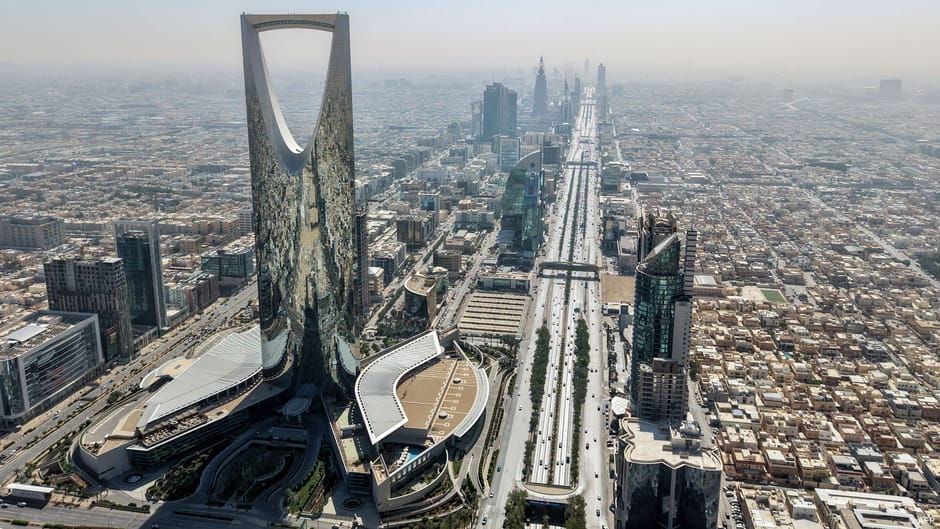
The Houthis say they set fires at Ras Tanura. Saudi air-defense operators say they intercepted four drones there. Eleven people were hurt when a building in Riyadh’s financial district was struck. One of the parties is lying, or the damage is being contested in real time. That ambiguity is the most important detail in the story, because the global oil market has built its entire risk pricing around the assumption that Saudi Arabia’s export infrastructure is, for now, untouchable.
Houthi military spokesman Yahya Saree told reporters on Wednesday that “accurate and direct” strikes on Ras Tanura — the kingdom’s largest refinery and its principal crude-export terminal — had caused fires. He described a separate three-phase attack on Riyadh’s financial district as hitting “their targets accurately.” Saudi officials conceded the financial-district tower was hit and that 11 people were injured. They said the four drones at Ras Tanura were downed before impact. No Saudi statement, at the time of writing, confirms or denies sustained damage to the refinery complex.
That gap between claim and confirmation is where the market’s nervousness lives.
Why Ras Tanura Is Not Just Another Refinery
Ras Tanura sits on the Persian Gulf coast and processes well over half a million barrels a day. It is not merely a refinery; it is the choke point through which a meaningful share of Saudi crude moves to Asian and European buyers. The terminal and the refinery are physically adjacent. A credible damage report there would not just disrupt one plant’s output — it would strain the logistics of Saudi’s entire export schedule, forcing vessels to queue, reroute, or reduce load. In a year when OPEC+ has been courting incremental supply growth to defend market share from non-OPEC producers, any credible hit to Saudi’s processing-and-export backbone compresses the group’s ability to respond to a demand shock elsewhere.
The November 19 strike on the same Riyadh tower, which caused no injuries, already showed that the Houthis can reach the capital. That this second attempt produced injuries — 11, by Saudi’s own count — tells analysts the drones or loitering munitions are improving in guidance, payload, or saturation tactics. The step from “we can hit a building” to “we can kill people in the financial center” is not a small one. It reframes Riyadh from a symbolic target to a live casualty zone.
The OPEC Spare-Capacity Question Nobody Wants to Re-Ask
Saudi Arabia holds the largest share of OPEC+ spare capacity — the barrels the group can theoretically pump within weeks of a demand spike. Traders have priced a thin geopolitical premium into Brent for years, assuming that even a bad day in the Gulf would not materially dent Saudi output. A confirmed, sustained outage at Ras Tanura changes that arithmetic. If the refinery is down for even two to three weeks for repairs, Saudi’s effective spare capacity shrinks not because the group has no crude to spare, but because it lacks the processing and loading infrastructure to move it. The market would be forced to re-underwrite the entire OPEC+ supply-flexibility narrative on a shorter timeline.
Brent’s risk premium, which had been modest by 2019 Abqaiq standards, would likely widen. The 2019 drone attack on the Abqaiq and Khurais facilities — then the single largest disruption to global oil supply in history, halving Saudi output for roughly a week — sent Brent up more than 15 percent in one session. Ras Tanura is not Abqaiq in strategic importance, but the signal value is comparable: the Houthis are telling the world that no site on the Saudi coast or in its capital is safe.
The Resistance Axis and What Iran Is Testing
The Houthis are the most operationally active component of what Tehran calls its “axis of resistance,” a loose network that also includes Iraqi Shia militias and, in a diminished form, Hezbollah. The timing of these strikes — set against the backdrop of the ongoing Iran conflict and heightened tension around the Strait of Hormuz — is not accidental. Each Houthi launch into Saudi airspace is a proxy stress test: can the Saudis and their American air-defense partners layer interceptors cheaply enough to keep the cost of a drone war from becoming a fiscal and political problem for Riyadh?
The answer, so far, appears to be yes, at Ras Tanura — four drones shot down, no confirmed refinery damage. At Riyadh, the answer is more mixed. The fact that a tower was hit and people were hurt suggests the intercept layer over the capital is thinner or the munitions were harder to catch. For Iran, that is the point. You do not need to sink a tanker in Hormuz; you just need to make every Saudi minister, every OPEC ministerial meeting, and every refinery foreman aware that the next drone might be the one that gets through.
Who Wins, Who Loses, and What Comes Next
In the short term, the Saudis and their allies absorb the cost. They spend interceptor missiles — expensive, finite, and supplied largely by the United States — to deny damage they may not have suffered in the first place. The Houthis expend drones that are cheap to produce and, per their own claim, increasingly accurate. Riyadh’s message to Washington is implicit: the air-defense umbrella is stretched thin.
For oil markets, the near-term move is likely a risk premium of two to five dollars on Brent, contingent on the next 48 hours of imagery and Saudi statements. If Ras Tanura is confirmed undamaged, the premium fades within a week. If even a partial outage is confirmed, expect a sharper, more sustained repricing, with Asian buyers scrambling for alternate cargoes from the Gulf or West Africa.
The longer-term risk is the normalization of strikes. Riyadh has been hit, on the same building, within weeks. If the cycle becomes monthly, the insurance, logistics, and investment calculus for the entire Gulf shifts. Energy companies pricing new projects will load in a new, permanent “Houthi toll.” And OPEC’s spare-capacity story — the quiet keystone of the group’s market-share strategy — will have to be told to buyers who are now asking whether that capacity can actually leave the dock.
The Houthis do not need to win the Yemen war to achieve their strategic goal. They need the world to stop treating Saudi infrastructure as invulnerable. On Wednesday, with eleven people hurt in the financial district and a contested fire at Ras Tanura, they made a credible argument that the old assumptions no longer hold.