Estonia's Border Closure Tests Russia's Willingness to Risk War With
Estonia's six-month border shutdown sends Moscow a sharp signal it can no longer blur the line between hybrid warfare and outright aggression on NATO soil. The Kremlin is shouting about open war — but who blinks first?
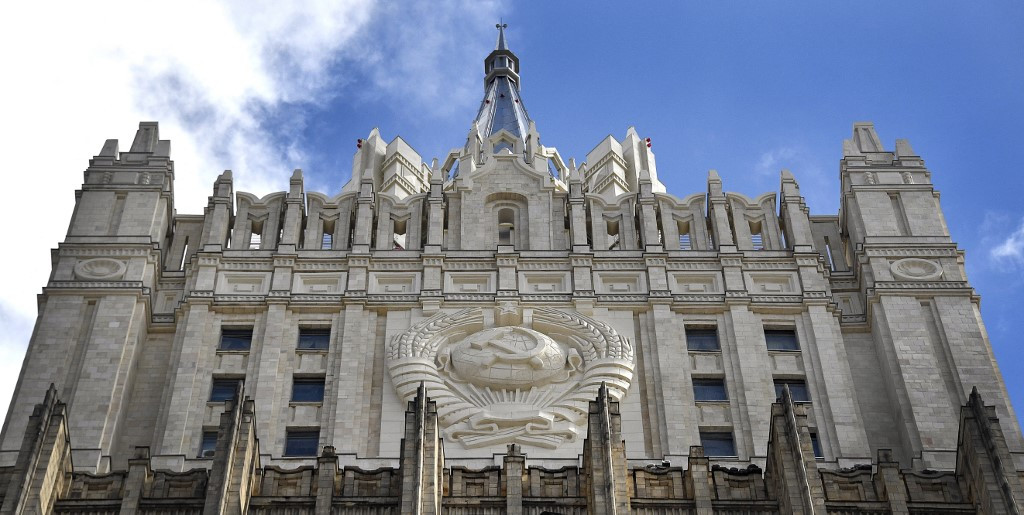
The Brinkmanship Game Nobody Wanted to Play
Russia does not often use the phrase “open war” loosely. When its foreign ministry chooses those exact words — directed at a fellow European state sitting squarely within NATO’s eastern flank — it is either trying to frighten a neighbor into submission or testing whether the alliance has any teeth left. The timing of Estonia’s decision to shut its land border with Russia for six months starting December 1 could not be more provocative, and that was precisely the point.
The official reason cited by Tallinn was not abstract ideology or ideological hostility. It was twelve documented incidents traced back to Moscow, the latest being an attempted arson attack on Threod Systems, a drone manufacturer that supplies components to the Ukrainian military. Eight suspects were arrested in Latvia in connection with the sabotage. The GRU’s fingerprints were everywhere in the investigation, and Estonia simply decided that letting Russian citizens walk through its checkpoints while Moscow funds hybrid attacks on its soil was a risk it no longer wanted to take.
Why This Matters Beyond the Border Posts
Border closures are one thing in peacetime. They become something else entirely when they happen between a NATO member and a nuclear-armed power already locked in a grinding war in Ukraine. What Estonia is doing is effectively drawing a red line on the ground — or rather, on asphalt and rail — across 338 kilometers of frontier that stretches from Lake Peipus to the Narva River. For years, the assumption was that both sides would keep using legal and illegal transit routes to maintain some minimal level of engagement. That assumption just died.
Moscow responded with fury, accusing Tallinn of cultivating “comprehensive hostility,” obstructing cargo ships in the Baltic Sea, imposing a maritime blockade, banning grain transit, and repressing Russian-speakers and the Orthodox Church. Each accusation contains a kernel of truth — Estonia has tightened restrictions on Russian-language media and Orthodox institutions in ways that have drawn criticism from Brussels and human rights groups — but the framing is designed to paint the border closure as unprovoked aggression rather than a defensive measure triggered by targeted sabotage operations.
The real signal coming from Moscow, however, is in what it did not say. There was no mention of immediate military mobilization along the border. No threat of economic retaliation beyond vague references to “boomerang” effects. The foreign ministry statement reserved the right to take “comprehensive political and diplomatic measures” — which in practice means more summoned diplomats, more expulsions, more noise. Russia is signaling willingness to escalate, but so far it has kept every option short of actual kinetic action.
The Article 5 Question No One Wants to Answer
This is where the geopolitical calculus gets complicated. If a Russian soldier crosses the border during the closure, or if an unmarked vehicle laden with explosives is driven toward an Estonian checkpoint and detonated, where does NATO draw the line? The alliance has spent seven years building deterrence posture in the Baltics, stationing battle groups, conducting joint exercises, and upgrading infrastructure. But deterrence only works if everyone believes it will actually be invoked.
What makes Estonia’s situation different from, say, Finland’s border with Russia is that Estonia shares not just a land border but a maritime domain that has seen drone exchanges, vessel interceptions, and shadow fleet activity throughout the conflict. The Baltic Sea itself has become a gray zone. Russian cargo ships face inspection at Estonian and Latvian ports. Ukrainian naval drones operate in waters where Russian patrol boats once felt untouchable. All of this happens in a theater where, under Article 5, an attack on one is an attack on all — including the United States, Britain, France, and Germany.
That is exactly why Moscow’s language about “open war” carries such weight. It is a warning to Tallinn, yes, but also a test of whether Washington and Berlin are prepared to see what happens when hybrid threats cross from the ambiguous middle ground into clearly defined acts of war on NATO territory.
The Economic Blunt Instrument
On paper, the border closure hurts both sides. Estonia loses a modest but symbolically significant flow of travelers, some freight, and the occasional cash sent by Estonian residents who hold Russian citizenship. Russia loses a route that, even before the invasion of Ukraine, carried relatively little traffic compared to other crossings further east toward Finland and Murmansk. The real damage is not measured in tons of goods or head counts at checkpoints. It is measured in the precedent.
If Estonia follows through on the full six-month closure and considers shutting the railway crossing as well — Prime Minister Kristen Michal confirmed on November 24 that the government is keeping that option open — it becomes the first EU member state to completely seal its land frontier with Russia since the Soviet dissolution. That is a structural shift, not a tactical adjustment. Other Baltic states and Poland are watching closely. Poland has already restricted certain categories of border traffic; Lithuania monitors the Suwalki Gap with heightened vigilance. Estonia’s move could catalyze a cascade of similar decisions across the eastern NATO flank, transforming what has been a managed friction zone into something closer to a hardened barrier system.
The question is whether Moscow will respond by softening its posture or by intensifying exactly the kind of covert operations that prompted the closure in the first place.
What Comes Next
Six months is a long time to hold a diplomatic position under maximum pressure. The Estonian government knows this. It is treating the closure as temporary by design, scheduling a reassessment period so it retains flexibility if circumstances change. But temporary in practice often means permanent in politics — no leader in Tallinn gains anything by reopening borders with Moscow while Russian operatives remain active in the region.
Russia faces its own constraints. It is already stretched thin defending southern Ukraine, monitoring the Baltics, and projecting power across the Arctic. Opening a new frontline against NATO by accident — or even by miscalculation — is a scenario neither side wants. Yet the gap between intention and outcome is where these crises usually sharpen.
What we are witnessing is not the beginning of open war. It is something more dangerous: a sustained state of controlled hostility where both sides believe they can push harder without triggering the very outcome they claim to fear. Estonia is betting that closed borders reduce risk. Russia is betting that isolation weakens resolve. Neither calculation has been tested at scale yet. The next six months will show which one is right.