Chinas 12 Million Auto Export Target Is Reshaping Global Trade
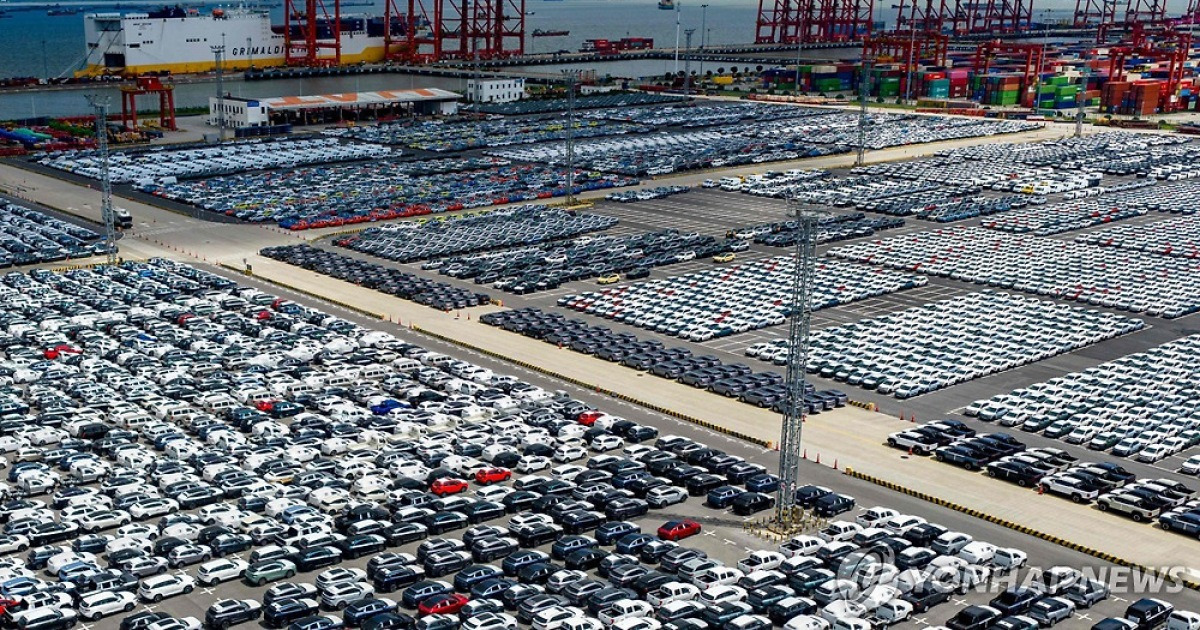
China's auto exporters are on track to ship 12 million vehicles overseas this year — up 44 percent from last year. The surge, fueled by electric vehicles, is delivering profits four times higher than domestic sales and sending shockwaves through Korea, Japan, and Europe.
The Number That Should Wake Up Seoul
Seventeen hundred thousand. That is how many more cars Chinese automakers will ship abroad this year compared to last, according to the China Passenger Car Association. The new projection — 12 million units — sits 20 percent above what the China Association of Automobile Manufacturers had already flagged as ambitious. It means Chinese automakers are rewriting the rules of global auto trade before most Western governments finished drafting their tariff responses.
The pace is staggering. In 2020, China exported just over one million vehicles. Six years later, the number is projected to be eleven times higher. That is not a cycle. That is a structural shift — the kind that upends industry assumptions about who gets to compete where and on what terms.
Domestic Weakness, Export Strength
The export surge is not happening because China’s home market is booming. It is happening despite it. Domestic car sales through August fell 20 percent year over year, totaling 11.7 million units. Consumers are hesitating. Prices are compressing. Margins are collapsing in a domestic landscape where overcapacity has turned every model launch into a price war.
So manufacturers turned outward. And the math changed instantly. Chinese automakers earn roughly 20,000 yuan per vehicle sold overseas, according to JP Morgan analyst Nick Li. That is about four times the profit per car sold domestically. In a market where home sales are a mercy kill, exports are the only thing keeping the lights on and the factories running.
Electric vehicles are the engine of this whole operation. Through August, China exported 3.46 million NEVs, up 70 percent from last year. By comparison, total auto exports grew 51 percent. The EV premium is real, and every major manufacturer is racing to capture it before the window narrows.
BYD led the charge with 1.16 million overseas sales in the January-to-August window, up 85.7 percent. The company had guided for 24 percent growth at the start of the year. It is on track to blow that target out of the water. Chery followed with 1.34 million exported units, a 68.2 percent jump that also crushed its original 150,000-unit annual goal — a target set so conservatively it now looks like a deliberate strategy to create a low bar.
Who Is Buying?
The demand is coming from places that did not feature heavily on Chinese automakers’ radars even two years ago. The EU and Africa posted the steepest growth, according to CPCA Secretary-General Zhu Dongshu. Middle East conflict-driven oil price volatility has also sharpened consumer interest in electric vehicles across emerging markets, where fuel costs directly affect household budgets in ways that make EV economics hard to ignore.
This is significant because it means the export pipeline is diversifying. China is not putting all its eggs in any single regional basket. When Europe raises tariffs and the United States slaps on 100 percent duties, there are still large untapped markets in Latin America, Southeast Asia, the Middle East, and across Africa where Chinese EVs are pricing local competitors out of existence. The strategy is geographic arbitrage — sell where you can still move product profitably while the political infrastructure to block you lags behind.
The Tariff Question
Western governments are responding exactly as predicted. The European Union has launched anti-subsidy investigations that could produce duties ranging from 17 to 38 percent. The United States has imposed tariff rates that effectively close the door on direct Chinese EV imports. Brazil and Turkey have followed with their own duties, and India has tightened import norms in ways that function as de facto bans.
But tariffs are a blunt instrument against a structural phenomenon. Chinese automakers are not just shipping finished cars anymore. They are building factories in Mexico, Hungary, Turkey, and Thailand — locations chosen specifically to bypass tariff walls and position production closer to end markets. The CPCA figure of 12 million includes both exported vehicles and those produced at Chinese-owned overseas plants. The supply chain follows capital and labor costs, not shipping containers.
Beijing itself is nervous about the speed. Last month, the government issued its first-ever guidelines on overseas auto operations, urging companies to resist cutthroat pricing competition abroad. The message was clear: slow down the race to the bottom before foreign governments have an excuse to shut you out entirely. There is a delicate balancing act between leveraging export strength and avoiding the kind of trade retaliation that could isolate Chinese firms in key markets.
There are also murmurs about potential reductions in export tax rebates, which would raise the cost of shipping Chinese cars overseas. If those rebates shrink, the margin advantage that currently makes exports so profitable evaporates somewhat — and the math that justifies massive overseas expansion becomes tighter.
Second-Order Effects
The ripple effects extend well beyond auto manufacturing. Chinese auto exports are pulling demand through upstream suppliers — battery makers, rare earth processors, semiconductor fabs, and steel producers — creating a cascading industrial boost that domestic weakness cannot offset. CATL, the world’s largest battery manufacturer, has expanded production capacity in part to serve overseas-bound Chinese EVs. These supplier ecosystems are harder to tariff away than finished vehicles.
Employment patterns are shifting too. Factory workers in provinces like Guangdong and Jiangsu are finding that export-oriented production lines offer more stable employment than domestic-market divisions. Meanwhile, dealerships in exporting countries are being reconfigured around Chinese brands, displacing legacy dealer networks and reshaping after-sales service territories.
Currency dynamics also matter. A stronger yuan would erode the price advantage that Chinese automakers currently enjoy, but Beijing has no incentive to let that happen while exports are serving as a macroeconomic stabilizer. The People’s Bank of China has shown willingness to manage the currency in ways that support export competitiveness.
What Comes Next
Some analysts expect the growth rate to decelerate next year simply because 12 million creates a massive base effect. A 44 percent increase this year followed by a smaller percentage gain is mathematically inevitable. But Zhu Dongshu pushed back on that logic, arguing that entry into new markets with growing EV demand will sustain momentum over multiple years. The question is whether that thesis holds as tariff barriers multiply and as Chinese firms exhaust their easiest growth opportunities.
The real question is not whether the growth slows. It is whether Western trade policy can slow it faster than Chinese automakers can adapt.
For South Korea, the threat is immediate and personal. Hyundai and Kia dominate ASEAN and Latin American markets — the same markets where Chery and BYD are now appearing with EVs priced 20 to 30 percent lower. Japan faces the same squeeze in Southeast Asia, where Toyota’s hybrid advantage is eroding as Chinese firms push full battery-electric options at lower prices. European incumbents are further behind, still reeling from the transition to electrification while Chinese firms shipped millions of EVs before most Europeans had seen one in person.
The longer-term risk for Western automakers is not just lost market share — it is the loss of scale. Every Chinese vehicle sold overseas reduces the volume that German, Korean, and Japanese plants can produce, driving up per-unit costs and making it harder to fund the very transition needed to compete. It is a vicious cycle that accelerates precisely when response time is shortest.
China’s auto export story is no longer about subsidies or cheap labor. It is about a manufacturing ecosystem that moved first, moved fast, and now ships vehicles that are genuinely competitive on price and technology. Tariffs delay the inevitable. They do not reverse it. And as the 12 million target demonstrates, the momentum has enough structural force to outlast any single policy response.