China's CXMT Just Shook the World Memory-Chip Order
China's CXMT reported a 10x revenue surge and 16 trillion won profit in H1 2026 — a blow to Korean DRAM dominance that arrives as Samsung and SK Hynix pivot to HBM and leave commodity capacity behind.
The number that should terrify Wonsan
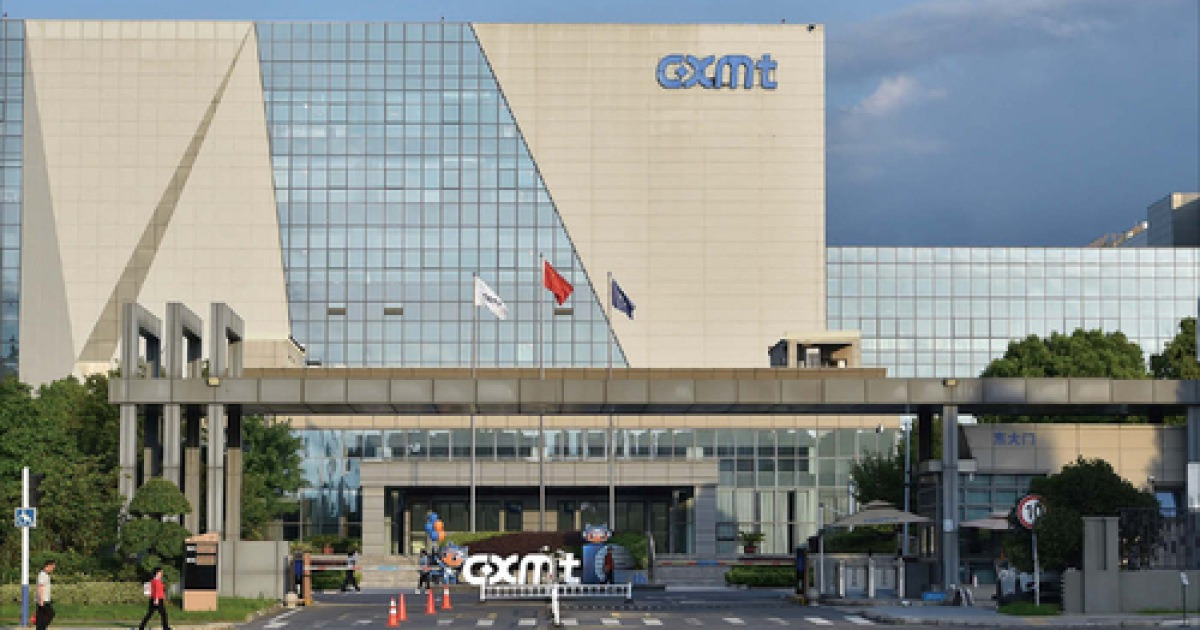
On August 28, China’s ChangXin Memory Technologies (CXMT) released its first-half results after a months-long silence — and immediately rewrote what analysts thought they knew about the global DRAM market. Revenue came in at 150.31 billion yuan, roughly 31 trillion Korean won, up 873.6 percent from the same period last year. Net profit attributable to controlling shareholders hit 77.61 billion yuan, a dramatic turnaround from a 2.33 billion yuan loss a year earlier.
CXMT had guided for revenue between 110 billion and 120 billion yuan and net profit of 50 to 57 billion yuan. It beat both ranges by a wide margin. The stock, which only recently began trading after its long-awaited IPO, has been priced for extraordinary growth — Bloomberg consensus places the forward P/E at 24.1x, nearly six times SK Hynix’s 4x multiple. The market was already anticipating a breakout. It just came faster than expected.
Why the surge hit where it hurt
The numbers alone are striking. The reason they matter geographically is more complicated. CXMT’s windfall coincides precisely with the phase of the AI memory supercycle where Samsung and SK Hynix have been intentionally starving the commodity DRAM market of supply. Both companies have been aggressively reallocating fabrication capacity toward high-bandwidth memory (HBM), the specialized stack-dramed RAM that powers NVIDIA and AMD’s latest AI accelerators. HBM margins dwarf those of standard DDR4 and DDR5, and the premium chips are in ferocious demand from data-center builders expanding to meet generative-AI workloads.
The strategic bet worked — but it left a gap. As Korean and Micron capacity shifted toward HBM, standard DRAM supply tightened globally, and prices rose across the board. CXMT, which never held significant HBM capability and thus faced no such reallocation pressure, expanded its general-purpose DRAM output. Its utilization rates climbed. It sold more chips at higher prices, and the revenue compounded.
This is not accidental. It is structural leakage from a containment strategy that succeeded too well in one lane and weakened another.
The AI supply-chain paradox
Chinese semiconductor policy, as articulated in the Made in China 2025 initiative and reinforced through state-backed funding vehicles like the Big Fund, has always treated memory chips as strategically autonomous. CXMT is the flagship project. The goal was never to win at HBM — at least not initially. The goal was to secure a baseline of DRAM self-sufficiency for China’s domestic electronics sector and to insulate the country from export controls that could cut off a critical supply.
For years, that plan looked slow. CXMT’s older process nodes lagged behind Korean rivals, yields were lower, and the company reported consistent losses through 2024. Western export controls on advanced lithography equipment, particularly the 2023 tightening under the Biden administration and subsequent expansions, were designed to keep CXMT stuck in that second tier indefinitely.
Instead, the AI boom created a different kind of opportunity. When Samsung and SK Hynix moved their most profitable fabs to HBM production, commodity DRAM suddenly became scarce. CXMT did not need EUV lithography to compete in DDR4 and DDR5. It needed capacity and yield improvement, both of which it could pursue with the tooling it already had — DUV scanners acquired before the restrictions hardened. The very controls meant to contain China’s chip industry may have inadvertently created the market conditions in which a contained competitor could fill a gap the controllers left open.
What DDR4 and DDR5 mean for Korea
The specific product mix tells the story. CXMT’s DDR series — chips used in PCs, servers, and data centers — accounted for 69.47 billion yuan in H1 revenue, representing 46.3 percent of total sales. That is not a side business. It is the core business, and it is growing at a pace that Korean producers cannot easily replicate without abandoning their HBM pivot.
Samsung Electronics and SK Hynix face a difficult calculus. Pulling capacity back from HBM to serve commodity DRAM would dilute the margin advantage that currently justifies their premium valuations in the eyes of investors. But holding the line means ceding ground to CXMT in exactly those segments where price competition is the primary battlefield. Korean producers are not losing the AI race — they are winning it at HBM. They are just losing the market that built them over the past two decades.
The market is already pricing in the risk. Every time CXMT announces a capacity expansion or a supply agreement, Samsung and SK Hynix shares wobble. The August 29 headline on Daum — “월요일 삼전 주가 어떡해” (“What do we do with Samsung’s stock on Monday?”) — captures the mood among Korean retail investors, who dominate domestic equity trading and react quickly to competitive threats.
The valuation gap that says everything
Perhaps the most telling detail is not the revenue or the profit, but the multiple. CXMT trades at a forward P/E of 24.1x. SK Hynix trades at 4x. The gap suggests two things. First, global investors are willing to pay a significant premium for CXMT’s growth trajectory, betting that the company will continue capturing market share even as Korean rivals respond. Second, the market is discounting SK Hynix’s earnings power, either because HBM demand is viewed as cyclical or because the commodity DRAM weakness will eventually erode overall profitability.
Either interpretation carries risk. If the AI infrastructure buildout continues beyond 2027, HBM demand will remain robust and SK Hynix’s current compression is temporary. If the cycle turns faster than expected — and memory markets are historically brutal about timing — both CXMT’s growth and Korea’s margin premium could collapse simultaneously. The difference is that CXMT has no HBM cushion, and SK Hynix has no commodity escape valve.
What happens next
CXMT’s results will be read in three capitals. In Seoul, they validate the fears of Korean semiconductor planners who have warned for years that state subsidies in China could not be ignored. In Washington, they reinforce the argument that export controls must be tightened further — or that the current framework is already creating unintended consequences. In Hefei, where CXMT is headquartered in Anhui province, the results are proof that patience and capital allocation can force open a door even under siege.
The next quarterly report from CXMT, due in early November, will be the critical test. If the company continues to grow at this pace while keeping utilization rates above 80 percent, the compression of Korean market share in standard DRAM becomes not a risk but a trajectory. If growth slows, the surprise was cyclical rather than structural.
For Samsung and SK Hynix, the strategic question is whether to defend the commodity floor or to double down entirely on HBM and higher-margin specialty memory. There is no clean answer. The market they inherited is gone. The one replacing it is already writing its own earnings reports.