Chinas G20 Rebuke Exposes Fractured Global Financial Order
China publicly condemned G7 rate hikes at the G20 while the US was absent, repositioning itself as defender of the Global South. The move signals a deeper fracture in monetary coordination that emerging-market investors can no longer ignore.
The Uninvited Guest at the Table
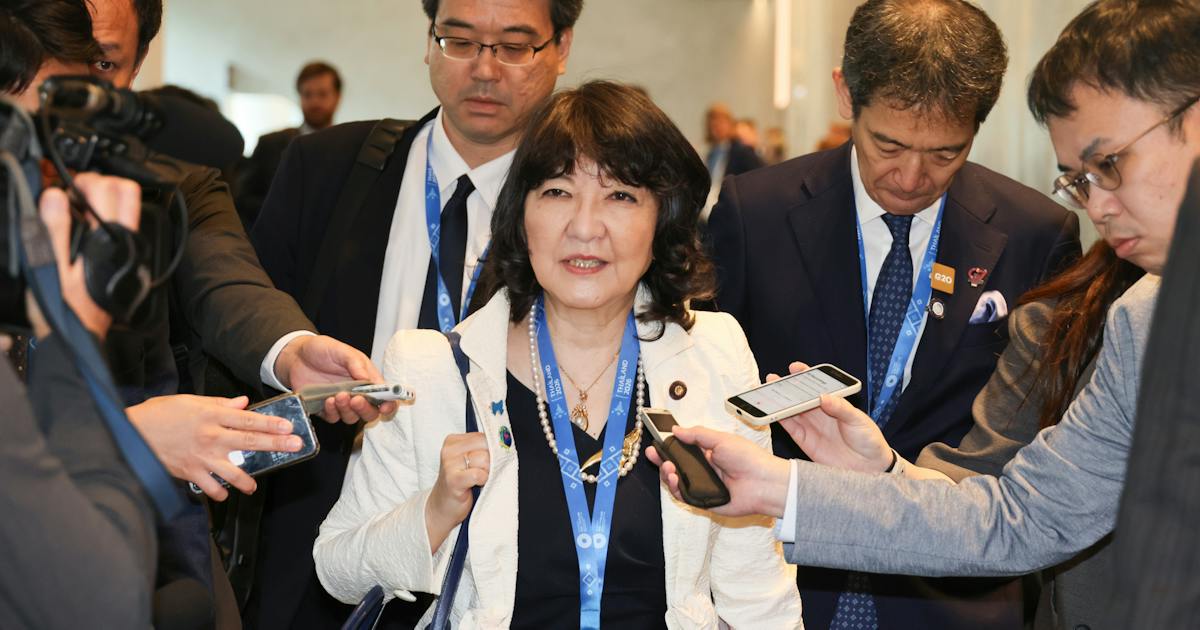
China’s finance chief Pang Gongsheng walked into the G20 meeting in Bangkok on October 15 and found an empty chair where the American Treasury secretary should have been. That absence told a story before any statement was read. Bessent, a sitting US Treasury secretary and host-country representative, did not show up — a choice that echoed through the hall and set the tone for what would follow.
What came next was worse than a diplomatic misstep. It was a full-throated indictment of Western monetary policy, delivered by Beijing with the precision of a calculated strategy rather than the spontaneity of a leaked grievance.
Behind closed doors before the formal session, according to people familiar with the discussions, China pressed a message that was clear enough to be understood even without the official record: the G7’s surge in interest rates was doing damage to developing countries. The phrasing — “bad interest rate rises” — may have sounded informal in translation, but the sentiment was blunt. China was framing the debate not as a technical disagreement over inflation targets but as a moral question about who pays the price for American monetary decisions.
The timing was deliberate. With the US missing, the EU economically fragile, and the UK already signaling that its fiscal path was constrained, there was no coalition ready to push back.
A Yield Divergence With Geopolitical Teeth
The numbers behind China’s argument are real, even if the causal story is more complicated than Beijing’s narrative suggests. As noted by analysts at NLI Research, the G7’s ten-year government bond yields have been in a sustained upward trend since 2026 began. Japan, still wrestling with the limits of its yield curve control legacy, has seen its own ten-year yield climb. Germany, already strained by fiscal deterioration, faces rising borrowing costs. The United States, with the Federal Reserve holding rates elevated, continues to anchor the yield curve at levels that have not been seen in years.
Meanwhile, China’s ten-year yield has dropped below 1.7 percent — a level that reflects not just weak domestic inflation and stagnant growth, but also the structural barriers that keep its bond market insulated from full global integration. Foreign investors still face meaningful capital account restrictions when comparing the depth and freedom of participation in Chinese bonds versus G7 sovereign debt. That structural friction explains much of the low yield. But it also means the divergence is durable, not temporary.
What makes this divergence geopolitically significant is that it gives China ammunition it did not possess a decade ago. In the 2010s, China was still a borrower in the global financial system, dependent on Western capital flows and careful about offending the institutions that governed them. Today, with vast foreign exchange reserves, a managed currency, and a bond market increasingly accessible through programs like the Bond Connect initiative, China can afford to take a harder line. It can publicly accuse the G7 of exporting inflation and financial instability without fear of immediate market retaliation.
Europe’s Quiet Anxiety
Europe’s presence at the G20 was not just passive. Multiple sources indicated that European finance ministers and central bankers expressed concern about what they see as an expanding cycle of transactions between the US administration and major AI companies — deals that shift value and risk asymmetrically toward Washington while leaving European industrial policy-makers watching from the sidelines.
This is not a new worry. The EU has been articulating concerns about US tech dominance and favorable domestic investment treatment for years. But the framing has shifted. What was once discussed in technical committees and working groups is now surfacing in high-level finance minister conversations, often couched in language about “circular transactions” that benefit American corporations while European fiscal positions deteriorate under the weight of energy subsidies, defense spending, and green transition costs.
The United Kingdom, meanwhile, offered no counterweight. Its finance ministry has been consumed with managing a fiscal trajectory that markets find increasingly questionable. The eurozone’s fragmentation — between fiscally responsible northern states and southern economies burdened by debt and demographic decline — makes coordinated action nearly impossible.
That vacuum is exactly what Beijing is exploiting.
Japan’s Paradoxical Position
Japan’s finance minister, Satsuki Katayama, took a notably restrained posture at the meeting. According to reporting, he confirmed that the G7 had raised no formal criticisms or objections regarding Japan’s supplementary budget for electricity and gas subsidies. That detail — buried in the margins of the coverage — is telling.
Japan is caught between two realities. It benefits from the dollar’s dominance and the US security umbrella, yet it is also deeply exposed to the spillover effects of American monetary policy. The yen’s vulnerability during periods of Fed tightening is well documented. And yet, when the G20 conversation turned to who was harming developing economies, Japan was conspicuously silent. Not because it agreed with China’s framing, but because it lacked the political room to disagree.
The broader implication is that Japan’s reflexive alignment with G7 monetary orthodoxy is no longer a stable position. Domestic inflation pressures, a weakening yen, and the fiscal constraints of an aging population mean Tokyo is increasingly vulnerable to the very rate environment it has historically supported. If the yield curve reprices further, Japan’s debt sustainability story weakens — and with it, its credibility as a vocal advocate for the status quo.
What Emerging-Market Investors Should Take From This
The most important takeaway from the G20 is not that China won a rhetorical victory. It is that the architecture of global financial governance is no longer self-executing.
For years, the implicit bargain was simple: the US would set monetary policy, other countries would adjust, and the system would hold. Emerging-market investors accepted volatile capital flows, currency swings, and periodic crises as the cost of participating in a dollar-denominated system. The assumption was that American leadership — flawed, self-interested, often unilateral — would prevent the system from fragmenting completely.
That assumption is now under direct challenge. China does not yet have the capacity to replace the US dollar. It lacks the deep, liquid, freely accessible bond market that makes Treasuries the global reserve asset. It does not control the clearing systems, the SWIFT network, or the pricing benchmarks that underpin international finance.
But it does not need to replace the dollar to weaken the system. By positioning itself as the champion of the Global South, by offering an alternative narrative about who is responsible for financial instability, and by capitalizing on the absence of American leadership at a critical moment, China is eroding the legitimacy of the existing order from within.
For investors, the practical consequence is clearer now than it has been in a decade. Emerging-market portfolios can no longer be constructed on the assumption that dollar strength will eventually recede and reset conditions. The structural factors driving higher yields — fiscal deterioration in advanced economies, deglobalization pressures, the energy transition, defense spending — are not cyclical. They are embedded in the new political economy.
The G20 in Bangkok did not produce a joint statement that addressed these forces. It produced something more consequential: a public acknowledgment that the consensus is gone. China spoke. The US did not. The EU listed its grievances. And the emerging markets, watching from the sidelines, realized they are no longer being spoken for.
That realization will shape portfolio decisions long after the press conferences end.