China's Laos Base Reshapes Southeast Asia's Strategic Balance
Beijing's new military facility at Ban Keun Airport gives the PLA its first dedicated foothold in Laos, a landlocked country caught between Chinese financial gravity and its own fragile sovereignty. The move is already shifting how regional powers calculate their defense strategies.
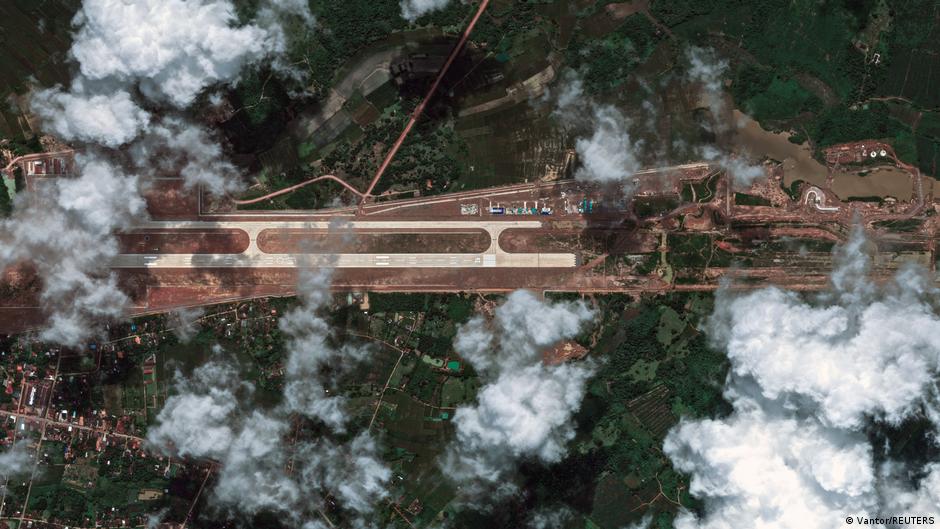
A facility, not a fortress — yet
China has opened a military training and logistics center at Ban Keun Airport, just north of Vientiane, and framed it as nothing more than a joint capacity-building project for the Lao air force. The Chinese Defense Ministry called it a non-threatening institution aimed at deepening practical cooperation and maintaining regional peace. That framing, however, undersells what this actually represents.
Ban Keun is Beijing’s first dedicated military infrastructure inside mainland Southeast Asia that sits outside the South China Sea orbit. Djibouti, across the Indian Ocean, serves China’s naval convoy missions. Ream Naval Base in Cambodia — expanded with Chinese funding and inaugurated last year — gives Beijing a deep-water port adjacency to the contested waters. Ban Keun is different. It extends China’s security posture into the heart of the Indochinese peninsula, a region where the United States has no military presence and where neighboring countries are already watching closely.
The math behind the leverage
Laos is among the most indebted nations on Earth. Public debt stood at roughly 81 percent of GDP last year according to the International Monetary Fund, and China is by far the largest bilateral creditor. In 2020, China’s state-owned Southern Power Grid acquired a reported 90 percent stake in the company that operates much of Laos’ electricity transmission network. The economic dependency is not abstract — it is structural.
That dependency is the foundation of political leverage. Hunter Marston at Australia’s Lowy Institute put it directly: Beijing has ample political leverage over Vientiane to demand exclusive access to Ban Keun in the future, should it choose to convert the training center into a permanent base. The physical infrastructure already exists. What would be required is a decision, not a construction project.
This is the pattern that has drawn criticism across the region — sometimes labeled debt-trap diplomacy — where infrastructure loans create obligations that can be converted into strategic concessions. Laos has not formally ceded sovereignty over Ban Keun, but the gap between a training center and a forward-operating base is shorter than most analysts want to admit.
Vietnam’s encirclement anxiety
Hanoi is paying attention. The Vietnam-China relationship is complicated by shared party politics and deep economic ties, but it is also defined by competing territorial claims in the South China Sea, where incidents have repeatedly escalated tensions. For decades, Vietnam has treated Laos and Cambodia as a strategic buffer along its western flank, working to maintain considerable political and military influence in both countries.
Euan Graham at the Australian Strategic Policy Institute described the shift plainly: Vietnam faces the alarming possibility of strategic encirclement by China, and the new air facility in Laos complicates Hanoi’s defense planning considerably. The geographic logic is unambiguous. A Chinese military presence in Laos places a second front directly adjacent to Vietnam’s western border — the same border that has shaped Vietnamese defensive doctrine for generations.
This is not new anxiety. Vietnam has long feared exactly this scenario. What is new is the physical reality of Chinese military infrastructure on territory that Vietnam considered within its sphere of influence. The psychological impact on Vietnamese defense planners is likely to be as significant as any operational implication.
The geography problem
Not every analyst sees Ban Keun as a game-changer. The facility is landlocked. Unlike Ream, which provides sea access and sits near contested shipping lanes, Ban Keun offers no direct maritime projection capability. Chinese military aircraft already operate from substantially larger and better-equipped bases in southern China. From a pure power-projection standpoint, the facility adds marginal capability.
Collin Koh at Singapore’s Nanyang Technological University noted that while China could gradually expand its presence — deploying more personnel, adviser-instructors, trainer aircraft, and eventually more advanced platforms, plus prepositioned equipment — the operational usefulness for PLA power projection in Southeast Asia remains constrained by Laos’ landlocked geography. The facility is useful for training and logistics, not for projection.
But usefulness and symbolism are not the same thing. A military facility operated by Chinese personnel on foreign soil, even a landlocked one, signals something beyond tactical utility. It signals that China has normalized the concept of overseas military infrastructure in Southeast Asia’s interior, not just along its coastal periphery.
Laos’ balancing act under strain
Simon Creak, a historian of Laos at Singapore’s National Institute of Education, argued that Vientiane has maintained a policy of non-alignment since 1986 and has not established similar joint facilities in the past despite close relations with Vietnam, China, and Russia. He also noted that any mention of foreign bases in Laos typically recalls the CIA’s covert operations during the Indochina Wars — a history that makes the current arrangement politically sensitive for the Lao government.
Creak considers it highly unlikely that Laos will adjust its formal foreign policy or abandon its effort to balance relations with Vietnam, Thailand, and China. But balancing requires room to maneuver, and that room is shrinking. When your electricity grid is owned by a Chinese state company, your public debt is owed primarily to Beijing, and a Chinese military training center operates on your soil, the ability to play multiple powers against each other diminishes significantly.
What happens next
The most likely trajectory is incremental expansion rather than dramatic escalation. China will deepen its use of Ban Keun for training, logistics, and potentially prepositioning equipment. It will frame each step as capacity-building for Lao partners. Vientiane will accept, because it has few viable alternatives for financing and because Beijing’s leverage is structural rather than coercive in the visible sense.
Regional neighbors will respond in kind. Vietnam will accelerate its own defense modernization and seek closer security partnerships with other regional actors. Thailand, already navigating its own complex relationship with China, will recalibrate. ASEAN as an institution will struggle to respond coherently, because member states’ relationships with Beijing vary too widely to produce a unified position.
The United States, which maintains extensive military access across the Indo-Pacific through alliances with the Philippines, Japan, and Australia, will see Ban Keun as another data point in a broader pattern of Chinese military expansion — one that confirms Washington’s strategic concerns without offering a straightforward countermeasure. There is no equivalent American facility in Laos to match it, and building one is not realistically on the table.
Ban Keun is small. It is landlocked. It is officially a training center. But it is also the latest piece in a strategic realignment that is quietly restructuring the security architecture of mainland Southeast Asia. The question is not whether it matters. The question is how much longer the region can pretend it does not.