China's Moon Timeline Changes Everything
China's detailed pre-2030 lunar roadmap is a strategic signal, not just a space milestone. The move pressures NASA's Artemis schedule and reshapes the commercial launch landscape.
The Timeline Was the Point
China did not just announce a moon landing. It published a four-year sequence of specific missions, each with defined hardware and a clear date.
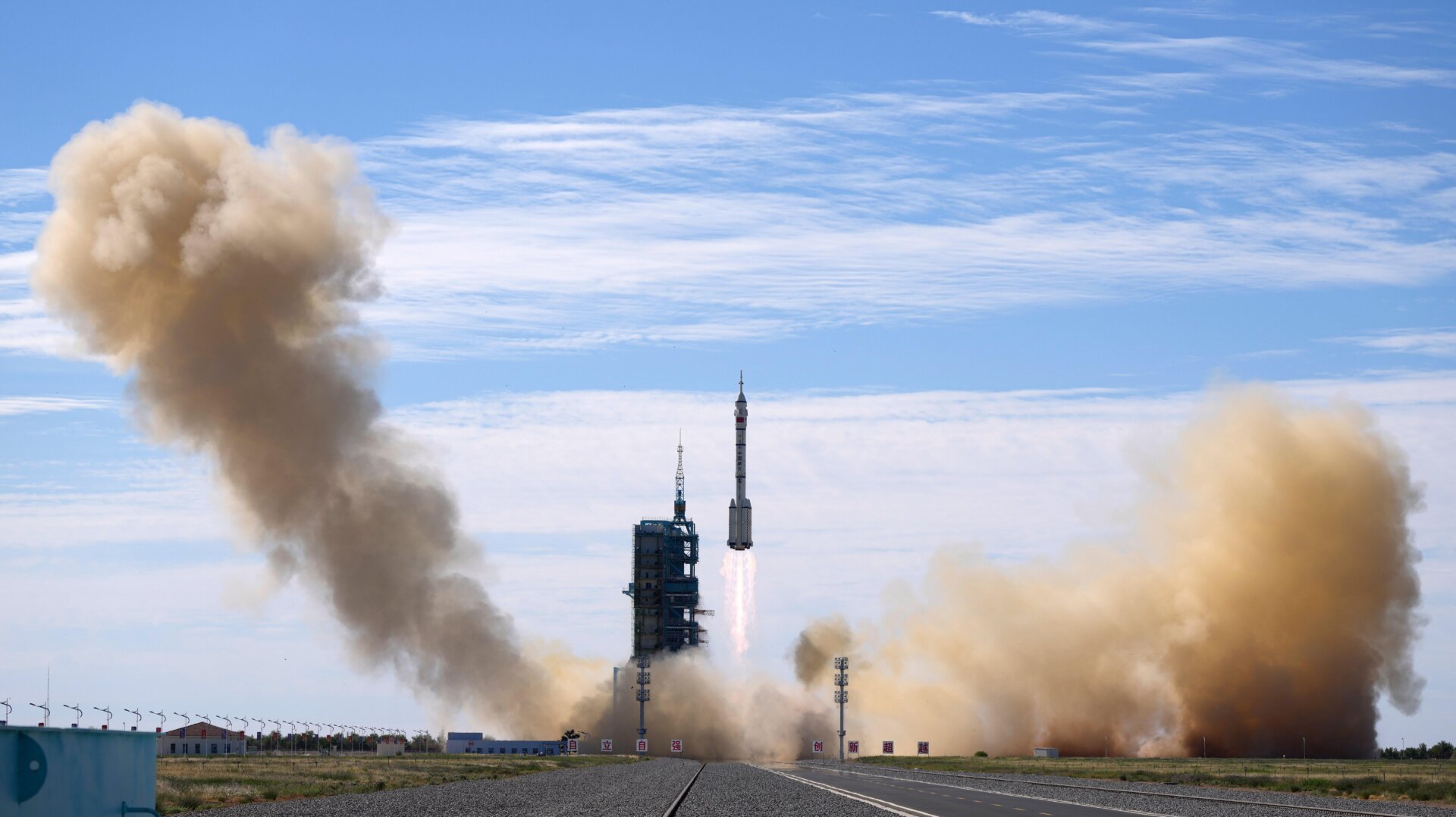
The announcement came from Wang Xiang, chief designer of China’s lunar exploration program, at the 7th Manned Space Symposium in Beijing. His briefing — reported by China’s Global Times — laid out an uncrewed cargo flight aboard Long March 10A in early 2027, an uncrewed test of the larger three-stage Long March 10 and the Lanyue lander in 2028, a full orbital rehearsal in 2029, and a crewed landing attempt before 2030.
That level of detail is unusual for China’s space program. Beijing has historically issued broad targets — “before 2030,” “in the next decade” — and let results speak later. This time, the schedule itself is the story.
The shift from vague ambition to concrete planning is a signal. To partners. To rivals. To domestic agencies still debating budgets. And, perhaps most pointedly, to NASA.
The Sequence
China’s plan follows a tried method with new hardware.
The 2027 launch sends the Mengzhou spacecraft to Tiangong on a single-stick Long March 10A without side boosters. The mission is cargo-only, collecting flight data and proving the rocket’s reliability. It is a low-risk rehearsal before the real work begins.
In 2028, the upgraded three-stage Long March 10 carries Lanyue, the lunar lander, on an uncrewed flight. The lander attempts a soft touchdown and lift-off from the lunar surface. That alone would be significant — a precision landing and return from the Moon without a crew. If successful, it validates the lander’s core systems.
Then comes the 2029 rehearsal. Two Long March 10 rockets launch separately: one carrying Mengzhou with three taikonauts, the other carrying Lanyue. The spacecraft rendezvous and dock in lunar orbit. The crew transfers to the lander, descends, spends three days on the surface conducting extravehicular activities on each day, then returns to orbit and docks with Mengzhou for the trip home.
This orbital rendezvous profile mirrors the Apollo approach, where the Saturn V launched both the command module and lunar lander together on a single vehicle. China’s method separates the launches, using two rockets instead of one massive booster. That is not a weakness. It is a deliberate architecture choice — one that trades launch complexity for modular flexibility.
Why It Pressures Artemis
NASA targets an early 2028 crewed landing as part of Artemis 4. The plan relies on SpaceX’s Starship and Blue Origin’s National Team lander, both still in development. Delays are widely expected. Multiple reports have pushed Artemis timelines back, and the commercial partners face steep certification hurdles.
China’s schedule does not need to succeed for it to matter. The mere existence of a firm timeline changes the calculus for everyone else. When Beijing says 2029, Washington and its partners face a harder question: can we miss that date and still claim leadership?
The Artemis program has always leaned on the argument that the United States leads through partnership — that commercial vendors and international allies multiply America’s reach. China’s approach is different. It is state-directed, state-funded, and state-accountable. When China sets a date and then shows footage of hardware being unloaded at Wenchang, as reported by SpaceNews, it tells a story that commercial reliance cannot easily match.
That is the pressure. Not that China is guaranteed to beat NASA. But that every delay on the Artemis side makes the contrast sharper.
The Commercial Launch Dimension
Long March 10 is not only a lunar vehicle. It is China’s answer to the commercial launch gap that the United States filled through SpaceX.
If the 2027 cargo mission to Tiangong succeeds, China will have a heavy-lift rocket capable of launching both crew and cargo on a regular cadence. That is infrastructure the country’s commercial sector can build on. A reliable launch system changes the economics of every downstream mission — lunar, cislunar, and deep-space.
SpaceX has demonstrated that reusability and frequency drive cost. China does not yet have a reusable booster. But a successful Long March 10 program proves the architecture and builds institutional muscle. That muscle will serve commercial customers eventually, whether China admits it publicly or not.
The Diplomatic Signal
China’s detailed timeline is also a diplomatic document.
The country has been expanding its space partnerships through the International Lunar Research Station proposal, a collaboration that includes Russia and a growing list of partner nations. A credible moon landing timeline gives those partners something concrete to anchor to — a date, a program, a shared objective.
The Artemis Accords already count dozens of signatories. China’s ILRS is positioned as an alternative framework, one that emphasizes multilateral participation over U.S.-led coordination. When Beijing publishes a mission sequence, it signals to potential partners that it is serious, organized, and capable of delivering.
That matters because the next decade of lunar activity will shape which institutions control the infrastructure, the data, and the norms. The country that lands first and stays longest sets the standard. China’s timeline is an invitation to those nations looking for an alternative.
What Could Go Wrong
The plan is ambitious. Every step carries risk.
The 2027 cargo flight is the first test of Long March 10A. Any failure there pushes the entire sequence back. The 2028 Lanyue landing is the first attempt to touch down on the Moon and lift off again without a crew — a feat no country has repeated since the Apollo era. It is technically demanding. A missed landing or a failure to launch from the surface would delay the 2029 rehearsal and the crewed attempt alike.
The orbital rendezvous in 2029 is another high-risk milestone. China has practiced docking at Tiangong, but lunar orbit is a different environment. The transfer from Earth orbit to translunar injection, the orbital insertion, the rendezvous and docking in lunar orbit — each step is a potential failure point.
China is aware of these risks. The decision to reveal the plan publicly suggests confidence in the program’s trajectory, but also a calculation that transparency serves a purpose. A detailed roadmap invites scrutiny, but it also creates accountability — both internally and externally.
Who Wins, Who Loses
China wins if the timeline holds. It gains prestige, strengthens its partnership network, and establishes a credible lunar presence ahead of the United States.
NASA wins if the Artemis schedule recovers and executes on time. The U.S. still holds advantages in commercial innovation, international partnership breadth, and deep-space experience. But those advantages erode with every delay.
The commercial launch industry wins if China proves its architecture. A successful Long March 10 program increases global launch capacity and drives down costs, benefiting everyone who needs access to cis-lunar space.
The losers are unclear. There is no direct victim in a space race, but countries and programs that bet on U.S. primacy may find themselves recalibrating if China lands first.
What Happens Next
The next twelve months will reveal more than the announcements.
Footage from Wenchang spaceport already suggests hardware is moving. Large containers loaded onto cargo ships at the Chinese coastal facility indicate that launch preparations are underway. If the 2027 cargo mission proceeds as planned, the sequence gains credibility. If it stalls, the entire timeline comes into question.
NASA’s response will be telling. The Artemis program has faced repeated delays and budget pressures. China’s timeline forces a choice: accelerate, or accept that the United States may no longer be first.
The moon landing race is no longer about who can reach the surface. It is about who can sustain a presence once there. China’s roadmap hints at that longer game. The United States is still writing its answer.
The next chapter begins in 2027.