Why a 12-Year-Old Bridge Between China and North Korea Is Finally Opening
The Sinuiju–Dandong bridge sits nearly a decade and a half abandoned after Beijing paid for its construction. Now trucks are running across it, and analysts say Pyongyang may use the crossing to sidestep sanctions as it deepens logistics ties with both China and Russia.
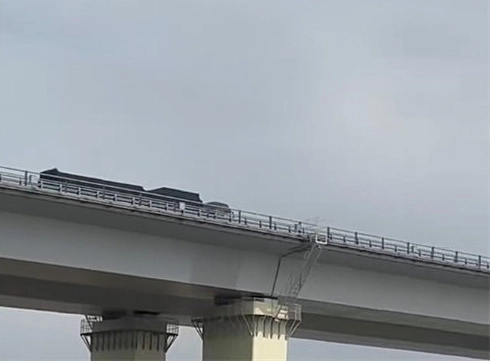
A bridge nobody uses — until they do
On the morning of September 20, residents of Dandong saw something they had not witnessed since 2014: a large truck crossing the Shin-Yalu River Bridge toward North Korea’s Sinuiju city.
This is not routine. The bridge has sat closed for twelve years, despite Beijing paying for the entire construction and completing it in October 2014. For over a decade, no official freight traffic has used the span. North Korea lacked connecting roads on its side, plus customs and immigration facilities, so the structure remained a silent concrete link between two economies that trade billions without ever moving cargo across that particular crossing.
The sighting came from Seoul News Service reporting, citing local residents who also reported dozens of trucks and cars queued near the Chinese-side approach ramp. Analysts say this looks less like a tourist drive-through and more like a pre-opening trial run.
What makes this moment worth watching extends far beyond the novelty of a bridge finally seeing traffic. The Shin-Yalu River Bridge — a 980-meter span completed at a cost estimated between $50 million and $70 million — was conceived as part of a broader push to deepen Sino-North Korean commercial ties. The Chinese side invested heavily in the structure itself, expecting it would become a second major crossing point alongside the existing railway bridge that has handled freight and passenger trains for decades. But North Korea never finished the corresponding infrastructure on its end. No customs hall. No border inspection facility. No connecting highway worthy of the name. The bridge became what diplomats in the region quietly called a “two-factor bridge” — one side ready, the other not, rendering the crossing functionally inert.
The likely date: October 6
Multiple sources suggest the formal opening could happen around October 6, which marks the 77th anniversary of North Korean–Chinese diplomatic relations. No official announcement has been made by either government. But the pattern is clear — vehicle staging at the ramp, trial crossings, infrastructure finishing on the northern side. All point to an imminent switch from closed to open.
If the timing holds, this becomes one of those quiet geopolitical switches that matters more than any press conference. The bridge will officially join the existing rail corridor that already connects Dandong and Sinuiju, giving China a second, redundant route for overland freight. The symbolic weight of choosing an anniversary date is not lost on observers. Diplomatic milestones in East Asia are routinely selected with care, and October 6 is a date both capitals can frame domestically without appearing to cave to external pressure.
Chinese local media has not yet published formal reports about the bridge opening, but trade forums in Liaoning Province have recently featured briefings on “new cross-border logistics channels,” a phrase that appears deliberately chosen to encompass the Shin-Yalu crossing without explicitly naming it. That kind of coded language is common when governments are testing the waters before a public announcement.
Why now? The sanctions pressure is real — and shifting
This is not just about a bridge opening. It is about how North Korea survives under some of the world’s strictest sanctions regimes.
Since 2017, UN resolutions have banned most North Korean coal, textiles, and seafood exports, restricted oil imports, and curtailed labor remittances. Beijing has largely enforced those rules at official ports. But North Korea has never been isolated — it has always had land borders with China and Russia, and land crossings are harder to police than seaports. Trucks can be inspected less thoroughly than container ships. Drivers can operate on shorter notice. And overland routes leave fewer digital trails than maritime shipping manifests.
The new evidence suggests Pyongyang is preparing to use those land routes more aggressively. The Shin-Yalu Bridge opening would give China’s largest North Korea trade gateway — Dandong handles the bulk of official Sino-North Korean commerce — a second, parallel freight corridor. More importantly, it reduces dependence on any single crossing point. If one bridge faces renewed scrutiny or closure, the other can absorb traffic. That redundancy is exactly what a sanctions-targeted state needs.
Add the recently opened Tumen River auto bridge to Russia, and you get a picture: North Korea is building out overland freight capacity with both neighbors simultaneously, diversifying away from a single chokepoint in Dandong. This is a deliberate strategy — not an accident of geography.
Who benefits, who loses
China benefits most immediately. More legal or semi-legal border crossings mean more movement of goods, which means more customs revenue for Liaoning Province, more work for logistics firms, and more leverage over Pyongyang through economic interdependence. Beijing has always preferred engagement over isolation when it comes to North Korea, and this bridge is a tangible expression of that preference. For Chinese provincial officials, the bridge also carries economic upside. Dandong’s economy has long been constrained by its position as a border city — remote from China’s industrial heartland but perfectly positioned for trade with the North. New crossings refresh that advantage.
North Korea benefits through sanctions resilience. Even if most trucks carry legitimate goods — agricultural inputs, machinery parts, consumer products — every additional legal crossing also creates opportunities for dual-use items, cash smuggling, and other revenue streams that help fund the regime’s priorities. Second-hand vehicles, which North Korea desperately needs, frequently move through these corridors under vague customs classifications. Pharmaceutical ingredients, precision tools, and electronic components follow similar paths. The bridge does not create new smuggling routes; it legitimizes existing ones by giving them a formal structure.
The United States and its allies lose a layer of leverage. Sanctions enforcement depends on chokepoints. When those chokepoints multiply, enforcement becomes a game of whack-a-mole. A second bridge alongside an existing rail link makes monitoring far harder for any single country’s customs or intelligence apparatus. The U.S. Treasury’s sanctions wing relies heavily on financial messaging data and port inspections — tools that are blunt against land crossings where cash transactions and informal documentation remain common.
The bigger corridor picture
This bridge cannot be understood in isolation. It sits inside a wider network that North Korea and its partners have been assembling for years:
- The existing Dandong–Sinuiju railway, operational for decades, already moves freight across the Yalu on a steel bridge originally built during the Japanese colonial period and upgraded multiple times since.
- The Tumen River auto bridge to Russia opened earlier this month, adding a southern route into Primorsky Krai and giving North Korea access to the Russian Far East without transiting Chinese territory.
- North Korea’s Rason special economic zone sits at the center of a planned China–North Korea–Russia freight corridor that has been discussed at summit level but never realized at scale.
The Shin-Yalu Bridge is the next domino. If it opens, it reinforces the Rason corridor concept and gives Beijing and Moscow a concrete infrastructure project that bypasses seaport sanctions oversight. It also signals that North Korea is no longer waiting for broader diplomatic breakthroughs before investing in physical connectivity — it is building incrementally, one crossing at a time.
Second-order effects to watch
The opening will trigger several ripple effects. First, Chinese provinces bordering North Korea — particularly Jilin and Liaoning — will likely push for expedited customs processing on both sides of the new crossing. Local governments have a direct economic stake in making the bridge functional, and they have previously lobbied Beijing to ease restrictions that hurt their trade volumes. Expect petitions from provincial business chambers within weeks of the opening.
Second, the bridge may accelerate North Korea’s internal road-building efforts. TheSinuiju side still requires significant upgrades — a proper highway connecting the border to Pyongyang and beyond, warehousing facilities, and loading docks capable of handling sustained truck traffic. North Korean state media has not yet reported on these improvements, but satellite imagery from September shows grading equipment operating on the northern approach, suggesting work is underway or recently completed.
Third, Russia stands to gain indirectly. A more porous land border between China and North Korea facilitates the movement of goods that can later be rerouted through Russian territory. Beijing and Moscow have been coordinating logistics outside formal alliances, and additional crossing capacity strengthens that coordination without requiring a publicly signed agreement.
What comes next
Expect a period of uncertainty. The bridge may open on October 6, but initial traffic volumes could be low as customs procedures are hashed out. North Korea’s side infrastructure, while reportedly advanced, still needs to prove it can handle sustained freight flows without creating bottlenecks that frustrate Chinese exporters. The first few months will reveal whether this is a genuine opening or a carefully staged demonstration designed to test international reaction.
Over the longer term, the opening signals that North Korea is not retreating from its international pariah status through isolation. It is adapting — finding new routes, deepening ties with both Beijing and Moscow, and using land bridges to create economic options that sanctions have not fully foreclosed. The regime has learned that survival does not require breaking sanctions openly; it requires building enough parallel infrastructure that enforcement becomes costly and incomplete.
Western observers should watch not just whether the bridge opens, but what crosses it. Legitimate trade will flow first. The question is what else follows — and whether existing sanctions architecture can contain a regime that now has two new land routes to the world’s second-largest economy and one of its most powerful nuclear allies. The bridge itself is concrete and steel. What matters is what it enables.