China's Rare-Earth Leverage Is the Real Game at This Week's US-China Summit
As Trump and Xi prepare for their first White House meeting in 11 years, the rare-earth supply chain is the quiet lever reshaping AI safety negotiations — and the stakes go far beyond tariffs.
The Meeting No One Is Talking About Correctly
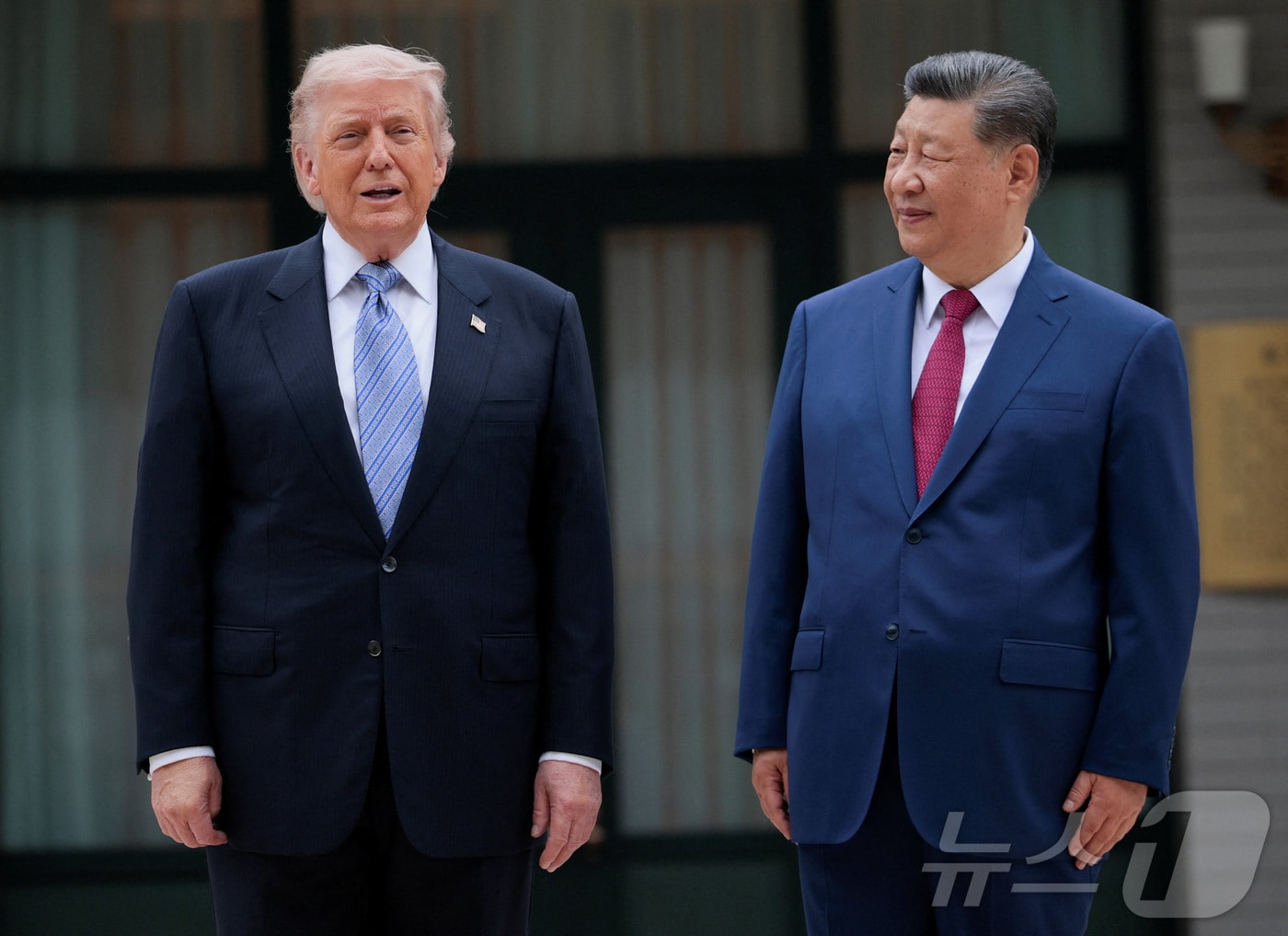
Washington is bracing for its highest-level Sino-American contact in over a decade. President Donald Trump will personally greet Xi Jinping at the White House on September 24 — the first time a US president has escorted a Chinese leader from the tarmac since 2015. Treasury Secretary Scott Bessent and Chinese Vice Premier Li Yufeng are already in New York running preliminary negotiations. The headlines will focus on tariffs, wheat purchases, and whether the trade truce survives another six months.
But the real drama is hidden in a supply chain most Western readers can’t name.
China controls roughly 60 percent of global rare-earth mining and nearly 90 percent of processing capacity. That is not a negotiating concession to be traded away for a longer tariff pause. It is structural power — and it is the thing America cannot afford to ignore as AI ambitions accelerate.
Rare Earths Are the New Leverage
The source material from News1 identifies rare-earth exports and critical minerals as core negotiating points alongside agricultural purchases and tariff reductions. Western coverage tends to reduce this to a price dispute. That misses the architecture underneath.
Rare earths — neodymium, dysprosium, lanthanum, and others — are not exotic commodities. They are the magnetic and conductive backbone of everything from F-35 turbines to data-center servers to EV motors. An AI safety framework without a rare-earth supply agreement is a conversation without a lock.
Beijing has not formally weaponized these exports yet, but it has signaled repeatedly that it will. In 2023, it restricted gallium and germanium shipments to Japan and the Netherlands. The playbook is calibrated, not improvised. Every restriction is a message that the valve can be turned tighter.
Washington’s preference for a six-month truce extension versus Beijing’s push for a term-long deal reveals something important about leverage positioning. China is betting that the longer the uncertainty drags, the more it consolidates its export-control advantages while American defense and tech firms scramble for alternatives. Time, in this calculus, is not America’s ally.
AI Safety Is the Surface Issue. Supply Chains Are the Real One.
The News1 report flags AI as the newest agenda item in these talks — both sides acknowledge the risk of military and cyber misuse but diverge sharply on how far development should be constrained. This framing is almost entirely wrong.
AI safety is not the new topic. It is the lens through which rare-earth dependency is now being judged. Beijing knows that any meaningful AI guardrail regime must include supply-chain provisions. Washington knows it cannot sign a safe AI architecture while relying on Chinese-processed minerals for the hardware that runs it.
The likely outcome is not a comprehensive regulatory treaty. It is a parallel track: limited safety dialogue on AI risk channels alongside separate, opaque mineral-access guarantees. China will offer cooperative language on AI governance while quietly tightening export controls on the very materials that make AI infrastructure possible. Washington will accept the conversation as a diplomatic win while hoping its reshoring investments mature before the next escalation cycle.
The Unspoken Geopolitical Chessboard
The US-China meeting does not happen in isolation. It is bookended by two other confrontations at the UN General Assembly.
Iran’s President Masoud Pezeshkian speaks on September 23. The US-Iran war has now stretched seven months, with the Strait of Hormuz and the Red Sea destabilized. Trump plans to meet Gulf Cooperation Council leaders to discuss the post-war order and Hormuz management. North Korea will send Vice Foreign Minister Kim Sun-hyong to address the UNGA on September 28, almost certainly repeating its refusal to denuclearize while leaving the door open for direct talks if Trump’s rhetoric softens.
These threads are connected more than they appear. A stable oil route through the Strait of Hormuz requires Chinese economic cooperation in the Persian Gulf. North Korea’s nuclear stance affects US force posture in the Indo-Pacific, which in turn shapes how aggressively Beijing can press rare-earth leverage without triggering a wider confrontation. Xi’s health — whether the rumors of a stroke or hospital treatment after the BRICS summit in India were dismissed or not — could alter how assertively China plays its hand.
Who Wins, Who Loses, and What Happens Next
If the US accepts a longer truce without securing concrete rare-earth supply guarantees, it loses strategically. China gains time to deepen its processing dominance and accelerate AI-military integration using materials it controls. The US gains political cover but not resilience.
If Beijing agrees to broaden critical-mineral access in exchange for AI safety dialogue, it loses control of its most effective leverage tool without receiving enforceable restrictions on American chip export bans. Xi gains a photo opportunity and a debt-reduction bump from agricultural purchases. Washington gains a narrative of engagement and a few months of supply-chain breathing room.
The most probable path is a muddle: a truce extended, an AI safety channel announced, rare-earth language softened into Joint Commitment-style vague phrasing, and both sides claiming victory while the structural imbalance remains intact.
That muddle will hold through the end of the year. It will not hold through 2027. By then, the US may have enough alternative refining capacity to renegotiate from a weaker position — or it may not. The deciding variable is not diplomacy. It is who builds faster.
The Signal Worth Watching
The concrete detail that matters most is not what Trump and Xi say on September 24. It is whether Bessent and Li Yufeng produce a standing working group on critical minerals supply-chain stability during the New York prep talks. A named mechanism with a timeline is the only signal that rare-earth leverage is being treated as a structural issue rather than a bargaining chip to be spent and forgotten.
If it appears, watch for it. If it does not, the summit will produce a headline and nothing else.