Why China's Taiwan Blockade Drill Is a Supply Chain Alarm Bell
Taiwan's latest military report reveals the PLA is normalizing blockade operations east of the island. The real story isn't just about reunification rhetoric — it's about who insures shipping routes, who holds semiconductor leverage, and which capitals are already planning for disruption.
A report, not an event — and that’s the point
Taiwan’s defense ministry dropped its 2026 China Military Power Report this week. It landed alongside a five-year force development plan and the proposed budget for next year. The document itself is procedural, the kind of annual briefing legislatures expect. But one passage deserves more attention than most front-page crises get.
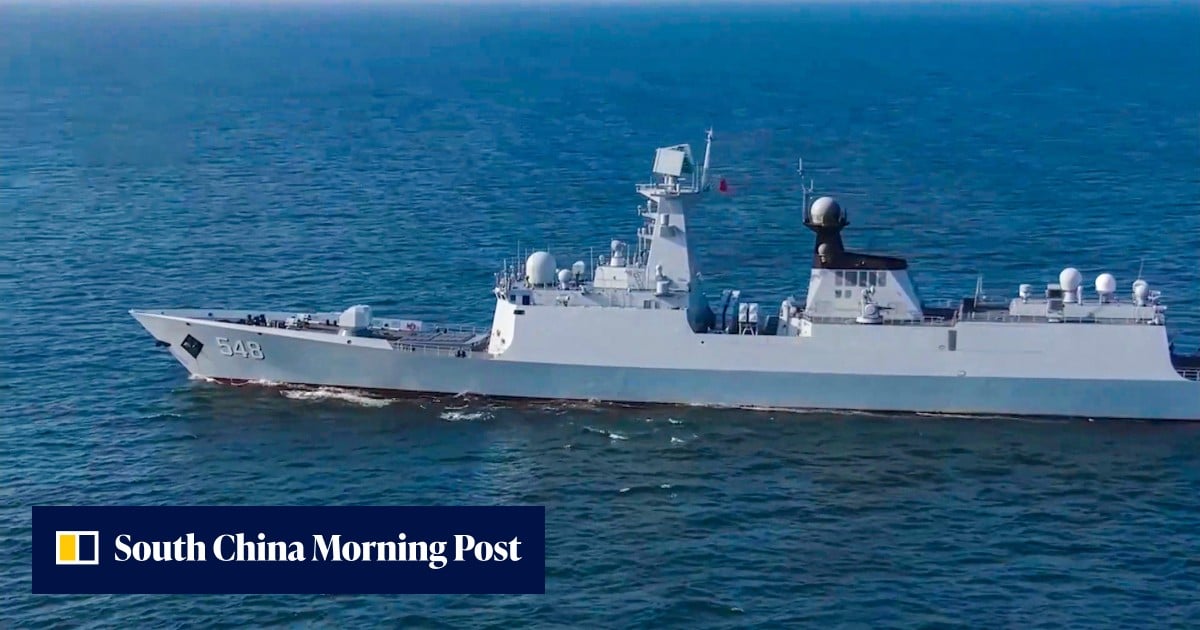
The PLA is no longer just rehearsing invasion scenarios. It is drilling, with increasing regularity, for something more surgical: a joint blockade and control operation that seals off Taiwan’s air and sea approaches.
This is not a threat to seize the island by force. It is a threat to starve it of supplies. The distinction matters enormously for everyone who ships goods, moves energy, or relies on chips made in the strait.
From amphibious landing to strangulation
The report describes a shift in PLA exercise focus. Recent drills now emphasize maritime and air blockades, joint firepower strikes, the seizure of comprehensive battlefield superiority, and amphibious landing operations — but the blockade piece is the new center of gravity.
Why blockade instead of invasion? Because blockade is deniable. It is ambiguous. It does not require boots on the ground and it does not trigger the same immediate coalition response as an outright assault. A naval quarantine around Taiwan looks a lot like a routine exercise to outside observers until it stops being one.
Beijing has never ruled out force to achieve reunification. What this report makes clear is that it now has a credible, lower-escalation alternative. It can pressure Taipei without crossing the threshold that draws the United States, Japan, and others into active combat.
The shipping lanes nobody insures anymore
Taiwan sits on some of the world’s busiest sea lanes. Roughly a third of global container traffic passes within a few hundred nautical miles of the island. Energy shipments from the Middle East and Africa funnel through the same corridors. When the PLA practices blockading these routes, it is not only targeting Taiwan — it is touching the spine of global trade.
Here is what the English-language wire coverage tends to miss: insurance markets are already pricing in risk. Hull and war-risk premiums for vessels transiting the Taiwan strait have trended upward for years. Major reinsurers in London and Munich have quietly withdrawn capacity from the zone, pushing risk onto thinner, less liquid markets. That creates a fragility that has nothing to do with missiles and everything to do with balance sheets.
If Beijing escalates from drill to actual blockade — even a limited one that targets commercial vessels rather than warships — the first casualty will not be a battleship. It will be cargo insurance. Ships will reroute. Port calls will be cancelled. Rates will spike.
Semiconductors: the silent leverage
Taiwan produces roughly 60 percent of the world’s semiconductors and nearly 90 percent of the most advanced chips. TSMC alone is the single largest contributor to the global supply of processors used in everything from smartphones to warheads.
A blockade does not require destroying fabs. It requires controlling the routes that bring in raw materials — silicon, specialty gases, precision equipment — and ship out finished wafers. The island imports virtually all its energy and most of its industrial inputs. A sustained cordon would choke production within weeks.
That is why semiconductor strategy in Washington, Tokyo, and Brussels has shifted so dramatically over the past two years. The CHIPS Act, the export controls on advanced lithography equipment, the push to diversify manufacturing to Arizona, Singapore, and Dresden — these are not accidental policy choices. They are direct responses to a risk that has moved from speculative to structural.
The Taiwan report confirms the risk is real and intensifying. But the policy response remains slow. Fab construction takes years. Supply chain redundancy is expensive and incomplete. The world still depends on an island it cannot protect.
Who wins, who loses, who blinks
Beijing wins the most from normalization. Every year the PLA practices blockade operations, the harder it becomes for outsiders to distinguish drill from preparation. Ambiguity is a weapon. Each exercise tightens the noose around Taiwan’s economic lifelines without firing a shot.
Taiwan loses strategically. Its defense budget rises — the report was accompanied by a proposed increase — but no amount of spending closes the gap against a adversary that controls the continent’s industrial base and the sea within a few hundred kilometers of its coast. The strategic situation deteriorates regardless of what Taipei does.
The United States and its allies occupy an uncomfortable middle ground. They have invested heavily in deterrence — carrier groups, missile defenses, arms sales — yet they have never clarified what a blockade would trigger. Ambiguity cuts both ways. It may deter China, but it also leaves partners uncertain about whether they will be dragged into a conflict over trade routes rather than territory.
Japan is the most exposed ally. Its energy imports from the Middle East transit waters that a PLA blockade would effectively control. A six-week disruption would send Japan’s crude stockpiles into crisis. Tokyo understands this better than almost any capital, which is why its defense posture has shifted so sharply in the past three years.
What happens next
The report signals three likely developments over the coming year.
First, PLA blockade exercises will become more frequent and more realistic. Expect drills that simulate fuel and food denial, not just military supply interdiction. The line between wartime blockade and coerced peacetime access will grow thinner.
Second, Taiwan will accelerate investments in asymmetric defense — mines, anti-ship missiles, underwater drones — designed to make blockade prohibitively costly rather than impossible. This is the logic of the porcupine strategy: you cannot prevent a lion from approaching, but you can make it bleed.
Third, the United States will face pressure to formalize its response threshold. Right now, ambiguity serves both deterrence and flexibility. But as PLA practices accumulate, the cost of remaining vague rises. Allies will ask what a blockade means. Commercial insurers will demand certainty. And every unanswered question makes escalation more likely, not less.
The blind spot in the wire
n
International news wires treat Taiwan as a political flashpoint. When exercises happen, they are reported as provocations. When reports like this one emerge, they are filed under diplomacy or defense.
The deeper story — that blockade preparation is reshaping global trade risk, semiconductor strategy, and alliance calculations — gets far less coverage. It should not. The PLA is not preparing for a single dramatic strike. It is preparing for a slow squeeze that can be applied gradually, reversed if tensions cool, and justified as something other than war.
That is a more dangerous scenario than any headline-grabbing invasion drill. Because it does not announce itself. It simply becomes normal, day by day, exercise by exercise, until the world wakes up to find that the strait is no longer open.