Germany's Nord Stream Trial Changes Everything
Germany is trying a Ukrainian for the Nord Stream sabotage -- the first time a European court is examining whether Ukraine orchestrated attacks on energy infrastructure. Here is what the case reveals about European politics, international law, and the Ukraine war itself.
The First of Its Kind
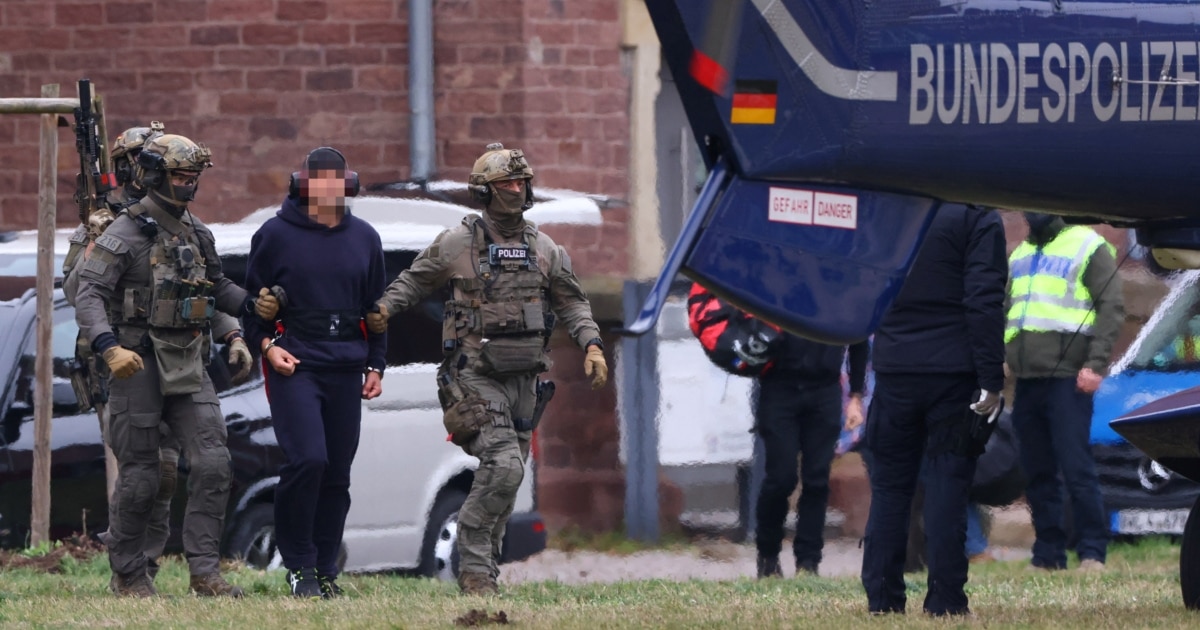
Germany is doing something almost no European country has attempted: putting a Ukrainian citizen on trial for a war crime committed against German infrastructure during a conflict that Berlin has declared it fully supports. The case began on October 14, when the Hanseatic Higher Regional Court in Hamburg opened proceedings against Serhii K., identified elsewhere as Serhiy Kuznetsov, a former military officer accused of planning and executing the September 2022 sabotage of the Nord Stream gas pipelines.
This is not a routine prosecution. It is a legal event with the potential to rearrange European politics, redefine the framing of the Ukraine war, and force Berlin to confront a contradiction it has spent three years sidestepping: the tension between unconditional support for Kyiv and the rule of law when that support appears compromised.
German prosecutors have gone further than naming a suspect. They have stated, on the record, that Kuznetsov and others acted “on behalf of state authorities in Ukraine.” That language shifts the case from individual criminal conduct to alleged state-sponsored sabotage – a classification that could reframe the entire conflict in international courts and political discourse.
Kyiv denies involvement. Kuznetsov denies involvement. But the question the trial raises is not whether one man planned an operation. It is whether Germany, the Ukraine war’s most important military backer, is willing to examine evidence that may implicate its ally’s state apparatus, and what happens when that examination produces uncomfortable results.
Who Is Serhii K.?
Kuznetsov is a former Ukrainian military officer and professional diver. German investigators say he was the ringleader of a group that hired a yacht in September 2022, descended to the seabed near the Danish exclusive economic zone, and placed explosives on both Nord Stream 1 and Nord Stream 2 – the twin pipelines that carried Russian gas directly to Germany, bypassing Ukraine and Poland.
The blasts rendered the pipelines inoperable. They remain so today. An estimated two thousand cubic meters of methane escaped into the atmosphere over several days, creating the largest known intentional release of greenhouse gases in history.
Western governments, including Germany’s, initially blamed Russia. The assumption was straightforward: Moscow had destroyed its own infrastructure rather than let Ukraine or Europe control it. That narrative held for months, then years.
By 2023, German investigators had quietly pivoted. Internal intelligence assessments, leaked to German media, suggested a different story – one in which Ukrainian divers, operating with at least the knowledge of elements within Ukraine’s security apparatus, carried out the sabotage.
The motive, according to the German indictment, was economic warfare. By destroying Nord Stream, Kuznetsov and his supposed co-conspirators aimed to “permanently halt gas deliveries” and prevent Russia from using pipeline revenue to finance its war effort. The logic mirrors arguments made repeatedly in Western capitals: that cutting off Russian energy income weakens Moscow’s capacity to wage war.
Whether that logic holds is separate from the legal question before the Hamburg court. The court must determine whether Kuznetsov planned and executed the operation, whether he acted on orders from Ukrainian state authorities, and whether those authorities included anyone beyond the rank-and-file military.
The State-Authority Claim
The most consequential element of the prosecution’s case is not the explosion itself but the allegation that it was authorized by the Ukrainian state.
Prosecutors have not named President Volodymyr Zelenskyy or any member of his administration. Stefan Meister of the German Council on Foreign Relations told RFE/RL that “there we still have no proof that they were really involved.” The indictment stops short of that claim. But by framing the operation as conducted “on behalf of state authorities,” prosecutors have opened a door that cannot be closed: the possibility that the sabotage was not the work of rogue soldiers but of a coordinated policy.
That distinction matters legally and politically. If Kuznetsov acted alone, he is a criminal. If he acted on orders from Ukrainian authorities, the case becomes an allegation of state-sponsored sabotage against a fellow European nation – an allegation that could, in principle, trigger proceedings at the International Criminal Court or shape future negotiations over reparations, accountability, and the legal architecture of the Ukraine war.
Russia has seized on the evidence. Moscow has long argued that the Nord Stream attack was a false-flag operation designed to provoke Western involvement. The German investigation’s pivot toward Ukrainian culpability complicates that narrative without resolving it. If Ukraine did carry out the sabotage, was it acting independently, or was it encouraged or enabled by Western intelligence? Those questions remain unanswered, and the trial will not answer them.
The Evidence Problem
Roman Chervinskiy, identified in German media as Kuznetsov’s commander, told RFE/RL’s Ukrainian Service in July that “the Germans actually have no evidence whatsoever that Serhii took part in this operation, if it even took place.”
Kuznetsov’s Italian lawyer, Nicola Canestrini, echoed that assessment, telling RFE/RL there is “no smoking gun” in the case. The prosecution’s strongest piece of evidence appears to be a phone call Kuznetsov made while in Italian custody, in which he reportedly told his wife that a lawyer had advised him to admit the operation was “an official military operation” and that his commander should clarify they were not just “two crazy military men.”
German authorities secretly recorded the call. Canestrini has argued that the remark was taken out of context and does not constitute a confession. The defense is expected to press that point aggressively.
Other suspects are in different legal predicaments. Vladimir Z. is in custody in Croatia, fighting extradition. He was previously detained in Poland, where a judge released him after ruling that if Ukraine was responsible for the Nord Stream attack, it was a “just” act – a decision that drew international attention and criticism from German officials. Another suspect, identified by Polish lawyers as Volodymyr Zhuravlyov, was working in Croatia as an adviser on a Hollywood film about Nord Stream when he was arrested.
None of these cases is simple. Each involves jurisdictional complications, extradition disputes, and the fundamental difficulty of prosecuting a crime that occurred in international waters, alleged to have been committed by citizens of one country against infrastructure owned by a company majority-controlled by the state of a second country, during a conflict involving a third.
The Political Earthquake in Germany
The trial will not unfold in a vacuum. It is arriving at a moment of acute political fragility in Germany.
The Alternative for Germany (AfD), the main opposition party, has won key regional elections and is piling pressure on Chancellor Friedrich Merz’s government over Ukraine, immigration, and economic policy. The AfD has long argued that German support for Ukraine is misguided, that Kyiv is a failed state, and that Berlin should pursue closer ties with Moscow. Evidence of Ukrainian involvement in the Nord Stream attack, the party has argued, would validate every one of those claims.
Meister noted that point directly: “It would resonate also in parts of German society.” The AfD’s narrative is not built on legal evidence. It is built on political intuition – the sense that Germany’s Ukraine policy has grown costly, unpopular, and detached from national interest. A guilty verdict in the Nord Stream case would feed that intuition with apparent legitimacy.
Merz has responded by doubling down. In early October he traveled to Kyiv with a new aid package that includes joint production of interceptors for Russian drones. That signal – of continued military integration between Berlin and Kyiv – was designed to pre-empt the political damage a conviction could cause. It is also a recognition that the government sees the trial not merely as a legal proceeding but as a political event with consequences for Germany’s entire Eastern policy.
What a Conviction Would Mean
A guilty verdict would not end German support for Ukraine. Mykhaylo Honchar of the Kyiv-based Strategy XXI Global Studies Center told RFE/RL that the government would avoid steps undermining the bilateral relationship regardless of the outcome, given what he called “real Russian policy, which is directed against the EU and NATO, and Russia’s anti-German rhetoric.”
But a conviction would change the terms of that relationship. It would introduce a formal, judicial finding that elements of the Ukrainian state participated in sabotage against German infrastructure – an act that, under normal circumstances, would be treated as an act of war. Germany has not treated it as such. It is treating it as a criminal case. That distinction matters, and it may not hold indefinitely.
In Ukraine, the response would be immediate and predictable. Honchar predicted it plainly: “Many people will say: ‘If our guys did it, they are heroes.’” The operation, after all, achieved exactly what many Ukrainian officials publicly wanted – the permanent severing of the energy link between Russia and Germany, a link that Moscow had used for decades to divide Europe and finance its war machine. Whether that justification absolves the act in Ukrainian public opinion is beside the point. It will shape the political reaction.
The Legal Precedent
Beyond politics, the trial carries legal significance that will outlast the courtroom drama.
This is the first European war-crimes trial examining whether a NATO-supported state conducted sabotage against the infrastructure of its patron. No precedent exists for how to handle such a case – not because the act is unprecedented (sabotage occurs regularly in conflict zones) but because the political context is. Germany has invested more in Ukraine’s defense than any country except the United States. It has framed the conflict as a defense of European security architecture. And it is now prosecuting a Ukrainian for an act that, if proven, targeted German soil.
The legal question is whether the Nord Stream pipelines constituted a legitimate military target. Kuznetsov’s German lawyer, Jes Meyer-Lohkamp, has argued that they did not – that gas pipelines are civilian infrastructure and that attacking them, even to deprive an adversary of revenue, violates international humanitarian law. The prosecution must counter that argument, and in doing so, define the legal boundaries of economic warfare in a conflict that has already stretched those boundaries to their limits.
If the court finds that the pipelines were legitimate targets, it sets a precedent that could justify similar operations against energy infrastructure in future conflicts. If it finds they were not, it establishes a line that may constrain Ukraine’s allies as well as Ukraine itself.
The Unanswered Questions
The trial will run until at least February, with two hearings per week scheduled. It may run longer. The evidence presented will not resolve the larger questions the case has generated.
Did Ukrainian state authorities authorize the operation? How deep did that authorization go? Were Western intelligence agencies aware? Was the attack planned before Russia’s full-scale invasion, or in response to it? What role did Poland, which released one of the suspects, play in the investigation? None of these questions will be answered conclusively in a German courtroom.
What the trial will do is force Germany, a country that has spent three years presenting itself as Ukraine’s steadfast defender, to examine evidence that may implicate its ally’s state in an act of sabotage against German infrastructure. That examination is the point. It is also the risk.
The outcome will matter not because it will deliver justice for the destruction of Nord Stream – the pipelines are gone, the methane has dissipated, the economic consequences are already priced in – but because it will reveal how far European nations are willing to pursue legal accountability when that pursuit conflicts with political alliance. Germany has chosen to proceed. The question now is whether it is prepared for what the proceedings may produce.