China's Quiet Robot Revolution Is Leaving Korea Behind
While the world fixates on humanoid robots, China is quietly deploying over 2 million industrial robots through state-backed manufacturing — a scale-driven revolution Korea is struggling to match.
The Humanoid Distraction
The Second World Humanoid Robot Games in China recently put dancing, boxing, and sprinting machines center stage. They make for spectacular video. But they represent only the visible tip of a far larger transformation happening in Chinese factories right now.
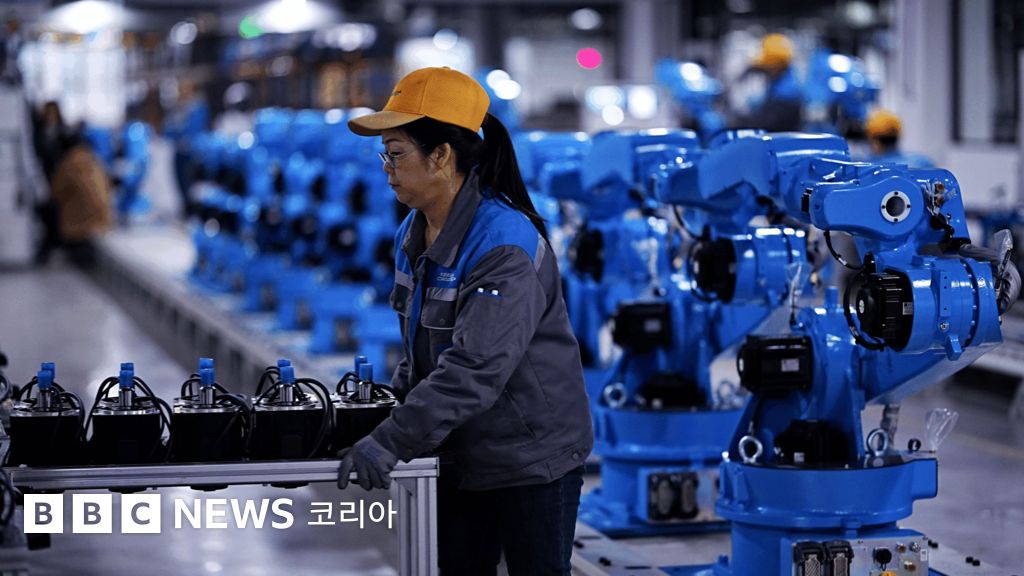
Behind closed doors, over 2 million non-humanoid industrial robots are welding, painting, lifting, and assembling parts around the clock. They do not resemble humans. They do not need breaks. And they are not the main attraction.
China already manufactures more than half of the world’s industrial robots. The expansion continues at a pace that is difficult to overstate. While Silicon Valley and Seoul obsess over humanoid design, Beijing is winning the volume game — and volume is what reshapes global manufacturing economics.
Who Is Behind the Machines
The 200-billion-yuan (€26 billion) national plan championed by President Xi Jinping is not a vague research grant. It is a targeted industrial policy that has already produced results. The Hangzhou Mechanical Engineering Institute — one of thousands of new vocational schools being built across the country — is a case study in scale. Students as young as 15 learn robotics, aerospace engineering, and rare-earth processing, all under one campus. Employers are already signing up graduates before they finish their training.
Qian Tianyou, a 28-year-old instructor there, puts it plainly: if you are not essential to AI and robotics, you will be left behind. His students, many of them focused intently on code rather than conversation, appear to have absorbed the message.
This is education designed for a specific national outcome — not general learning. The goal is to flood the factory floor with workers who can program, maintain, and upgrade the machines replacing them.
The Supply Chain Moat
What makes China’s robot push genuinely dangerous to competitors is the ecosystem surrounding it. According to Susan Velleja, secretary general of the International Federation of Robotics, a company building robots in Shenzhen can source every component needed for a robotic arm within an hour. In Europe, the same supply chain can take a full week.
That speed difference compounds across millions of units. It means faster iteration, cheaper production, and quicker deployment. It also means China controls the physical infrastructure of advanced manufacturing — motors, batteries, electronics, gears, sensors — the entire physical stack that turns AI into action.
The one area where the United States still holds a clear lead is the AI “bRAIN” itself. Chinese startups including DeepSeek and Moonshot are closing the gap fast, often through open-source collaboration that circumvents American semiconductor export controls. But the latest assessment from analysts is blunt: the next battleground is not who builds the best language model, but who can deploy AI across the widest fleet of physical machines.
The Demographic Gun
Beijing is accelerating automation for a reason. Official estimates project that by 2035, more than a third of China’s population will be over 60. The working-age population is shrinking by roughly 6 million people annually — a number接近 the entire population of France. The factory floor cannot absorb that shock without machines filling the gap.
The risk, of course, is that the transition outpaces the social infrastructure. Over 120 million Chinese workers remain employed in manufacturing. Too rapid automation threatens wages and livelihoods on a scale that could destabilize communities built around factory employment. The government has not published any assessment of how these displaced workers will be absorbed.
What is visible is a growing mismatch. Youth unemployment already sits at roughly one in five. Vocational schools like the one in Hangzhou are positioned as an escape hatch — but they train for jobs that may themselves be automated within a decade. Chen’s own words carry that tension: “I don’t know,” he told his students when asked about the future. “Technology is changing too fast.”
The Korean Blind Spot
South Korea has spent years comparing itself to China on robotics. The conversation has been dominated by the same humanoid narrative playing out in Chinese media — a framing that plays to Seoul’s strengths in precision engineering while obscuring Beijing’s real strategy.
Korea’s approach has been narrower and slower. The country’s robot adoption rate is high but concentrated in specific sectors, and the talent pipeline is far smaller. China’s vocational school model, operating at scale, produces thousands of robotics-trained graduates annually. Korea does not have a comparable system feeding factory floors.
The gap matters beyond the bilateral relationship. Korea’s automotive, electronics, and shipbuilding industries — the pillars of its export economy — depend on just-in-time manufacturing that increasingly relies on robotic flexibility. China is now building that capability domestically at lower cost and higher volume. Korean suppliers in these sectors face a double squeeze: losing domestic orders to Chinese automation while competing in third markets against Chinese-made robots that undercut on price.
Lip Motors, an electric vehicle maker with a factory near Hangzhou, illustrates the trajectory. The company says its stamping, welding, and painting lines are already 100 percent automated. The remaining human workers perform final inspections. The shift from assembly line to quality control is well mapped. The timeline is measured in years, not decades.
Who Wins and Who Loses
The winners are clear. Chinese manufacturers gain a structural cost advantage. Chinese robot makers like CRP Technology — which has been building robotic arms for nine years and says a single unit can replace over 90 percent of repetitive work — are entering a gold rush with home-field advantage. Foreign automakers and electronics firms producing in China benefit from the densest robotics ecosystem on Earth.
The losers are harder to identify because the displacement is still incoming. Chinese factory workers, European manufacturers competing on cost, and Korean suppliers face the sharpest exposure. Each faces a different timeline, but the direction is the same.
What remains uncertain is whether China’s automation wave can offset the deeper structural problems weighing on its economy — the property crisis, local government debt, weak consumer demand. Robots do not pay mortgages. They do not buy homes or cars. The government may be solving one employment problem while deepening others.
What Comes Next
The race is no longer about who builds the smarter robot. It is about who builds the most robots, deploys them fastest, and teaches the largest number of people to keep them running. China is currently winning all three legs of that race.
Korea’s response will determine whether it remains a robotics competitor or becomes a supplier to Chinese automation. The choice is not between adopting more robots and adopting fewer — the direction is already set. The question is whether Seoul invests in the ecosystem that makes domestic robot deployment sustainable, or continues to watch the scale game unfold from the sidelines.