CIA Chief Ratcliffe's Secret Moscow Trip Signals a New Backchannel Era
John Ratcliffe's unannounced trip to Moscow is a historic break from US-Russia protocols that reveals where real diplomacy happens now — and what's being traded behind closed doors. The visit coincides with stalled Ukraine talks and a prisoner swap that may have paved the way.
The Unannounced Flight That Spoke Volumes
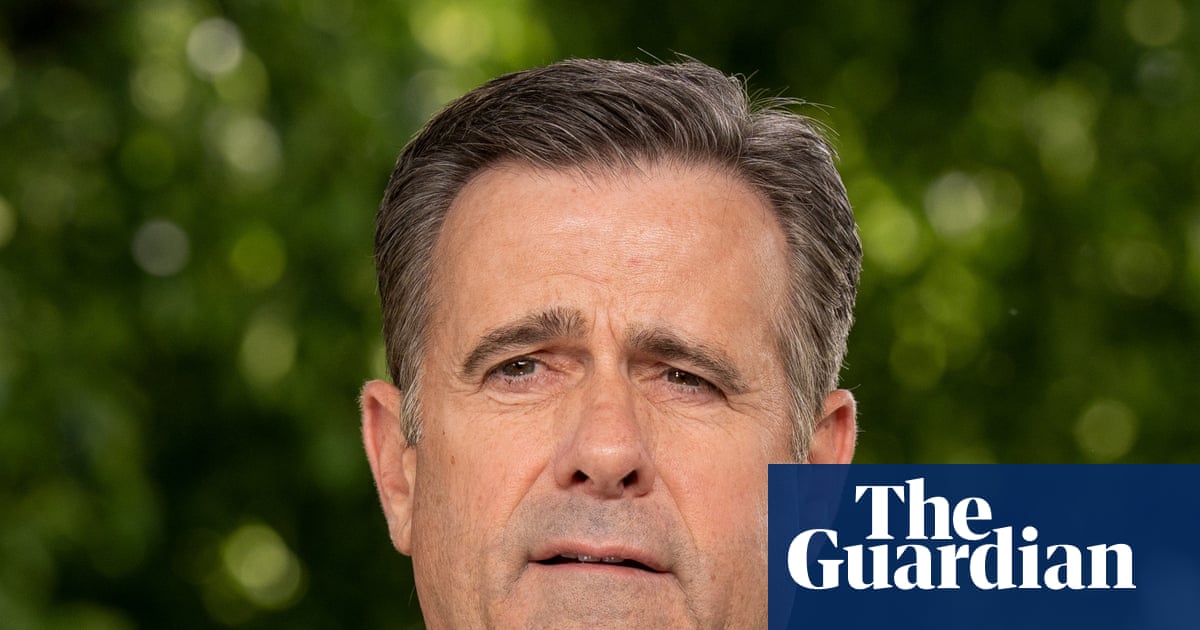
A C-17 Globemaster III took off from Joint Base Andrews on a Sunday morning last week, bound first for Latvia, then onward to Moscow. Flight tracking data made the route visible to anyone watching — a commercial breadcrumb trail left by aircraft that typically operate outside public scrutiny. What wasn’t visible, until now, is that the aircraft carried CIA Director John Ratcliffe on what CBS News and Axios confirm was his first known trip to Russia since taking office.
The visit produced no press conference, no joint statement, no photo opportunity. The White House declined to comment. The CIA said nothing. But the silence is itself a message: this was a working visit, conducted on intelligence backchannels that have become the primary conduit between Washington and Moscow as formal diplomacy stalls. In an era where diplomatic cables are routinely monitored and embassy meetings are photographed before participants even sit down, the absence of documentation is the documentation.
The Financial Times reported that the Trump administration asked Kyiv to pause long-range strikes on major Russian cities during the visit. That request alone tells you how sensitive the talks were — and how much leverage Ukraine still holds over a process that appears to be moving without its consent. A pause on deep-strike operations, even a temporary one, represents a tangible concession extracted from a partner nation. The optics are unmistakable: Washington is managing Moscow, not just supporting Kyiv.
What Ratcliffe’s Visit Reveals About Where Power Actually Lives
The CIA’s role in hostage diplomacy is not new. The agency mediated the 2024 prisoner exchange that secured the release of Wall Street Journal reporter Evan Gershkovich and Marine veteran Paul Whelan — a swap that required navigating a labyrinth of Russian detention cases, third-party guarantees, and last-minute legal maneuvering. It has facilitated other discrete swaps between Washington and Moscow in the years since. What is new is the scale and visibility of this trip — a sitting CIA director physically traveling to the Russian capital, on a military transport plane, without advance notification.
Under previous administrations, a CIA director traveling to Moscow would have triggered notifications to Congress, coordinated messaging through the State Department, and likely drawn protests from Russian opposition figures monitoring American officials’ movements. The fact that none of that occurred suggests the Trump administration is deliberately operating outside established norms — not recklessly, but with the kind of controlled unpredictability that characterizes this administration’s broader foreign policy approach.
This suggests Ratcliffe was either testing the temperature for higher-level talks or handling a time-sensitive exchange that couldn’t wait for a State Department courier. The fact that Moscow freed a former US Marine earlier this month — a man detained since 2022 amid concerns about his health — could indicate the prison swap was the trigger. Russian authorities had repeatedly cited medical reports raising questions about the condition of Western detainees, and the timing of this release, just days before Ratcliffe’s arrival, is difficult to dismiss as coincidence.
Or it could mean the visit was about something far larger: the war in Iran, which remains a persistent bone of contention between the two capitals. On Monday, Treasury Secretary Scott Bessent announced a new economic sanctions strategy designed to isolate Iran — a move that directly intersects with Russian interests, given Moscow’s deepening military cooperation with Tehran. Ratcliffe may have traveled to Moscow to ensure the Kremlin understood the stakes, or to negotiate some quiet accommodation on Iranian policy in exchange for concessions elsewhere. The interconnection between Ukraine, Iran, and the broader Russian sanction regime creates a negotiation landscape where every issue is linked to every other.
The Stalled Ukraine Peace Process and the Shadow Track
US-brokered talks aimed at ending Russia’s invasion of Ukraine have stalled, their public framework insufficient to bridge the gap between Kyiv’s territorial demands and Moscow’s entrenched positions. Public diplomacy offers no pathway forward — each side has staked out positions that would be politically catastrophic to abandon publicly. But the Ratcliffe visit proves that backchannels are very much alive, operating at a level of intimacy that formal negotiations cannot replicate.
Intelligence officials on both sides have been meeting throughout the conflict, often through third-party venues in Turkey or the Middle East, where the heat and the historical connections provide cover for conversations that would be dangerous in Geneva or Vienna. Moscow may have decided that bringing the CIA director to Russian soil was a way to demonstrate domestic credibility — showing its population that Washington still needed to talk — while keeping options open for future negotiations that might eventually surface publicly.
The request for Kyiv to pause strikes during the visit is telling in ways that extend beyond the immediate tactical question. It suggests Washington still views Ukraine as a party to a process it doesn’t fully control, and that the pause was meant to prevent actions that could derail whatever was being discussed behind closed doors. This is the kind of quiet pressure that rarely makes headlines but shapes outcomes. It also reveals a second-order effect: Ukrainian military planners have likely already adjusted their operational calendars, compressing strike windows or redirecting assets to targets outside the restricted zones. The pause wasn’t just a political signal — it altered the physical landscape of the conflict in real time.
Ukraine’s leadership faces a dilemma that will only intensify: comply with American requests and risk appearing weak at home, where the political culture prizes defiance, or refuse and risk losing Washington’s support entirely. The pause was likely temporary and tactical, not strategic — a single window rather than a sustained posture change. But it signals that the US is prioritizing dialogue with Moscow over unrestricted Ukrainian military action, a shift that could redefine the war’s trajectory over the coming months. If subsequent pauses follow the same pattern, the conflict could gradually narrow into a set of negotiated boundaries rather than culminating in a decisive military outcome.
The Broader Signal: A New Normal in Great Power Handling
Ratcliffe’s trip reflects a broader trend that extends well beyond US-Russia relations: as formal diplomacy between major powers deteriorates, intelligence backchannels have become the default mechanism for managing crises. The CIA director traveling to Moscow is unprecedented in modern times — not because such visits are illegal or forbidden, but because they represent a level of engagement that bypasses traditional diplomatic protocols entirely. This is diplomacy by osmosis rather than proclamation, conducted in rooms where the walls have better soundproofing than the record.\n
This doesn’t mean the relationship has improved. It means both sides recognize the cost of complete separation. Nuclear risk reduction, prisoner exchanges, conflict de-escalation — these require some form of communication, and when the State Department can’t deliver it, the intelligence community steps in. The question is whether backchannel diplomacy can survive the political pressures on both sides. In Washington, any appearance of softness toward Putin is toxic, and the political cost of being seen as cozying up to the Kremlin is immediate and severe. In Moscow, any concession to Washington is treated as weakness by domestic hardliners who still remember the humiliations of the 1990s.
Ratcliffe’s visit suggests the Trump administration is willing to absorb domestic criticism for the sake of keeping channels open. That’s a calculated risk — and one that could pay dividends if it leads to meaningful progress on Ukraine, Iran, or strategic stability. It could also backfire if the talks produce nothing and the perception grows that Washington is engaging with Moscow without sufficient leverage, handing Putin a propaganda victory without extracting tangible returns.
There are also second-order consequences that extend beyond the immediate bilateral relationship. Other adversarial powers — Beijing, Tehran, Pyongyang — are watching closely. If Moscow sees that Washington is willing to engage through backchannels, it may feel emboldened to test the limits of what it can extract. Conversely, if the trip yields concrete results, it could provide a template for engaging other adversaries on issues where formal channels are blocked. The implications ripple across the entire architecture of great power competition.
What Comes Next
The absence of an immediate statement from either side doesn’t mean nothing happened. It means whatever was discussed is being kept confidential — by design, and by the nature of the people discussing it. Intelligence backchannels operate on a logic of plausible deniability that both sides understand and respect. The next few days should reveal whether a prisoner swap followed, whether Ukraine strike pauses were extended, or whether the visit was purely exploratory — a scouting mission rather than a negotiation.
What’s clear is that the era of complete US-Russia isolation is over, replaced by a more pragmatic — if less transparent — model of crisis management. Ratcliffe’s flight path from Andrews to Moscow may have been the most revealing document of all: a reminder that even when governments pretend not to talk, they never stop. The channels existed long before this trip, and they’ll continue to operate long after the headlines fade. What has changed is not the existence of the backchannel, but its visibility — and the willingness of the most powerful intelligence official in the United States to walk through its door.