The CIA Chief's Secret Moscow Trip Exposes a Fracturing Deterrence
John Ratcliffe's unannounced visit to Moscow — conducted while the US asked Kyiv to suspend strikes — reveals how far US-Russia relations have shifted from formal diplomacy to shadow contingency management.
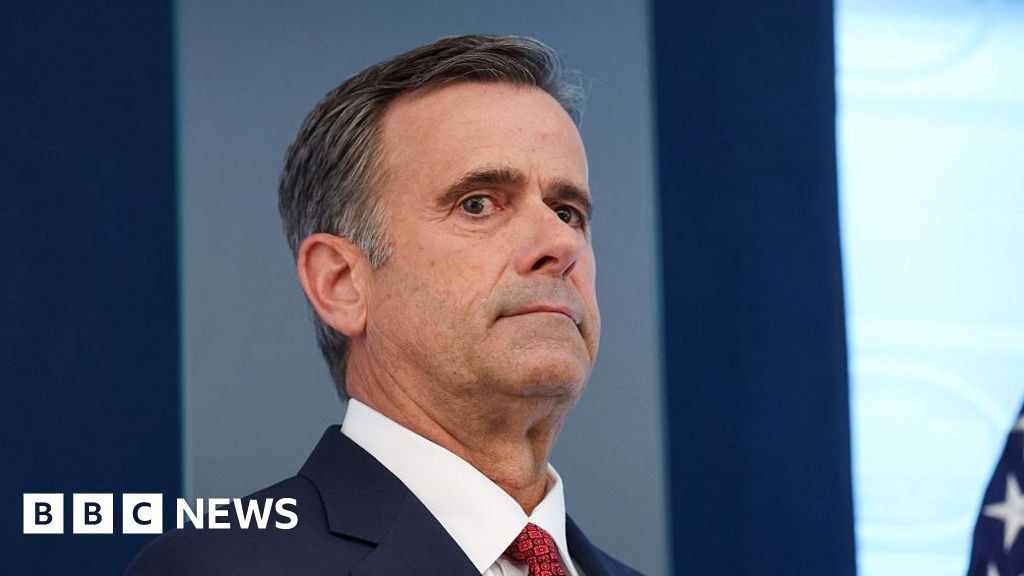
The Plane That Spoke Louder Than Words
A C-17 transport aircraft touched down at Moscow’s Vnukovo airport on Tuesday morning, and in that single act, a great deal was said about nothing at all. The plane had departed Riga five hours earlier. It returned shortly before 5 p.m. GMT. No press pool accompanied it. No embassy spokespeople issued advance briefing materials. John Ratcliffe, the director of the Central Intelligence Agency, was on board.
The United States and Russia had not announced the visit. Neither side has confirmed who Ratcliffe met or what was discussed. That silence, however, is itself data. In the ecosystem of US-Russia relations — where formal diplomatic channels have narrowed to a trickle since the full-scale invasion of Ukraine — an unannounced, short-notice trip by the top American spymaster is about as close to a signal flare as you are likely to get.
The Strike Suspension That Says Everything
Perhaps the most revealing detail emerged not from Washington or Moscow but from Kyiv. A senior Ukrainian official told CBS that ahead of Ratcliffe’s trip, the United States asked Ukraine to suspend strikes until the delegation had left Russian territory. That request alone tells you how the power architecture has rearranged itself. Kyiv is no longer the primary decision-maker on its own war. Washington sets the tempo, even when the conversation is happening between enemies.
This is a practical demonstration of deterrence fracturing in real time. The US cannot afford to let Ukraine’s battlefield activity intersect with an active backchannel between American and Russian intelligence chiefs. The implication is uncomfortable for Kyiv and its Western backers: escalation management between Washington and Moscow now takes precedence over Kyiv’s operational calendar.
Two Threads, One Destination
British military attaché John Foreman, who served in Moscow between 2019 and 2022, flagged two likely drivers for the visit. The first is escalation management. Speculation about recent drone activity in Germany being linked to Russia has been circulating, and when drones appear in NATO territory, Washington needs a direct line to Moscow’s intelligence establishment to assess intent — or at least to prevent miscalculation from spiraling.
The second thread is prisoner releases. Ratcliffe has handled these negotiations before. He played a role in securing the freedom of Ksenia Karelina, the Russian-American citizen jailed for over a year on accusations of supporting Ukraine. The CIA was also involved in the 2024 swap that freed Wall Street Journal reporter Evan Gershkovich, former Marine Paul Whelan, and journalist Alsu Kurmasheva. These are not glamorous operations, but they are the work that keeps relationships from freezing entirely.
Both threads point to the same conclusion: Washington and Moscow are no longer conducting a relationship. They are conducting a series of contingency operations.
The Architecture of Absence
What makes Ratcliffe’s trip notable goes beyond the rarity of in-person talks between high-level American and Russian officials. It is about what level of government is doing the talking now. Under normal circumstances, visits of this nature are handled by the State Department or, in cases of genuine crisis, by the National Security Advisor or even the President. The fact that the CIA director is making the trip suggests that the conversation is happening in a space below formal diplomacy — the kind of space where deniability is built into the architecture and where outcomes can be adjusted without political embarrassment.
This is not new in absolute terms. The CIA has long served as a backchannel to adversarial capitals. But the frequency and visibility of such trips have changed dramatically. During the Biden administration, the few high-level meetings that occurred between American and Russian officials typically took place in third countries under tightly managed conditions. An unannounced landing at Vnukovo — with flight tracking data confirming every leg — is a different posture entirely.
Trump’s Second Term and the Quiet Realignment
Ratcliffe appears to be one of the highest-ranking US officials to visit Russia during Donald Trump’s second term. Trump met Vladimir Putin at a summit in Alaska last year, but that meeting produced no breakthrough. Subsequent US-led peace talks between Russia and Ukraine have stalled. The public diplomacy pipeline is clogged. What remains is the shadow infrastructure — intelligence contacts, prisoner swap operators, escalation managers.
The Trump administration has never been shy about bypassing traditional diplomatic channels. But this trip is notable because it operates through the intelligence community rather than through the White House directly. That distinction matters. It signals that even within an administration willing to flex unconventional approaches to foreign policy, there are lines that are not yet ready to be crossed publicly. The visit is deniable precisely because it has to be.
Who Wins, Who Loses
In the immediate term, Washington gains a communication channel it otherwise would not have. Moscow gains visibility into American priorities and possibly some leverage over the timing of Ukraine’s operations. Ratcliffe himself gains proof that he can still operate in environments that have become increasingly hostile to American officials.
Kyiv loses something less quantifiable but more important. Every time the United States asks Ukraine to pause strikes to accommodate a backchannel negotiation, the credibility of Kyiv’s sovereignty erodes further. The war is fought on Ukrainian soil. The decisions are increasingly made elsewhere. That dynamic was always present but has intensified as formal diplomacy has退潮.
What Happens Next
No one should expect an announcement from either government detailing the substance of the talks. That is not how this work operates. The most likely outcome, if the escalation-management thread was dominant, is a tacit understanding about drone activity or other provocative actions that both sides can publicly deny and privately enforce. If the prisoner-release thread was primary, expect another swap deal to emerge months from now, preceded by vague statements about “humanitarian considerations.”
The deeper story, though, is structural. The fact that the head of the CIA is flying to Moscow unannounced in 2025 — a decade after Russia’s full-scale invasion upended the post-Cold War order — is evidence of a relationship that has settled into a new and uneasy equilibrium. Deterrence is not broken. It is being managed around, channel by channel, operator by operator, in rooms where no one takes notes.
That is not a sign that the world is safer. It is a sign that the institutions designed to prevent catastrophe have been replaced by something smaller, quieter, and far less accountable.