China's CXMT Races Into 4F DRAM — and It Changes Everything
Chinese memory maker CXMT aims to commercialize 4F-square DRAM this year, bypassing EUV restrictions with a structural innovation that lets Samsung and SK Hynix fight on new terms.
The Move No One Expected
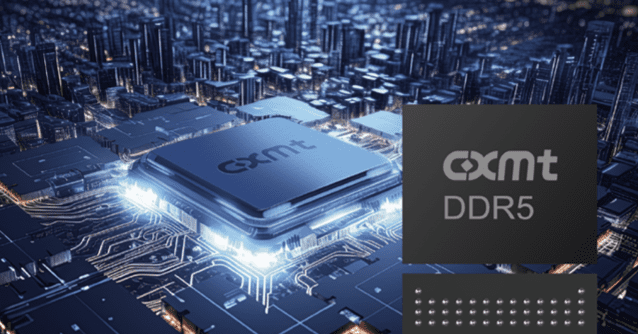
CXMT, China’s largest DRAM manufacturer, says it will ship 4F-square DRAM-based DDR5 server modules by the end of this year. The announcement lands like a brick through a window in the global memory industry — not because 4F-square itself is new, but because CXMT is pursuing it without the one tool most manufacturers consider essential: EUV lithography.
The two leaders, Samsung and SK Hynix, have both been developing 4F-square variants. Neither has commercialized one yet. Samsung is targeting its sub-10nm VCT (vertical channel transistor) design, internally called D0a-V. SK Hynix has parallel efforts. CXMT, meanwhile, claims it will beat them to market with a DUV-only path at the 14-nanometer node.
If the company hits that target, the implications reach far beyond a single product line.
Why 4F-Square Matters
DRAM cell architecture has followed a predictable path for years. The “F” represents the size of the feature — roughly the pitch of the cells on a chip. “6F-square” has been the industry standard, meaning each cell occupies roughly 6 square units of area. Moving to 4F-square cuts that footprint significantly, boosting cell integration density by more than 50 percent. That translates directly into higher capacity, better performance, and improved power efficiency — exactly the combination data-center builders and AI chip designers are hungry for right now.
The trick is doing it without new process nodes. Most companies were planning to leap to 4F-square only after moving to their most advanced (and most expensive) EUV-based processes. CXMT’s bet is different: apply the denser cell structure to a more mature 14-to-11-nanometer DUV process, where the company already has manufacturing experience.
It is a bet on architectural ingenuity over process sophistication. And it is precisely the kind of asymmetry that makes this story worth watching.
The EUV Problem and the DUV Workaround
CXMT cannot acquire EUV lithography equipment. US export controls have made that impossible, and the restrictions have only tightened since the company was added to various entity lists. The company has been producing DRAM at older nodes using DUV (deep ultraviolet) tools for years, but those tools hit physical limits as memory cells shrank.
Here is where the 4F-square approach becomes strategic. By restructuring how the transistor sits inside the cell — what CXMT calls “Vertical Surrounding Gate” or VSG — the company can achieve higher density without needing shorter-wavelength light. The trade-off is that moving to 11 nanometers and below will eventually require EUV anyway. But for the next two or three generations, DUV with a 4F-square architecture should be competitive.
That window is significant. The global memory market is currently constrained by high demand for AI infrastructure, and every company building data centers needs DDR5 server modules in volume. If CXMT can supply a meaningful share — even at a performance disadvantage — it adds supply and exerts downward pressure on prices that benefit everyone downstream.
The Technical Hurdles Are Real
Several experts note that moving to 4F-square introduces serious engineering challenges that CXMT must solve before volume production. The floating-body effect, where charge accumulates inside the transistor channel and degrades performance, requires new mitigation strategies. Vertical channel transistors need damage-free etching — or at least minimal-damage processing — to function correctly. Leakage current must be controlled, possibly through an additional back-gate structure.
The source material indicates CXMT is still in the evaluation phase, measuring data retention, junction leakage, and contact resistance. The company is reportedly using conventional silicon channel material rather than novel semiconductors, which simplifies the integration story but may limit ultimate performance.
Samsung and SK Hynix are working through similar hurdles at their respective 4F-square nodes. The difference is that they have EUV available when they are ready to go further down the roadmap. CXMT does not. That constraint will define how far the company can push this architecture.
The Patent Question
CXMT has filed more than 300 patents related to its 4F-square work. The volume alone is notable, but quality matters more in memory — a field where patent thickets are dense and incumbents hold deep portfolios. Samsung and SK Hynix each hold substantial 4F-square related IP. A direct patent clash over the core architecture is unlikely to favor CXMT simply because it filed first or most frequently.
There is a cautionary precedent from the NAND side. YMTC, another Chinese memory maker, built a compelling hybrid-bonding approach that ultimately relied on foundational patents held by Samsung. The lesson was that creative process innovation does not automatically translate into patent freedom. CXMT faces the same dynamic, though the 4F-square field is less locked down than NAND was when YMTC emerged.
What This Means for the Market
The immediate impact is on supply and pricing. CXMT’s entry with 4F-square DDR5 modules would add a third major supplier to the high-end server memory market, which has been effectively a duopoly. More suppliers mean more negotiation leverage for buyers — Microsoft, Amazon, Google, and the growing cohort of AI infrastructure builders all feel the memory pinch acutely right now.
The longer-term impact is geopolitical. Every nanometer CXMT achieves with DUV reduces the leverage that export controls give to US policymakers. The company does not need to reach the most advanced node to make a dent in the market. It needs to produce competitive capacity at 14 nanometers, and that is achievable.
Samsung and SK Hynix will respond. Both companies have confirmed they are on track to produce 4F-square prototypes by late 2028 at the earliest. The race is no longer about who reaches the most advanced node first — it is about who can ship competitive volume at scale, and at a price that keeps data-center operators from breaking into sweat.
CXMT just changed the terms of that race.