China's CXMT Is Quietly Attacking Samsung's Cash Cow While the West Watches HBM
CXMT's formal declaration of fifth-generation DRAM mass production signals a deliberate strike at the profitable mainstream memory market where Samsung and SK Hynix still make their money. The West is watching HBM — but the real battle is happening in DDR.
The Announcement Nobody in Silicon Valley Is Talking About
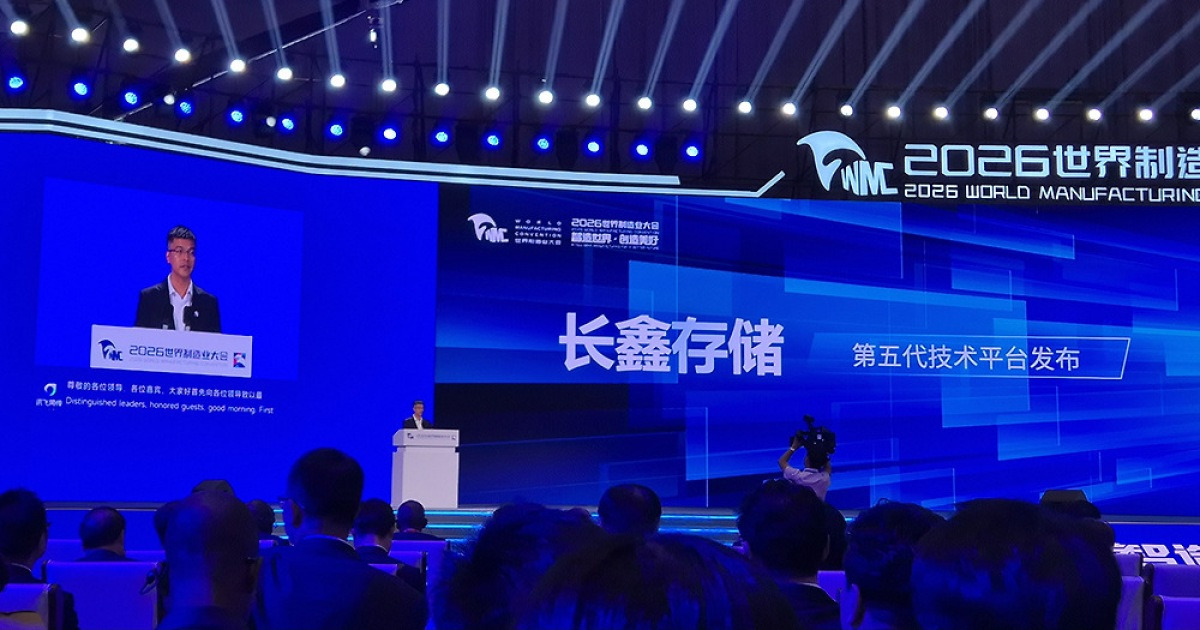
On September 20, 2026, at the World Manufacturing Fair in Hefei, Anhui Province, Luo Xiaodong, vice president and marketing head of ChangXin Memory Technologies — better known as CXMT — took the stage and said he had good news.
The company had officially entered mass production of its fifth-generation DRAM technology platform. It had achieved a circuit pitch of 11.95 nanometers using four-patterning lithography. That figure sits at the frontier of what the industry calls early 10-nanometer-class DRAM processes. CXMT was also shipping 24-gigabit LPDDR5X chips, already inside Xiaomi and Huawei flagships, with 50 percent more density than the previous generation.
The details sound technical. The implications are not.
Why This Matters More Than HBM
For the past two years, the global semiconductor press has treated High Bandwidth Memory as the only DRAM story that matters. HBM powers the AI training clusters that define the current investment cycle. Samsung and SK Hynix are racing each other to ship HBM3E and HBM4. The headlines are about TSMC, about NVIDIA, about data centers.
But HBM is a narrow market. Even if you double production, it occupies a small slice of total DRAM revenue. The real money in memory — and the real vulnerability in the Korean duopoly — lies elsewhere. Standard DDR4 and DDR5, used in everything from servers to smartphones to consumer electronics, account for the vast majority of DRAM shipments by volume. The margins there are thinner than HBM, yes, but the volume is enormous, and that is precisely where CXMT is aiming.
This is a strategic decision to attack the cash cow, not the trophy. If CXMT can capture even a modest share of the mainstream DDR market, it squeezes Samsung and SK Hynix at the exact point where their R&D budgets are funded. HBM losses can be subsidized by DDR profits. Take away the DDR profits and the whole equation changes.
The Numbers Are Modest. The Direction Is Not.
Let us be honest about what 11.95 nanometers means. Samsung and SK Hynix are already mass-producing at the 10-nanometer class and beyond, with mature yield curves and decades of process know-how baked in. CXMT is not catching up on process generational parity here. The Korean companies retain a meaningful lead — domestic industry sources estimate three to five years across the full spectrum of process maturity, yield rates, and cost competitiveness.
But this is about direction, not position.
CXMT announced its first-generation 8-gigabit DDR4 platform at this same venue in 2019. It has now iterated through five generations in seven years. That is a pace of platform turnover that would have been unthinkable a decade ago. Each generation has expanded product coverage and improved density. The latest leap to LPDDR5X with 50 percent higher capacity per chip is not incremental — it is the kind of jump that allows Chinese smartphone makers to drop Korean memory chips from their bills of materials entirely.
Xiaomi and Huawei are already doing this. That is not a future projection. Those chips are in phones shipping right now.
The Real Innovation Is in the Process, Not the Node
What is more interesting than the nanometer figure is how CXMT got there. The company cannot access EUV lithography equipment. American export controls have blocked that path definitively. So CXMT has been forced to innovate around the constraint rather than against it.
The company told the fair that it has adopted AI-driven simulation and full-process digital twin technology to dramatically improve R&D efficiency. It has also worked with Chinese equipment manufacturers to breakthrough in interface engineering, core structure design, dielectric layers, and wiring processes. The result is a 45-to-1 data storage structure ratio and a reduction of core circuit height to 6,762 nanometers through a metal process adapted specifically for DRAM.
These are not cosmetic improvements. They represent a fundamental rethinking of how to produce competitive DRAM without the most advanced lithography tooling on the planet. If CXMT can replicate this kind of process innovation at scale — and the yield numbers will tell us whether it is real or theoretical — it becomes a model that other Chinese memory makers can follow, and a capability that US sanctions cannot easily neutralize.
The AI simulation piece deserves particular attention. Compressing R&D cycles through digital twins and AI-driven process optimization is the kind of force multiplier that narrows the gap between a sanctioned player and an unconstrained one. It does not eliminate the gap entirely, but it narrows it faster than traditional methods would allow. That is the difference between a five-year catch-up and a three-year catch-up, and in semiconductor cycles, two years is an eternity.
The Market Context: Why Now
CXMT went public on the Shanghai Stock Exchange in late July 2026. The timing of its fifth-generation announcement — just two months after the listing — is not accidental. A successful product debut on the heels of an IPO reinforces investor confidence and validates the valuation. But it also sends a message to the Chinese government and to domestic downstream manufacturers: the subsidy is working, the technology is advancing, and the supply chain is becoming self-reliant.
China’s 14th Five-Year Plan targets 70 percent self-sufficiency in semiconductors by 2025. Memory chips have been among the hardest targets precisely because the barrier to entry is so high and the existing players are so dominant. CXMT’s progression from an eighth-generation DDR4 announcement in 2019 to fifth-generation LPDDR5X mass production in 2026 suggests the target may be achievable, if not on the original timeline.
What Happens Next
The immediate question is yield. CXMT can announce a platform all it wants, but mainstream DRAM is won on yield curves and cost per bit. If the 24-gigabit LPDDR5X chips shipping in Xiaomi and Huawei phones maintain stable yields at volume, the Korean companies face a real competitive threat in the smartphone segment — their largest DRAM customer base outside of server and data center applications.
The secondary question is scope. CXMT’s current announcement covers DDR5 and LPDDR5X. It does not yet cover server-grade RDIMMs or the high-bandwidth products that command the highest margins. But the trajectory is clear, and each generation has expanded the product portfolio. The next logical step is server DRAM, which would directly challenge Samsung and SK Hynix in the data center market — the segment where they currently enjoy the strongest positioning alongside HBM.
The third question is geopolitical. Every step CXMT takes toward mainstream DRAM self-sufficiency is a step that reduces the effectiveness of US export controls as a strategic lever. The controls have successfully blocked EUV tools and certain advanced process equipment. But they have not blocked AI-driven R&D optimization, digital twin simulation, or the kind of incremental process innovation that multi-patterning DUV lithography enables. That is a gap in the sanction architecture that Beijing is actively exploiting.
The Bottom Line
The Western semiconductor narrative has become fixated on the most glamorous segment of the memory market. That is a mistake. CXMT is not trying to beat Samsung and SK Hynix at HBM today. It is trying to make HBM irrelevant by undermining the market that funds it.
The 11.95-nanometer figure is a milestone, not a triumph. But the direction it signals — toward a self-sufficient Chinese memory industry capable of competing in the mainstream DRAM market that sustains the Korean duopoly — is the story that deserves more attention than the HBM race.
The West is watching the peak. CXMT is undermining the foundation.