Cyberpunk 2077's Update 2.5 Proves the Franchise Isn't Dead
CD Projekt Red is betting that anime tie-ins can rescue AAA games from post-launch abandonment — and Update 2.5 shows how cross-media momentum is reshaping what a live-service game actually looks like.
How CD Projekt Red Turned a 2020 Launchpad Disaster Into a Cross-Media Engine
CD Projekt Red announced Update 2.5 for Cyberpunk 2077 on October 20. The free patch drops October 22 for PC, PS5, and Xbox Series X|S, with a Switch 2 version following soon after. The timing is deliberate: Netflix begins streaming Edgerunners 2 that same afternoon. This is not a coincidence. It is a strategy.
The Cyberpunk franchise — a game that launched in broken condition in 2020 and spent years clawing back credibility — is now anchoring its most significant post-launch content to an anime sequel rather than to any new game release. The implication is clear: the next chapter in the Cyberpunk universe may not arrive on a console at all. It may arrive through an animated show, and the game exists to capture the overflow attention.
What Update 2.5 Actually Represents
Before this announcement, the official line was that major updates would not follow version 2.0. That line lasted exactly one year. Update 2.1 added the NCART metro system and home-date mechanics. Update 2.3 introduced autonomous vehicles. Update 2.5 now adds content directly inspired by Edgerunners 2, including items and gameplay elements drawn from the anime sequel.
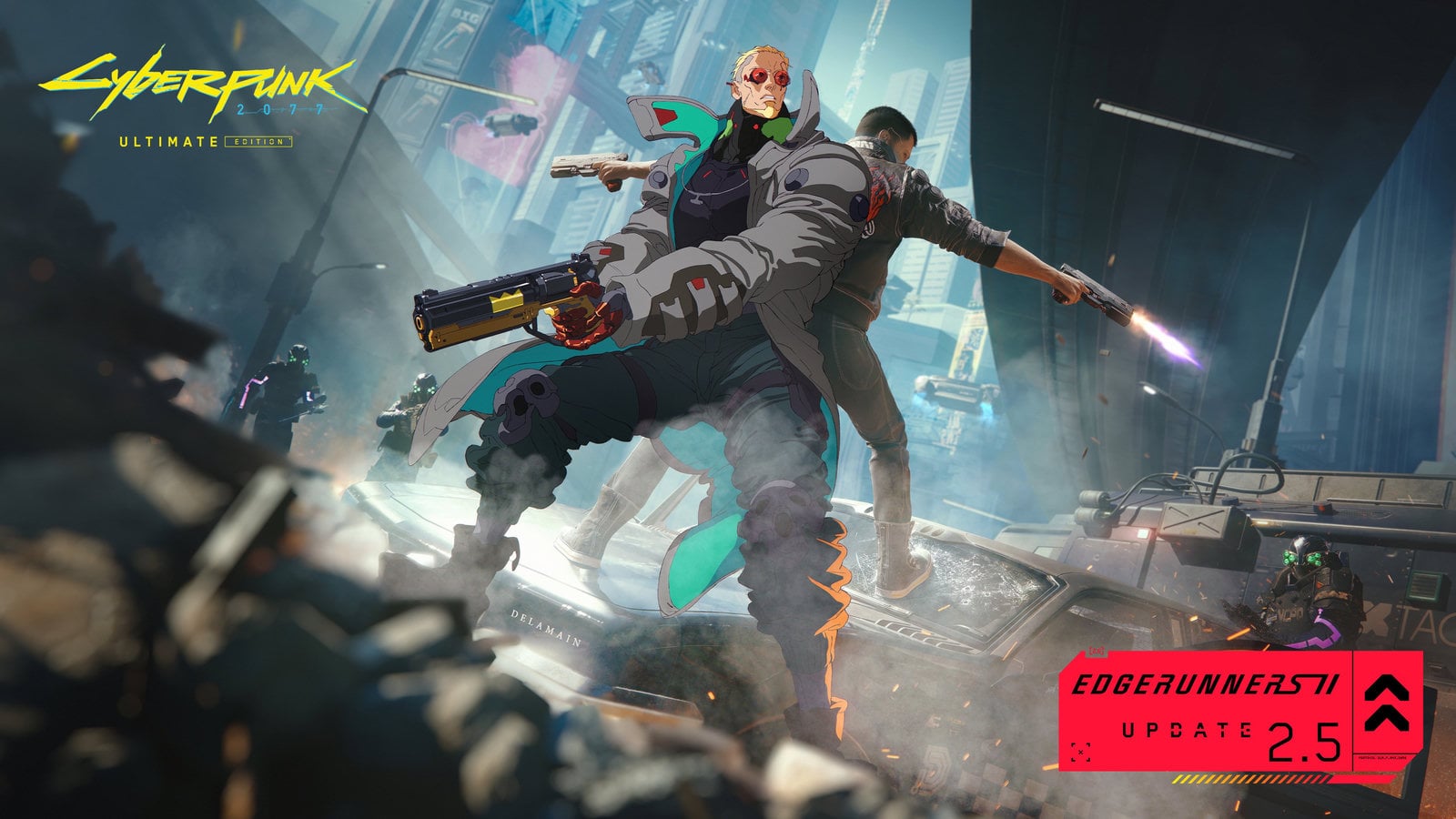
The teaser image released alongside the announcement shows Weike Kingsley fighting Max Tac alongside V — a crossover moment that had no precedent in the original 2077 timeline. Whether this translates into actual co-op missions, weapon skins, or narrative branches remains unclear. Details emerge during the REDstreams broadcast on October 21 across Twitch, YouTube, and Steam, alongside the official patch notes.
What matters is the pattern: CD Projekt Red has shifted from treating 2077 as a completed product to treating it as a persistent platform for franchise expansion. Each update serves as a touchpoint to keep the player base engaged between larger projects, and each major update is now synchronized with external media releases to maximize visibility.
The Economics of Anime-Timed Game Updates
This strategy is not universally adopted across the industry, but it represents a growing model for maintaining engagement in live-service environments where sequels are delayed or scrapped. Traditional AAA development timelines have stretched significantly since 2020. Studios facing repeated delays are increasingly turning to established IP ecosystems to sustain revenue and player interest.
Edgerunners 2 arriving on Netflix provides CD Projekt Red with a free marketing wave they would otherwise pay millions to generate through advertising. The anime sequel carries built-in audience momentum from the original Edgerunners, which became one of Netflix’s most-watched animated series and introduced a generation of new fans to the Cyberpunk universe who never played the game.
The math is straightforward: Update 2.5 costs nothing to promote beyond the REDstreams event, yet it aligns with a global streaming premiere reaching millions of viewers simultaneously. Players who discover the game through the anime will find it already updated and stocked with fresh content. The funnel from viewer to player shortens dramatically when the game itself carries the same narrative references and aesthetic details as the show.
Second-Order Effects on Development Culture
The deeper consequence of this approach extends beyond marketing. When a studio demonstrates that a live-service update synced with an anime premiere can sustain engagement, it changes how internal teams allocate resources. QA cycles, community management hours, and engineering sprints that previously chased post-launch bugs are now directed toward content integration with external media properties. This recalibration is subtle but measurable: the studio is no longer treating 2077 as a legacy product to maintain but as an active node in a broader narrative network.
This shift also redefines what “completion” means for a AAA title. The industry standard has long been launch, patch, and eventual abandonment. Update 2.5 signals a departure from that template. The game is being treated as a persistent world that evolves alongside complementary storytelling mediums rather than a discrete product with a fixed content ceiling.
Who Wins, Who Loses
CD Projekt Red wins by extending the commercial lifespan of a game that should have been retired years ago. The franchise maintains relevance without requiring a full sequel development cycle, which historically takes five to seven years in modern AAA production.
Players win through continued free content. Update 2.5 includes new items, gameplay mechanics, and what appears to be narrative integration with Edgerunners 2 characters — all at no additional cost beyond owning the base game or Ultimate Edition.
Competitors in the open-world RPG space lose marginally, because Cyberpunk 2077 continues to occupy cultural attention that would otherwise flow to newer releases. Games like Starfield and The Elder Scrolls VI face extended windows of reduced visibility precisely because franchises with active live-service models maintain player retention far beyond their initial launch windows.
The anime industry benefits indirectly, as Edgerunners 2 gains cross-platform reinforcement from a gaming audience that actively engages with its content, creating review cycles, discussion threads, and social media engagement that outlasts the typical streaming window.
What Happens Next
The REDstreams broadcast on October 21 will reveal specific content additions. Expect weapon mods, cyberware variants, and possibly mission structures incorporating Edgerunners 2 lore. Whether this leads to a dedicated Edgerunners storyline or remains cosmetic and mechanical depends on the patch notes.
CD Projekt Red has also confirmed that the Ultimate Edition — which bundles the base game and Phantom Liberty expansion — is available across PC, PS5, Xbox Series X|S, and Switch 2. This multi-platform availability ensures that new players entering through the anime have immediate access to the complete experience.
The broader implication for the industry is worth watching. If Update 2.5 drives meaningful engagement metrics, expect other publishers to explore similar anime-game synchronization strategies. The era of isolated game launches is giving way to multi-platform franchise ecosystems where content streams across media simultaneously rather than sequentially.
The Precedent
Update 2.5 marks a inflection point. The Cyberpunk universe now operates as a living brand rather than a single product. That shift happened gradually since 2020, but this is the first time the franchise has anchored its largest post-launch update to an anime sequel rather than to traditional gaming cycles. The precedent this sets could reshape how studios approach long-term franchise maintenance — not as a series of patches and hotfixes, but as sustained investment in a cross-media ecosystem where games, anime, and other storytelling formats reinforce each other in real time. The franchise that once symbolized the risks of premature launch has become something unexpected: a blueprint for how AAA titles can remain culturally relevant well beyond their original release window.