The Data Center Backlash Is Reshaping the AI Debate
Voters across the political spectrum are furious about AI data centers driving up electricity bills. Now both parties are spending tens of millions of dollars weaponizing that anger ahead of the midterms.
The Unlikely Enemy Both Parties Share
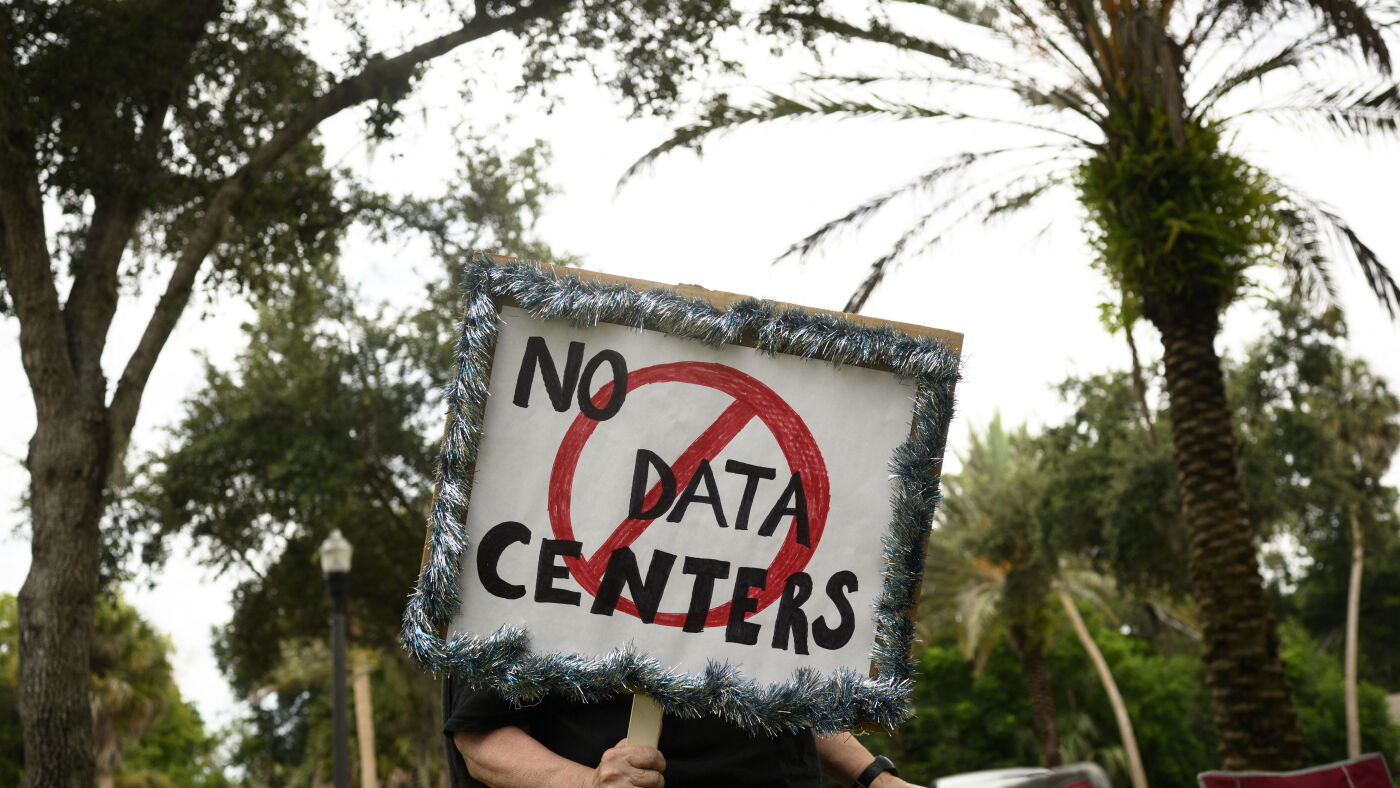
In Georgia, Florida, Wisconsin, Ohio, Iowa, and Kansas, a strange political coalition has formed: MAGA Republicans and liberal Democrats are standing shoulder to shoulder against the same target — the sprawling, power-hungry data centers powering the artificial intelligence boom.
Since January, campaigns and outside groups have spent more than $45 million on ads attacking data centers. The split is nearly even: over $22 million for Republican candidates, more than $21 million for Democrats. The message is identical. Data centers consume too much electricity, jack up utility bills, and receive sweetheart tax deals while communities bear the cost.
A Reuters/Ipsos poll found that 77 percent of Americans are worried about data centers raising electricity costs. Two-thirds of Democrats and half of Republicans say they would oppose a data center in their own backyard. That is not a niche grievance. It is a voting issue, and politicians are spending real money to exploit it.
How the Ads Look
Flip through any political streaming service in a competitive state right now and you will see the same frame repeated with different faces. David Crowley, the Democratic gubernatorial nominee in Wisconsin, promises to lower costs, make housing affordable, and stop AI data centers from making energy bills skyrocket. A Florida ad for Republican Byron Donalds vows to protect families from data centers that jack up utility rates. In Iowa and Kansas, similar spots air for Democrat Rob Sand and Republican Ty Masterson.
The ads are not subtle. They tie the abstract anxiety about artificial intelligence to something concrete and personal: the electric bill on your kitchen counter. That is why the messaging works. Voters may not know what a data center does, but they know what a rate hike feels like.
The Numbers Behind the Noise
Mentions of data centers in political ads exploded as the election approached. According to AdImpact data, there were just a handful of mentions in January. By June, that number climbed to 62. In July, more than 110. By August, about 164. The issue is clearly accelerating.
Gubernatorial races dominate the spending, accounting for roughly $32 million. House races follow at $8 million. Senate races come in third at $5.3 million. That hierarchy makes sense: data centers are a state-level problem. The federal government does not permit their construction. Governors feel the pressure from constituents first, and they are responding accordingly.
But the issue has spilled into Senate races, and in one contest it has become central. In Ohio, Democratic nominee Sherrod Brown has turned his Republican opponent, Senator Jon Husted, into a stand-in for the entire data center industry. Brown’s ads have painted Husted as the face of data centers, accusing him of handing corporations over $2.5 billion in tax breaks and causing electric bills to spike by thousands of dollars.
Ohio as a Warning Shot
The Ohio race is the canary in the coal mine for the Republican Party. An internal memo obtained by NPR and first reported by Axios revealed that the National Republican Senatorial Committee singled out the contest and called data centers a sleeper issue for the entire election cycle. The warning to the tech industry was blunt: if Husted loses, politicians nationwide will become wary of backing data center expansion.
Husted, who championed data centers as Ohio’s lieutenant governor, has pivoted. He is now airing no ads on the topic and has introduced congressional legislation to protect ratepayers from higher electric rates caused by data centers. He insists his position has not changed, only sharpened.
That he feels compelled to reposition at all says everything. In June, Husted was a pro-data-center ally. By autumn, his party’s activists and donors are running ads against the very industry he once courted. The political ground has shifted beneath him, and he is trying to keep his feet.
The Republican Defection
This is the story inside the story. The Republican Party has long positioned itself as pro-business and pro-industry. Data centers are the most capital-intensive infrastructure project of the decade, and they employ people, however indirectly. In a normal year, the party would be celebrating them. Instead, its candidates are running against them.
Michael Franz, co-director of the Wesleyan Media Project, put it plainly: data centers give each side the talking points it wants. Democrats latch onto environmental concerns. Republicans go in opposition to big corporations and a system that does not care about regular people. For the first time in recent memory, MAGA Republicans and liberal Democrats land in the same place.
A Republican Party operative told NPR that the most popular answer within the party is a conditional one: data centers can exist as long as they pay for their own energy. The operative also acknowledged the strategic calculus — data centers are necessary to win the race against China and create local jobs. But that argument is losing ground to the one about electricity bills.
Trump Is Out of Step
President Trump has urged states to keep building data centers. He has admitted they could use a little public relations help. He has not softened his tone. The rest of his party has.
Darrell West of the Brookings Institution noted that Trump seems oblivious to public opinion on a number of fronts. Typically, politicians shift when the public shifts. Trump is not doing that on data centers. That makes him an outlier in his own party right now, which is a rarer sight than you might expect.
Who Wins and Who Loses
The immediate winners are candidates who can tie data centers to voter wallet pain. The losers are the companies building the facilities and the politicians who backed them without hedging. Rick Jackson, the healthcare billionaire who defeated Burt Jones in Georgia’s Republican primary runoff, has benefited from ads that used data centers as a corruption bogeyman against Jones. That is how the issue operates: it is less about policy and more about ammunition.
The tech industry faces a mounting public relations crisis. It is building the infrastructure that will define the next decade of economic power, and the American public sees it as a threat to their household budgets. That tension is not going away. If anything, it will intensify as more centers break ground.
What Comes Next
The midterm elections will decide whether data centers remain a political third rail or become a regulated industry. If Republicans lose Senate seats in races where data centers are a focal point, the lesson will spread quickly. Candidates in other states will feel the pressure to take a harder line. If they hold or gain seats, the industry may survive but with stricter conditions attached.
Either way, the era of unopposed data center expansion in the United States is over. Voters want the intelligence. They do not want the plants in their backyards. Politicians on both sides have figured that out, and they are spending $45 million to prove it.