The Data Center Revolt Is Reshaping Midterm Politics
Trump is championing AI data centers, but voters across the political spectrum are pushing back hard. The fight over where to build them is exposing a fault line between tech infrastructure and the communities footing the bill.
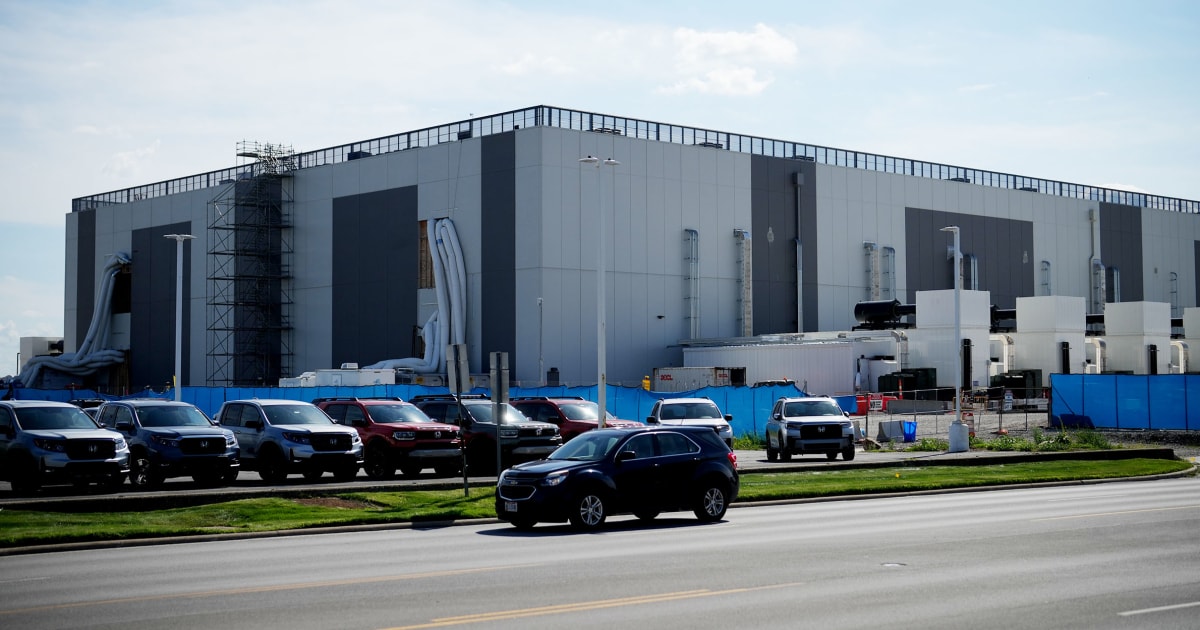
The Trump-Vogel Divide
Dawn Vogel is a Republican county supervisor in heavily Trump country—Buchanan County, Iowa, went 63-35 for him in 2024. She also voted to ban data centers from her county. The only company she has in Washington is Rep. Alexandria Ocasio-Cortez, who has floated a national moratorium on the same grounds. It is not the alliance anyone predicted before AI spending surged.
This is the new political geography of data center opposition: populist, cross-ideological, and aggressively local. An NBC News Decision Desk poll conducted in late August and early September found that 69% of respondents oppose building AI data centers in their area, with 45% saying they strongly oppose it. The number does not break neatly along party lines. Republicans support data centers at 57-43, but a majority still resist. Among Democrats, 81% oppose. Among independents, 71% oppose.
Donald Trump has made the pro-data-center case bluntly. He called opponents backward and poor on Truth Social in late August, arguing that communities should welcome the jobs, lower taxes, and investment. The rhetoric frames the debate as progress versus stagnation. But the voters surveyed along the I-80 corridor from Nebraska to New Jersey—eight swing House districts and two marquee Senate races—are not debating prosperity in the abstract. They are debating their water bills, their electrical grid, and whether a warehouse full of servers is the best use of land next door.
Who Pays, Who Benefits
The cost-benefit gap is where the politics live. Data centers consume enormous amounts of electricity and water. They do not create many permanent jobs—construction employment is temporary, and the operations workforce is small. What they do create is strain on local utilities. In Ohio, Rep. Marcy Kaptur, the 22-term Democratic incumbent, is running against Republican Derek Merrin and highlighting his 2017 vote in the state Legislature that extended tax breaks to data center developers. The message is simple: politicians who vote for incentives now face voters who feel the consequences later.
In Iowa’s hotly contested third district, electrician Jordan Cloe said he was told there would be no data on water consumption before a facility was built in neighboring Altoona. The grid that was extended to serve it, he said, was absorbed entirely by the data center. “Did we get to use that? No, they gobbled that up,” Cloe said. He plans to vote for Democratic challenger Sarah Trone Garriott in November.
Not everyone who works near or inside a data center shares those concerns. One anonymous worker in Ohio told NBC he makes up to $5,000 a week including overtime on a relatively low-level union job. He acknowledged hearing warnings about water use and strange noises from neighbors but said he did not observe them himself. He asked not to be identified because his employer discouraged media contact. That tension—between the few who gain economically and the many who absorb the externalities—is the structural story here.
The Flip-Flop Pattern
The political pivot is already under way among officials who once welcomed data centers as economic development trophies. In Ohio, Senator Jon Husted, a Republican seeking re-election against Sherrod Brown, championed data centers as lieutenant governor. This July he introduced legislation requiring utility companies to charge large data center operators enough to cover the increased electricity and water costs. Pennsylvania Governor Josh Shapiro, a Democrat on the ballot in November, signed a new batch of data center regulations in August after previously encouraging companies to locate in his state. The pattern is recognizable: embrace the announcement, feel the backlash, adjust the terms.
This shift matters because it reveals how fragile the pro-data-center consensus was. It was built on the promise of jobs and tax revenue without clear accountability for resource use. Voters are now demanding that accountability at the ballot box.
Second-Order Effects
The backlash is creating ripple effects beyond immediate permit battles. Insurance companies in rural Iowa have begun raising premiums for properties adjacent to proposed data center sites, citing increased fire risk and water pressure concerns. Property values in some counties have dipped as residents factor in proximity to the facilities. Local schools report that tax revenues from data centers have not materialized as promised—developers frequently claim homestead exemptions and enterprise zone benefits that erase their obligations.
Water districts are the most acute victims. In Texas, operators reported data centers consuming millions of gallons daily for cooling, rivaling small city populations. Municipal governments face impossible choices: host the facility and strain infrastructure, or deny permits and lose potential revenue. The legal battles are piling up—over 40 lawsuits nationwide challenge data center approvals on environmental grounds as of October 2026.
Even the tech industry feels the pressure. Some developers have quietly shifted focus to existing industrial parks where grid upgrades are already funded. Others are exploring smaller, distributed facilities rather than the massive campuses that trigger community opposition. The era of building wherever power is cheap may be ending.
What Changes Next
The immediate effect will be on permitting. Counties and municipalities are the gatekeepers. A moratorium in Buchanan County may seem small, but if similar measures pass in other rural and exurban jurisdictions—places with cheap land, existing grid access, and weak regulatory frameworks—the expansion timeline for AI infrastructure slows considerably. Developers can absorb delays in California or Virginia, where zoning battles are already common. They cannot absorb them nationwide.
There is also a legislative ripple. States will likely face pressure to codify cost-recovery mechanisms for utilities, to require environmental impact assessments before permit approval, and to define what “local benefit” actually means when a facility consumes megawatts of power and millions of gallons of water. Husted’s proposal in Ohio is one signal of the direction. More will follow.
Trump’s framing of the issue—data centers as a test of national ambition—will not disappear. But it collides with a practical reality: the people most affected live far from Silicon Valley and have no interest in being told their resistance is backwardness. The revolt is not anti-technology. It is pro-accountability. And in midterm elections, that distinction usually wins.
The data center backlash demonstrates a broader truth about American politics: infrastructure projects that concentrate benefits among corporations and distribute costs across communities will face stiff resistance. Voters may cheer AI innovation until they see their water bills double or their power grids falter. Once that happens, the politics shift fast. The question now is whether lawmakers learn from this before the next facility breaks ground.