Trump's Putin Diesel Deal Masks a Strategic Reorder
America's Democratic lawmakers are calling it a deal with the devil — but the real story is what the Trump-Putin diesel arrangement reveals about the administration's energy diplomacy and what it means for Kyiv's survival.
A Deal Wrapped in Gas Prices
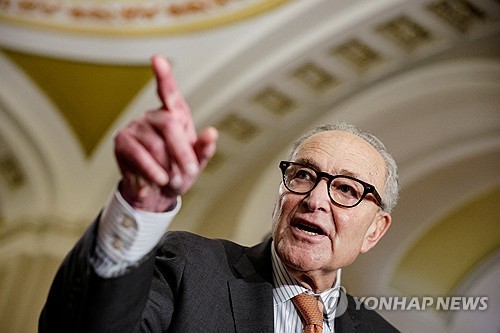
The Democratic backlash came fast and furious. Within hours of Donald Trump’s announcement of a so-called diesel deal with Vladimir Putin, Senator Chuck Schumer took to X and called it a pact with the devil. Senator Dick Durbin warned it would fund the Kremlin’s war machine. Representative Madeleine Dean accused Trump of backstabbing an ally while buying Russian fuel. The moral language was sharp, the outrage loud. But the substance of the disagreement matters more than the rhetoric.
What the press corps dismissed as a headline-grabbing political fight is, in fact, something far more consequential: a clear signal that the Trump administration is prepared to treat energy access as a direct bargaining tool against its own stated commitments to Ukraine.
The Numbers Behind the Backlash
The source material does not yet disclose specific volumes or pricing terms for the diesel deal, which is itself telling. An agreement of this nature — involving direct petroleum flows from Russia into American markets — would be extraordinary under any recent precedent. Sanctions on Russian energy have been a cornerstone of the Western response to the invasion since 2022. Even the European Union, which depended heavily on Russian gas, moved aggressively to diversify away from Moscow’s supplies after years of negotiation.
Now the United States appears to be reconsidering that posture, not through a formal policy shift but through a transactional arrangement framed as a consumer relief measure. That framing is deliberate. Katie Zakharia, the newly appointed White House press secretary, told Fox News the deal would deliver cheaper gasoline and lower food prices for Americans. The equation is straightforward in her telling: Russian diesel translates directly into lower costs at the pump.
The flaw in that equation is geopolitical. Cheaper fuel does not arrive without upstream consequences. Every barrel of Russian diesel absorbed into the American market weakens the price pressure that sanctions were designed to create against the Kremlin. It also undermines the legal and diplomatic architecture that has, however imperfectly, bound European allies and the United States around a common stance on Russia.
Who Wins and Who Loses
The winner in this arrangement is obvious: Vladimir Putin. A deal that moves Russian fuel into the US market — even indirectly — breaks the economic isolation that has constrained Russia’s wartime financing. It sends a message to Moscow that the United States will trade principle for convenience when domestic politics demand it.
The loser is Kyiv. Ukraine has fought for three years on the expectation that Western support would hold. That support was never unconditional, but it rested on a consistent public position: Russia’s invasion must be punished economically and diplomatically. A US-Russia energy deal of this kind shatters that consistency. It tells Kyiv that American commitment is conditional on American politics, not on principle. That lesson will shape Ukrainian calculations far more than any single statement from Washington.
Inside America, the political calculus cuts both ways. Trump gains a tangible consumer benefit to campaign on heading into the midterms. Schumer and other Democrats gain a clear attack line that paints the president as soft on Putin. Both sides are playing the same game, just on different boards.
What This Reveals About Trump’s Leverage
The deeper implication concerns Trump’s approach to leverage itself. His administration has long treated alliances as portfolios — assets to be managed, not bonds to be honored. The diesel deal fits that pattern precisely. It is not about energy security in any traditional sense. It is about converting Russian concessions into domestic political capital while testing how far Ukraine can absorb American ambiguity.
This is not the first time Trump has used Ukraine as a bargaining chip. During his first term, he withheld military aid to pressure Kyiv into investigating a political rival. The current arrangement is softer in form but identical in logic: American support is negotiable, and Ukrainian sovereignty is the currency.
The difference is that the current deal carries a longer shelf life. Withholding aid was a one-time political transaction. An energy deal creates a structural incentive for continued engagement with Moscow. It gives the White House a tangible reason to keep the channel open, regardless of what happens on the battlefield in Ukraine.
The European Dimension
Europe will watch this closely and react accordingly. The European Union has spent three years building alternative supply chains for Russian energy. They have accepted higher costs, slower growth, and industrial disruption to maintain sanctions unity. If the United States begins importing Russian diesel under a bilateral arrangement, European leaders will interpret it as a breach of the transatlantic compact — not in legal terms, but in political ones.
The immediate consequence will be diplomatic friction. The longer-term consequence is a realignment of energy strategy across NATO. European nations may conclude that American reliability on Russia is not guaranteed, and adjust their own defense and energy policies accordingly. That adjustment could take years to materialize but will begin the moment the deal is confirmed.
What Happens Next
Several scenarios are plausible. The first is that the deal proceeds as announced, with limited transparency on volume and pricing. In that case, the price signal to Moscow is clear, and the damage to sanctions cohesion is real but incremental. The second is that Democratic pressure forces a renegotiation or delay, which would preserve the public stance but leave the underlying policy uncertainty intact. The third — and most consequential — is that the deal becomes a template for broader US-Russia energy engagement, opening the door to discussions on gas, oil, and nuclear cooperation that have been off-limits for years.
None of these outcomes serve Kyiv’s interests. All of them reflect a Washington that has moved past the era of unwavering support for Ukraine. The question is no longer whether that support will erode. It is how fast, and how publicly.
The Real Story
The Democratic condemnation of the diesel deal is legitimate but incomplete. Schumer is right to call it a dirty deal. Durbin is right to warn about funding Putin’s war effort. But the deeper truth is that the deal is not an aberration — it is a preview.
It previews a foreign policy in which energy access trumps alliance commitment, in which domestic politics override strategic consistency, and in which Ukraine’s fate is treated as a line item rather than a principle. The gas prices may drop. The midterm headlines may shift. But the strategic cost will compound quietly, barrel by barrel, until someone decides to count it.
For now, the counting has not begun.