Dell Backlog Hits $95B as AI Server Shortage Reshapes Tech Valuations
Dell's AI server backlog reached a record $95 billion in Q2 2026 as component shortages constrain supply, driving analysts to revise targets higher. The imbalance is re-pricing semiconductor and IT-equipment stocks globally.
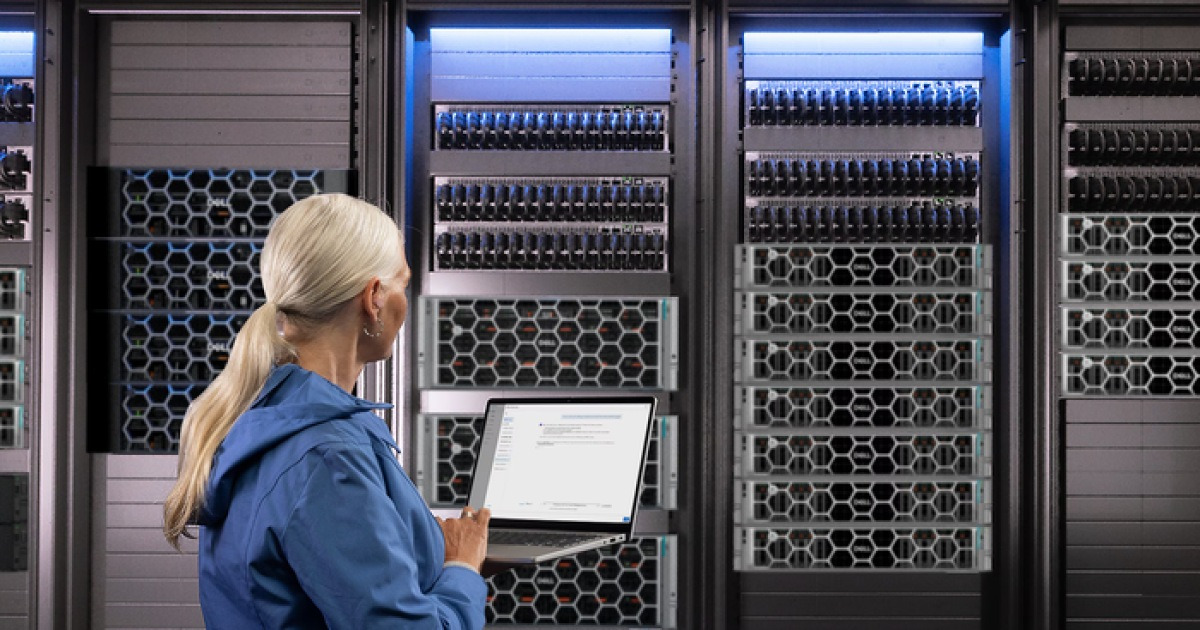
The Bottleneck That Rewrites Prices
Dell announced its second-quarter results on Thursday with a number that should make every semiconductor and enterprise hardware investor sit up: $95 billion in unfulfilled AI server orders. The backlog is more than double Dell’s full-year revenue guidance for 2025. What came with it was a stark admission — the company literally cannot build what it has been paid to build.
This is not a cyclical uptick. This is a structural mismatch between demand for AI infrastructure and the physical capacity to deliver it. The backlog alone represents roughly 18 months of deliveries at current production rates, assuming no new orders arrive. That is an extraordinary commitment pipeline for any manufacturing business, and it signals that the market has not yet absorbed how tight things are becoming.
What the Numbers Actually Say
Dell reported Q2 revenue of $46.97 billion and operating profit of $5.38 billion, both climbing sequentially. Adjusted earnings per share came in at $7.04 against a Wall Street estimate of $4.91 — a gap wide enough to signal that even aggressive consensus forecasts are underestimating the pace of demand. AI server orders alone reached $60.9 billion, a record. The company noted that enterprise and cloud customer engagement with its next-generation PX and PowerEdge platforms is accelerating faster than internal planning models anticipated.
The stock has risen 232.6 percent year to date. Fourteen analysts covering Dell gave ten buy ratings and four holds, with a consensus twelve-month price target of $527.38 — implying roughly 24 percent upside from current levels. Morgan Stanley led the revisions, raising its target to $560 after the report, citing “sustained order visibility that far exceeds the duration typically captured in quarterly outlooks.”
Traditional server revenue also surged 122 percent year over year. This is not purely an AI story. Enterprises are replacing aging data center equipment while simultaneously ordering next-generation AI racks. Storage revenue grew 26 percent. The correlation is obvious: every new AI cluster requires proportionally more storage and networking gear, and Dell sells all of it. Networking equipment sales, often treated as a footnote in past server cycles, grew 41 percent — a second-order signal that the infrastructure buildout is consuming more than just compute.
The Supply Problem Is the Real Story
On the earnings call, Dell’s chief operating officer Jeff Clark was direct when a Citigroup analyst asked whether component supply would keep pace with demand through next year. Clark did not hedge. Supply is not sufficient. Specifically, DRAM and NAND flash are the tightest constraints. CPU, hard drive, and optical component availability is also restricted.
The implication is critical. Dell can sign contracts it cannot fulfill. It can raise prices on available capacity — and it appears to be doing so. But it cannot simply turn on a tap and double output. The bottleneck is not in Dell’s factories. It is in the components that feed them. This is a first-tier constraint problem, not a second-tier assembly problem, which means Dell’s leverage is limited. No amount of factory expansion or overtime shifts can manufacture memory chips that do not exist.
What makes this particularly acute is the compounding nature of the shortage. Dell needs memory chips to build servers. Those servers need power delivery systems, cooling infrastructure, and high-speed networking — all of which face their own supply-side pressure. A delay in one node ripples through the entire stack. The result is a delivery queue where orders placed today may not ship for 12 to 18 months, and those lead times are likely to stretch further as the competitive landscape intensifies.
This is where the market re-pricing begins to matter beyond Dell’s balance sheet. Companies that supply memory chips, advanced packaging, and high-bandwidth interconnects now sit in a far stronger negotiating position than they did twelve months ago. Demand has outstripped not just Dell’s ability to assemble, but the entire tier-one component supply chain.
Who Wins, Who Loses
DRAM and NAND producers are the immediate beneficiaries. Every extra dollar Dell cannot spend because it lacks memory chips is a dollar those producers can charge to someone who can deliver. HBM (high-bandwidth memory) used in AI accelerators faces even steeper scarcity, which reinforces pricing power further up the stack. SK Hynix and Micron have already signaled capacity constraints extending well into 2027, and Samsung’s HBM production ramp has been slower than initially projected. The pricing environment for memory is structurally different from the oversupply cycles of 2023 and 2024.
Dell itself benefits from pricing leverage on its finished goods. A company sitting on $95 billion in backlog can raise list prices without losing orders — the alternative for buyers is waiting, and waiting means falling behind competitors already deploying inference and training capacity. Dell’s gross margin on AI server shipments is believed to be materially higher than its traditional server business, and the mix shift toward AI-enabled systems is expected to lift overall profitability for the foreseeable future.
Customers face the other side of the trade. Enterprise budgets are being forced to absorb higher per-rack costs, longer lead times, and potential deployment delays. Startups and mid-tier cloud providers that cannot secure component allocations early will be priced out or delayed. The barrier to building AI infrastructure is rising, which consolidates advantage toward the largest incumbents who can lock in capacity years in advance. Some中小cloud operators are reportedly exploring alternative architectures that use fewer GPUs per node, not because they choose to but because the supply constraints leave them no other option.
The secondary effect is reshaping vendor relationships. Large hyperscalers are moving away from pure OEM purchasing toward custom co-engineering agreements with Dell and its competitors. This gives Dell deeper integration and stickier contracts, but it also means smaller enterprises are squeezed out of the standard channel. The market is bifurcating: massive bespoke deals at the top, and a thinner, more expensive remainder for everyone else.
Shareholders of component suppliers stand to gain the most. Dell’s stock has already rallied; memory and chip equipment makers are next in line for repricing as the market recognizes that the infrastructure buildout has years of demand behind it, not months. The capex cycle driving this demand has a half-life that far exceeds the typical technology boom cycle.
Why This Is Different From Past Server Cycles
Server replacement cycles have occurred before. The 2010s saw periodic spikes tied to virtualization and cloud migration. Those cycles were predictable and self-limiting. This one is being driven by a technology shift — transformer-based AI models requiring orders of magnitude more compute per watt than traditional workloads — and it is not repeating a historical pattern. It is creating a new class of hardware demand.
The economics are fundamentally altered. A single AI training cluster can consume 10 megawatts or more of power, require specialized liquid cooling, and draw hundreds of petabytes of storage. These are not incremental purchases. They are capital projects that redefine what a data center looks like. The grid constraints, real estate requirements, and permitting timelines involved mean that even if Dell had infinite component supply, the physical deployment pipeline would still be a multi-year bottleneck.
Dell’s guidance revision is telling. The company raised its full-year revenue outlook by $25 billion to $192 billion. That is not a conservative increase. It is a acknowledgment that existing models were too low. The gap between what the market expected and what the company is now guiding suggests that forward visibility into this cycle is unusually poor — even for Dell’s own planners.
What Comes Next
The next earnings calls to watch are not Dell’s. They are Micron, Samsung, SK Hynix, and the manufacturers of advanced packaging and optical modules. If Dell’s supply constraints persist into next year — and Clark’s comments suggest they will — then component suppliers are about to enjoy multi-quarter pricing power that has not existed at this scale since the mid-2010s memory upcycle.
Equally important is the downstream impact on Dell’s competitors. Hewlett Packard Enterprise, Lenovo, and Supermicro all face the same component constraints, but Dell’s scale and contractual positioning give it a relative advantage in allocating scarce supply. Market share gains are likely to follow, particularly in the enterprise segment where Dell already commands significant mindshare.
Dell’s stock may still have room to run given the analyst targets. But the real investment thesis is broader: any company that sits between AI demand and physical delivery capacity is now priced in a market that is finally acknowledging the constraint. The question is not whether demand will fade. It is whether supply can catch up before the next cycle resets expectations again — and whether the infrastructure buildout has enough remaining runway to sustain this pricing environment through 2027 and beyond.