Russia Plot to Kill Ukrainian Rapper in Denmark Redefines EU Threats
Denmark's exposure of a Russian-backed hit against a Ukrainian-American artist on EU soil marks a dangerous escalation in hybrid warfare. The case challenges Europe's defenses and its ability to hold Moscow accountable.
A Hit on Danish Soil Changes the Equation
Denmark has become the latest European country to expose a Russian intelligence operation targeting civilians on its territory — this time an assassination plotted against a Ukrainian-American rapper ahead of a concert. Authorities arrested two alleged members of the outlawed street gang “Loyal to Familia” shortly before Kyivstoner’s scheduled September 25 performance, which was subsequently cancelled. Russian defense attaché Lars Barfoed was expelled. Four men remain in custody.
On the surface, this looks like just another escalation in Russia’s war of subversion against Europe. But the details are important and unsettling in ways that go beyond the usual diplomacy spat. For one thing, Russia did not send its own agents to pull the trigger. It recruited local gang members — people already embedded in Copenhagen’s underworld. That distinction matters. It means the Kremlin no longer needs conventional clandestine personnel operating in hostile territory. Criminal networks do just fine, and they leave messier fingerprints.
According to Danish police statements released after the bust, the two suspects were intercepted at Copenhagen Airport carrying several weapons and communication equipment when they arrived from an unidentified Eastern European capital. Investigators believe the recruitment chain ran through a Russian-speaking criminal intermediary who had ties to organized crime circles in Malmö and later shifted operations to Copenhagen. The operatives reportedly received video training packages showing surveillance techniques and close-quarters tactics adapted for urban environments — material consistent with known GRU instructor formats shared with proxy handlers across Northern Europe. No explosives were involved. This was meant to look like a street killing, the kind of murder that could easily be attributed to gang violence and dismissed as local crime rather than state-directed terrorism.
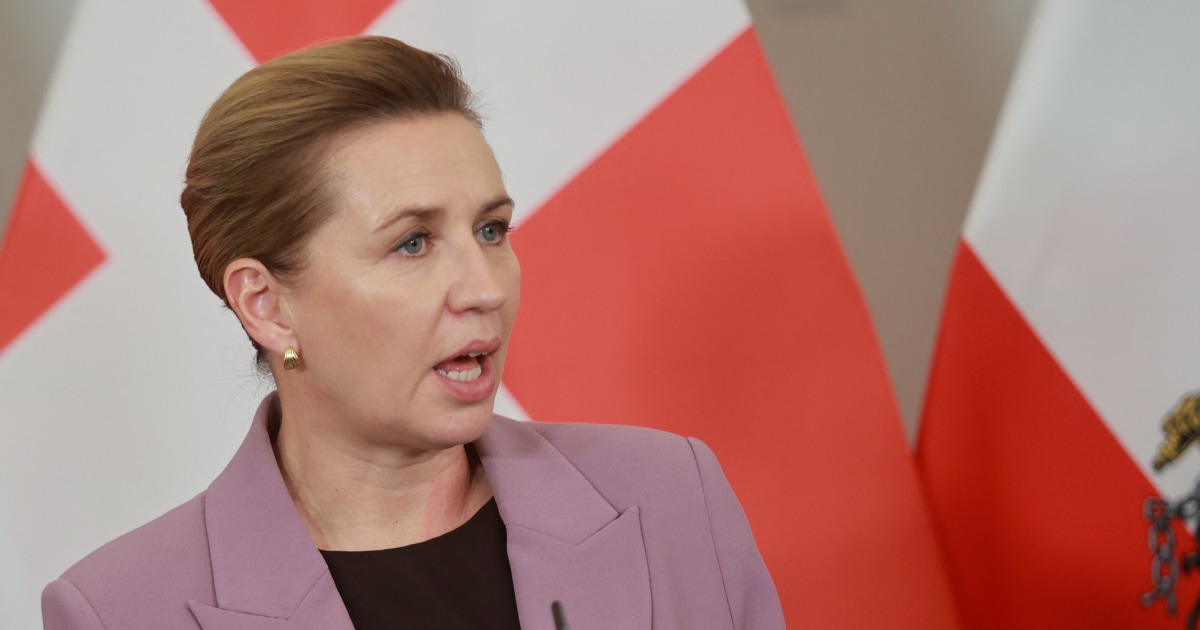
Danish Prime Minister Mette Frederiksen did not mince words Friday. “We are facing a Russia under pressure which is acting more aggressively and is more willing to take risks,” she said. Her diagnosis is not theoretical. Poland reported two Russian missiles and a suspected drone landing on its soil the same day, during European military exercises tied to a potential postwar mission in Ukraine. European Commission President Ursula von der Leyen called the attack on Danish territory an attack on the EU itself. “This was unacceptable,” she wrote on X.
The calculus inside Brussels is shifting because the threshold for what counts as an act of war — or at least an act warranting serious collective response — keeps getting tested, and crossed.
Who Wins, Who Loses
Russia gains propaganda value from chaos, but loses strategic clarity. An assassination plot on EU soil forces allies to answer a question they would rather avoid: when does a covert killing become a casus belli? So far, the response has been calibrated — expulsions, condemnations, solidarity statements. No Article 5 invocation. No military retaliation. The Kremlin likely expected that. Its calculation is simple: keep the violence below the level that triggers a unified defensive alliance response, while making the cost of supporting Ukraine feel uncomfortably close to home for ordinary Europeans.
But there are second-order consequences that Moscow may have underestimated. The exposure of this plot has triggered a ripple of institutional anxiety across the EU. Germany’s domestic intelligence service, the BfV, immediately escalated its threat assessment for cultural events and began coordinating closer watch on Russian-linked criminal proxies in major cities. Sweden announced it was reviewing security protocols for all upcoming concerts and public gatherings with Ukrainian themes. The Netherlands opened a dedicated desk within its General Intelligence and Security Service to track the exact type of gang-recruitment model used in Copenhagen. These are not symbolic moves. They represent a reallocation of resources and a recognition that the threat vector is portable — if Copenhagen was vulnerable, so are Rotterdam, Malmö, Hamburg, and eventually Berlin and Paris.
Denmark wins tactically. Police intercepted the plot before it carried out. The two gang recruits were stopped in a vehicle carrying several weapons. The threat was neutralized. But Denmark — and Europe — lose strategically if the response remains confined to the narrowest diplomatic remedies available. Expelling a defense attaché sends a signal. It does not change behavior.
Kyivstoner himself occupies a strange middle ground. He is a cultural figure turned political symbol, not a soldier, not a politician. His music channels the energy of Ukraine’s resistance. Attacking him is not an attack on a military target. It is an attack on morale — on the sense that Europe can host a concert without fearing a bullet in the crowd. That psychological dimension is precisely what makes hybrid warfare so corrosive. It erodes the feeling of normalcy that underpins democratic societies.
The broader cultural community has felt this acutely. Ukrainian diaspora organizations across Scandinavia reported a sharp increase in private security spending for community events. Several artists postponed tours citing safety concerns unrelated to any specific threat intelligence — a chilling effect that operates independently of whether plots succeed or fail. The harm is done simply by proving that such plots are imaginable on European soil.
The Definition Problem
Europe’s biggest gap right now is legal and institutional. There is no clean framework for treating a foreign-state-directed assassination planned and partially executed on EU soil as anything other than a criminal matter handled by national police. NATO has no procedure for a non-military attack that carries geopolitical weight. The EU has no single counterterrorism command that can move intelligence across borders fast enough to prevent the next attempt.
The jurisdictional questions here are especially thorny. Danish prosecutors are pursuing charges under domestic criminal law, but the evidentiary chain reaches through at least three countries — the recruitment intermediary, the training location, and the intended execution site. Extracting coherent testimony from defendants who may face life sentences in Russian penal colonies adds further complication. Several legal experts noted that existing anti-terrorism statutes were drafted for Islamist and far-right threats, not for state-sponsored proxy killings orchestrated through criminal brokers. Updating those frameworks requires political consensus that has proven elusive in capitals where Russia sympathizers still hold influential positions.
Denmark’s prime minister framed the situation as evidence that Russia is acting with greater willingness to take risks. That framing should push policymakers toward a harder conversation about escalation management. If Denmark is vulnerable, so are Berlin, Paris, Stockholm, Helsinki. If Russian intelligence can recruit local gangsters to carry out hits, other EU capitals face the same vector. The problem is not a single plot. The problem is a pattern, and patterns are hard to fight with expulsions and press conferences.
What happens next depends on whether Europe treats this as an isolated incident or a sign of systemic adaptation. The first step is admitting the latter. The second is building institutions that reflect that reality — shared intelligence fusion cells focused on hybrid threats, harmonized legal standards for prosecuting state-directed violence against civilians, and clear red lines that carry consequences beyond symbolic gestures. Anything less leaves the union vulnerable to a strategy that thrives on fragmentation.
Some of that work is already underway. The EU’s Hybrid Fusion Cell, created after the 2016 Russian interference campaigns, has been quietly absorbing insights from this case. France and the Baltics have begun sharing surveillance data on Russian criminal intermediaries operating across Schengen. But these are slow-moving initiatives. The gap between the speed of Russian adaptation and the pace of European institutional response remains the defining vulnerability.
Where the Line Blurs
The most consequential implication of this case may not be what happened in Copenhagen but what it reveals about where the boundary between peace and war has moved. The man responsible, according to Danish authorities, is not a soldier in uniform. He is a prime minister operating in the gray zone between peace and war. And as long as the West struggles to define where that line is, the gray zone keeps expanding.
Every day that Europe continues to treat Russian provocation as a series of discrete incidents rather than components of a sustained campaign, Moscow gains room to operate. The assassination plot against Kyivstoner was not an anomaly. It was a stress test — and the results show that Europe’s defensive architecture still has gaps large enough for proxy killers to slip through. Closing those gaps requires more than better policing. It requires a coherent doctrine that treats attacks on civilian life authorized by a foreign state as equivalent to attacks on sovereignty, regardless of whether the weapon arrives in a suitcase or in the mind of a recruited gang member.
Until that doctrine exists, every concert venue, every stadium, every public gathering becomes a potential target — and every European government becomes responsible for defending against an enemy that refuses to declare itself.