Diablo IV's Amazon Return Hides Blizzard's Live-Service Gamble
Blizzard's 30th-anniversary season brings back Deckard Cain, the iconic Amazon class, and a system that turns the three Prime Evils into permanent power trees. It's nostalgia packaged as a retention strategy.
Nostalgia with a business plan
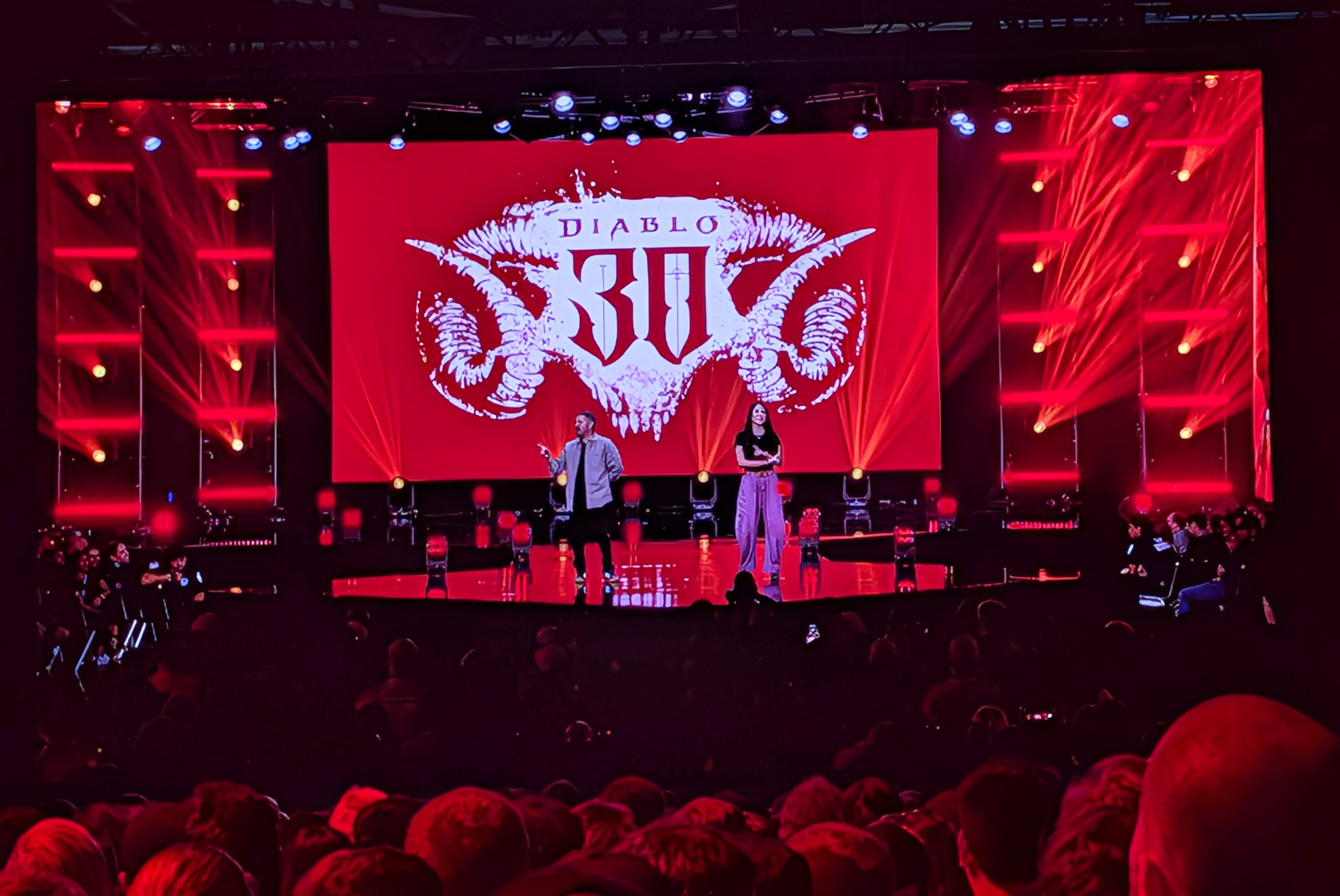
BlizzCon 2026 opened with the kind of headline Blizzard knows sells tickets and streaming views: Diablo V is real, and the Amazon is coming back to Diablo IV. But the more interesting reveal was quieter. The upcoming Season of Hell’s Legacy, launching September 16, 2026, doesn’t just add a class. It fundamentally restructures how the game rewards players for engaging with its own history.
The season centers on Deckard Cain—not as a distant narrator, but as a playable companion reborn in a borrowed body. Game designer Daniel Tanguay described him as a ghost-like presence tied to unresolved guilt from his past. That framing is deliberate. Cain is a man haunted by choices, which mirrors exactly what Blizzard is doing here: reaching back into franchise history, not out of obligation, but because the brand’s emotional capital is its most valuable asset.
What makes this move noteworthy is not simply that Blizzard is mining its back catalog, but how systematically it is doing so. The Reborn Cain companion integrates directly into seasonal narrative missions, offering dialogue branches that reference events from Diablo II’s expansion, Lord of Destruction. Players who completed those quests will encounter callbacks that function as both reward and tutorial—a way of teaching newer players lore they’d otherwise have to mine from wikis or YouTube essays. This is lore as onboarding, a tactic that turns casual engagement into institutional memory without breaking immersion.
Three evils, one power tree
The core mechanical hook is “Splinter of Evil,” a new progression system that lets players absorb fragments of the three Prime Evils—Diablo, Baal, and Mephisto. Each fragment levels up to unlock signature abilities: Baal’s ice attacks, for instance, become available alongside unique ultimate techniques belonging to each Overlord. The system turns canonical enemies into permanent skill investments.
This is a clever design pivot. Diablo IV has historically struggled with build diversity, often funneling players toward a narrow set of optimal skills. By distributing powers across three well-known bosses, the game gives players a reason to engage with all three rather than optimize around one. Game Director Brent Gibson explicitly stated the goal is a “healthy build environment” not dependent on one-shot burst damage alone. Whether Blizzard can actually execute that balance remains to be seen, but the intent is clear.
The second-order effect of this system may be more significant than its immediate gameplay impact. By tying powers to specific Prime Evils, Blizzard creates a social layer: players will naturally sort themselves into factions based on which fragment they prioritize, creating an organic community structure that resembles the old class-based tribalism of earlier Diablo titles. Leaderboards, streamer content, and forum debates will form around evil allegiance, giving the seasonal meta a narrative texture that purely mechanical systems lack. That cultural scaffolding is what keeps player communities alive between patches.
The Waking Nightmares
The season’s “Waking Nightmares” system revisits encounters with the three warriors who once carried the Black Soulstone—Aidan, Tasslden, and Sankaku. These aren’t simple boss fights. They operate across three scales: Keystone-tier layer dungeons replicating the Tristram Cathedral and Mount Arreat, fixed dungeons recreating iconic locations like the Den of Evil, and randomized field events against threats like Queen Arachir and the Khazra. The structure mirrors Diablo II’s difficulty scaling while adding modern procedural variety.
The inclusion of Aidan—the Dark Wanderer, Diablo’s original vessel—carries particular weight. His encounter functions as both a lore checkpoint and a mechanical gauntlet, forcing players to confront the origin point of the series’ central conflict. From a design standpoint, this creates a narrative throughline that stretches from the first game to the present day, giving longtime players a sense of completion while offering newcomers a curated introduction to the franchise’s mythos.
A class, a price tag, and a generation gap
The Amazon arrives as a paid class pack in early 2027, which immediately raises questions. Blizzard has never before put a major Diablo class behind a paywall. The pricing signals confidence—or desperation—in player loyalty. The class itself splits into four archetypes: two returning from Diablo II (Bow and Javelin) and two entirely new designs. The Javelin introduces a one-handed ranged weapon that pairs with a shield, enabling mid-to-close range combat and intelligence-based builds. That hybrid approach suggests Blizzard is testing whether Diablo IV can accommodate more tactical, position-dependent gameplay than its current meta allows.
Gibson framed the Amazon as a bridge for younger players entering the series for the first time. That’s strategically honest: the franchise’s average player age is undoubtedly higher than it was two decades ago, and bringing in fresh faces through familiar iconography is a proven retention model. But the paid-gate creates a potential generational split. Players who grew up with the original Amazon may view its return as vindication; those who entered through Diablo IV may see it as another monetization layer in an increasingly segmented ecosystem. The long-term risk is that Diablo IV fractures into separate player bases—one invested in legacy systems, the other in current ones—rather than coalescing around a shared experience.
There is also a competitive dimension. If the Amazon’s bow archetype mirrors Diablo II’s high-skill ceiling playstyle, it will attract the type of player who gravitates toward theorycrafting and min-maxing. That demographic tends to dominate discourse, create meta-defining guides, and influence patch direction through feedback volume. Their presence could pull the entire game toward a more mechanical, less accessible play pattern—a shift that may alienate the casual cohort Blizzard is simultaneously trying to court.
The Rebirth economy
Perhaps the most significant structural change is the “Rebirth” system, which carries Eternal characters into new seasons. This is a direct response to a persistent live-service problem: players lose motivation when endgame content becomes repetitive. By allowing progression carryover, Blizzard reduces the penalty for starting fresh and encourages seasonal participation. Combined with nine new legendary equipment pieces drawn from franchise history and three new “Soul Splinter” gem slots, the season is designed to feel both nostalgic and mechanically expansive.
The Rebirth system also addresses a subtle but real churn factor: the fear of wasted time. In traditional live-service games, every new season resets player investment, which punishes dedicated participants and rewards only the most casual. Rebirth turns that dynamic on its head by acknowledging that some investment should persist. However, it introduces a new tension—players who never leave their Eternal characters will find themselves perpetually behind seasonal competitors, creating a two-tier hierarchy within the same game. Blizzard will need to carefully calibrate what carries over and what does not, or risk entrenching inequality rather than alleviating it.
What this says about Blizzard’s future
The announcement of Diablo V alongside these updates for Diablo IV tells a larger story. Blizzard isn’t abandoning its flagship action RPG to chase the next project—it’s using one to fund and sustain the other. The 30th anniversary season functions as both celebration and proof of concept: the company can still make classic-feeling systems feel new.
For the broader market, this is a signal. Action-RPG developers who have treated live-service seasons as cosmetic DLC cycles should take note. Blizzard is demonstrating that mechanical depth, narrative integration, and franchise history can coexist within a seasonal framework—if the design team commits to the premise rather than treating legacy as decoration.
But the real test lies ahead. The Amazon’s paid model, the Splinter of Evil balance, the Rebirth economy—all of these are bets on a future Blizzard cannot yet prove. If the seasonal structure holds and player retention climbs, the franchise gains a durable second act. If the paid-class controversy or build imbalance alienates the core audience, the entire architecture cracks. The Amazon’s return isn’t just a wink at old fans. It’s a wager that nostalgia, properly engineered, can extend a game’s lifecycle well past its natural expiration date. Whether that bet pays off depends on execution—and Blizzard has rarely let execution disappoint when the stakes are this high.