A Divorce Unlocked 30 Years of South Korea's Darkest Secret
A divorce proceeding between an SK Group heir and a former president's daughter exposed a 30-billion-won slush fund that prosecutors say may have been hidden for decades. South Korea has never seen a political corruption probe originate inside a family court.
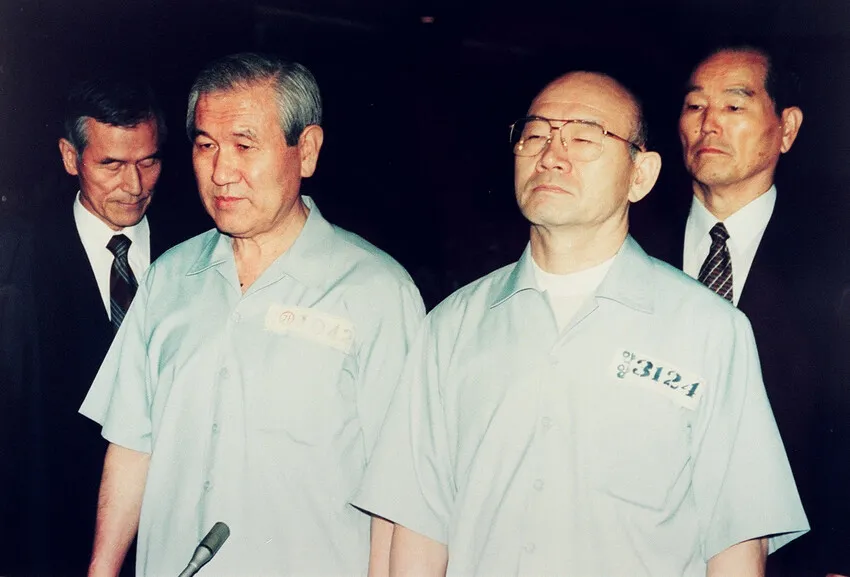
A Divorce Proceeding Cracked Open a 30-Year-Old Case
South Korea’s criminal justice system is used to political scandals. But it has never seen one break open from inside a family court.
The Central District Prosecutors’ Office in Seoul launched forced searches this week on three properties connected to the family of former President Roh Tae-woo — his wife’s home in western Seoul, two charitable foundations overseen by his son, the current ambassador to China, and the residences of former presidential secretaries accused of managing hidden bank accounts. The catalyst was a divorce case between Choi Tae-won, chairman of SK Group, and Noh So-young, Roh’s daughter, which exposed references to a 30-billion-won secret fund that Korean prosecutors had searched for decades but never fully traced.
For English-language readers, Roh Tae-woo’s name alone carries the weight of a nation’s reckoning with its authoritarian past. He was the military officer who seized power in the December 12 coup of 1979 and later presided over the massacre of civilians in Gwangju in 1980. After his presidency ended in disgrace, he was convicted of treason and embezzlement and sentenced to death — a sentence commuted to life, then a pardon. For thirty years, the full accounting of his illicit wealth remained unfinished, partially repaid, partially lost, and largely forgotten outside specialized circles.
That is what makes this case structurally unusual. The clues came not from investigative journalism, not from a whistleblower, but from court filings in a contentious divorce proceeding between two members of Korea’s most powerful economic and political families.
How a Family Court Unlocked State Secrets
Noh So-young’s legal team submitted documents in the 2023 appeal of the divorce case asserting that her father’s secret fund had been used to finance the early growth of Seungkyung Construction — the company that would eventually become part of the SK Group empire. The documents included a 1991 batch of 30-billion-won promissory notes issued under the Seungkyung Construction name, and a handwritten memo attributed to Roh’s wife, Kim Ok-sook, detailing a 90.4-billion-won slush fund.
Choi Tae-won’s side denied the allegations. But the documents were already on the public record, and they gave prosecutors a paper trail they had been unable to construct from state archives alone.
The 5·18 Memorial Foundation — an organization dedicated to preserving the memory of the Gwangju massacre — filed a criminal complaint in October 2024, accusing the Roh family of concealing approximately 126.6 billion won in illicit funds. The complaint broke the amount into three categories: the 90.4 billion won documented in Kim Ok-sook’s memo, an additional 21 billion won allegedly held in proxy accounts and operated through insurance payouts, and roughly 15.2 billion won transferred to charitable foundations overseen by Roh’s son, Ambassador Roh Jae-heon.
The foundation’s complaint is politically loaded — it frames the slush fund case within the broader narrative of unaddressed crimes from the authoritarian era. But it is also legally precise, providing prosecutors with specific transaction dates and amounts that can be verified against bank records.
The 7-Year Window That Determines Everything
The statute of limitations is the case’s central legal constraint. South Korea’s Criminal Proceeds Confiscation Act imposes a seven-year limitation period for the crime of concealing illegal proceeds. Transfers made between 2016 and 2021 — when Kim Ok-sook donated a total of 14.7 billion won to the East Asia Cultural Foundation, which her son chaired, and an additional 500 million won to the Roh Tae-woo Center in 2022 — fall squarely within that window. Those are the transactions prosecutors can pursue without running into procedural barriers.
Going further back is far more difficult. The original slush fund was created in the early 1990s, before South Korea implemented its financial real-name system in 1993, which required all bank accounts to be opened under the true identities of their owners. Accounts established before that reform were routinely held in proxy names, making it extremely difficult to trace ownership decades later. The assets may have been moved through multiple layers of corporate structures and foreign accounts. Some may have been spent. Some may have been converted into property or art.
Prosecutors now need to work backward from the foundation donations, following the money through Kim Ok-sook’s personal accounts and any proxy accounts she may have controlled, to determine whether the funds originated from the former president’s illicit reservoir rather than from legitimate personal wealth.
This is where the physical limitations of the investigation become stark. Both Roh Tae-woo and Choi Tae-won’s father, SK Group founder Chung Ju-yung, are deceased. Kim Ok-sook is elderly. The investigators cannot compel testimony from the people who created or used the original accounts. Their main evidentiary tool is now documentary — bank records, foundation filings, accounting documents, and personal papers recovered during the searches.
A Law Change That Targets the Past Without Naming It
The timing of this investigation coincides with a significant legislative change. Earlier this week, the National Assembly passed an amendment to the Criminal Proceeds Confiscation Act that establishes an independent confiscation system, allowing illegal assets to be confiscated even after the owner’s death. The law, which takes effect one year after promulgation, explicitly lists crimes against the constitutional order and associated bribery, embezzlement, and misappropriation offenses as confiscatable — language that legal analysts say is clearly aimed at the Roh Tae-woo case.
Prosecutors have insisted the search warrants were issued independently of the legislative change. But the political context is undeniable. South Korea has never successfully confiscated the illicit assets of a former head of state. Previous recoveries — including the partial restitution of funds from the Roh and full recovery from former President Park Geun-hye’s inner circle — fell short of full confiscation and were treated as political settlements rather than legal judgments. This case would be the first test of whether the new legal framework can deliver something closer to complete financial accountability.
Who Wins, Who Loses
The implications extend far beyond one family’s finances. If prosecutors establish that the Roh family concealed illicit political funds through charitable foundations and proxy accounts, it would set a precedent that affects every major political family in South Korea. The same mechanisms — charitable giving as a laundering tool, proxy accounts for asset concealment, cross-generational transfer of illicit wealth — are not unique to Roh Tae-woo.
For SK Group, the fallout is already visible. The company’s rise from a modest cement manufacturer to one of Korea’s largest conglomerates has always carried the shadow of its founding-era connections to the military government. A formal finding that Roh’s slush fund subsidized SK’s early growth would reshape the historical narrative around one of Asia’s most important corporations and could trigger shareholder and regulatory scrutiny.
For Ambassador Roh Jae-heon, the impact is immediate and personal. His professional reputation is now entangled with an active criminal investigation into the charitable organizations he leads. Whether he is formally charged will depend on whether prosecutors can prove he knowingly facilitated the concealment of illicit funds.
For the South Korean public, the case resurrects a wound that was never fully healed. The Gwangju massacre and the corruption of the military regime’s leaders were addressed through trials and pardons, but the financial dimension — the full scope of what was taken and where it went — was left incomplete. This investigation represents the first serious attempt in thirty years to close that accounting.
The divorce that started it all is a detail that Western observers will find surreal. But in South Korea, where political and economic power has always flowed through family networks, it is perhaps the only place the truth could surface. The boundaries between private family disputes and public corruption remain dangerously thin — and this case proves it.