The 58-Second Gap in a DMZ Mine Burst Rewrites the Escalation Script
Forensic details released by South Korea's Joint Chiefs — a 58-second interval between two explosions and a third unexploded mine recovered — point to deliberate North Korean landmining near the Military Demarcation Line. The finding forces Seoul and Washington to recalibrate their deterrence posture in a way that goes far beyond the usual protest-and-fireback cycle.
The number that matters is 58
South Korea’s Joint Chiefs of Staff spent a week keeping quiet about the details of a mine explosion that put four soldiers in a hospital on July 21. When they finally briefed the press on the 28th in Yongsan, the single most consequential figure they released was not a casualty count or a blast radius. It was 58 seconds.
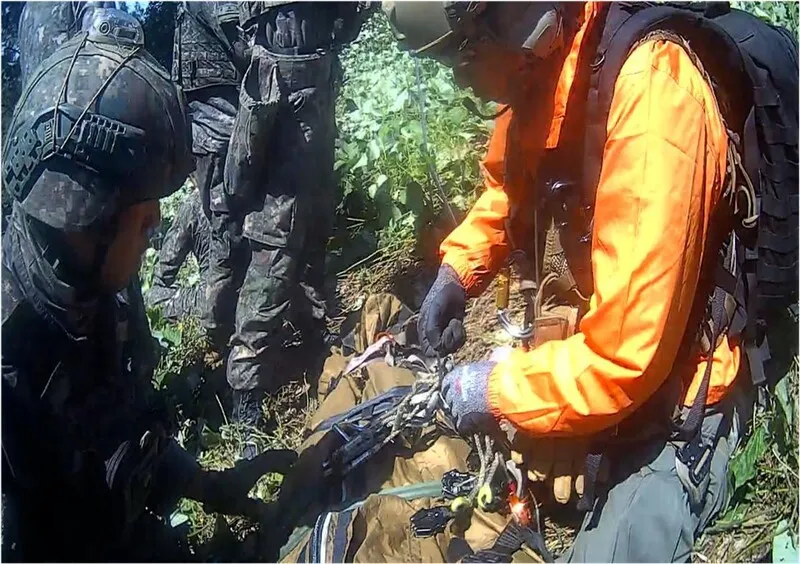
That is the gap, confirmed by audio recorded at a guard post (GP), between two separate explosions that struck a single file of 18 soldiers from the Army’s 25th Division. The first hit three men simultaneously as an engineer took a left step while preparing to withdraw from a new patrol-route survey. The second exploded 58 seconds later, picking up the reconnaissance battalion commander who had sprinted toward the first victim, shouting “You okay?” into the dirt. He landed with a shattered left ankle and shrapnel in his right thigh.
Fifty-eight seconds is not the rhythm of an old, corroded booby trap going off by accident. It is the rhythm of a sequence.
A third device changes the evidentiary picture
The soldiers’ escape from the blast zone was harrowing and, frankly, slow. Dense underbrush, rough terrain, a seriously wounded commander being carried on shoulders. But it was what they found on the way out that turned this from a bad day into a case file. An engineer crawling ahead with a hand shovel, scraping the ground to open a 20-meter corridor, spotted a square, smooth, brown plastic object roughly one meter from the first crater. The soldiers who saw it described it as a “wooden-casement mine” — the colloquial name for the type North Korea plants along the demarcation line. The Army assessed it as a resin anti-personnel device consistent with North Korean inventory.
Three mines in a tight cluster, 10 meters south of the Military Demarcation Line, in the western DMZ near the 25th Division sector. One triggered the first blast. One triggered the second, 58 seconds later. One was still sitting there, unexploded, when the survivors crawled past. That is not the signature of degraded ordnance left over from the 1953 armistice. That is the signature of a placement event. Someone walked this terrain recently, set three devices in a short arc, and walked away.
Who was where, and why it matters
The operation in question was a routine new-patrol-route development exercise. Eighteen soldiers — a recon element, a command element, and a logistics/support element — were moving on foot through the DMZ to carve a new trail for future patrols. The recon battalion commander assessed proximity to the MDL, called off the operation, and ordered withdrawal. They had not crossed the line. They were approximately 10 meters south of it, on South Korean sovereign soil in the strictest sense, though the MDL is a militarized boundary, not a soft border.
This detail is not trivial. If North Korea had fired across the line, the response protocol is set: Seoul’s cross-border artillery counterbattery, a verbal protest, a calibrated show of force. But a landmine is a different instrument. It leaves no shell casing, no launch platform to track, no radar return to attribute. It is, in the language of military law, a pre-placed attack that delivers its payload on the attacker’s schedule. The attribution problem is harder, and the political cost of misattribution is higher.
The escalation math now looks different
Seoul has responded to prior North Korean mine incidents — including the October 2023 firing incident near Panmunjom and earlier booby-trap detonations — with a mix of artillery fire across the DMZ and diplomatic protests. The pattern has been: hit back, signal that the cost of a probe is real, stand down. It worked because each prior incident was, on the surface, a single event. A shot. A single mine. One exchange.
Three mines, sequenced, with a 58-second kill window built in, is not a single event. It is an operation. It implies a small team with a plan, a timing choice, and an intent to wound multiple personnel in rapid succession. That reframes the incident from a “border frictions” category to a deliberate targeting category, even if the target set was soldiers clearing a trail rather than a specific individual.
For Washington, the question shifts. The bilateral alliance treaty obliges the United States to defend the Republic of Korea against armed attack. A single accidental mine does not trigger Article III consultation in any meaningful way. Three planted mines that maim a battalion commander and two other officers does. The State Department and Pentagon will now have to decide whether this crosses the threshold from “Seoul manages, we backstop” to “we sit in the room at the next SCARF meeting.” That is a posture change, not a policy change, but in an alliance, posture is often the whole policy.
What North Korea likely wants, and what it cannot want
The regime’s official line will probably be the familiar one: South Korean infiltration, espionage, violation of the armistice. The physical evidence — three mines, one unexploded, all on the South Korean side of the MDL — makes that narrative thin. But Pyongyang does not need the evidence to be strong; it needs the deniability to be plausible enough that a moderate Seoul government cannot build a coalition around full attribution without risking a wider war.
What the regime likely wants is a test of South Korean restraint. Will Seoul fire back across the DMZ and risk drawing in Washington? Will it hold its tongue and accept the humiliation of a staged ambush? The answer they are fishing for determines their next probe, whether that comes in two weeks or two months.
What it almost certainly cannot want is a successful deterrence demonstration that pins down the mine-placement capability as a red line. Every time Seoul fires and North Korea absorbs the strike without escalating to the peninsula-wide artillery exchange that Seoul has long rehearsed, the margin for future bold acts widens. The 58-second sequence, if attributed publicly and credibly, narrows that margin back down.
The next 72 hours that matter
Watch for three signals. First, whether Seoul releases the audio and photos of the third mine publicly or keeps them in the evidence vault. Public release is an attribution move; it locks the narrative. Second, whether the next SCARF (Senior Combined Air and Force) or extended defense consultation meeting is convened before the end of the week. An early call means Washington is treating this as a treaty-consultation event, not a routine ally check-in. Third, whether North Korea fires back across the DMZ within 48 hours of Seoul’s counterbattery, if any is conducted. A second firing would confirm the operation was a probe, not a finished message, and would push the situation from “managed border friction” into active low-intensity conflict.
The 25th Division’s soldiers cleared a trail in the DMZ on July 21. The trail they walked was not theirs. It was laid, three mines deep, by someone who counted the seconds between blasts and called 58 good enough.
That is a number that will now appear in every after-action review on both sides of the river, in every scenario the combined forces run over the next year. The DMZ is not a buffer anymore. It is a firing line with a schedule, and the schedule just got 58 seconds shorter.