The DNA On Switch Just Got Decoded — What It Means for Gene Therapy
A UC San Diego team used AI to decode a universal DNA 'initiator' sequence that controls 60% of human genes. The breakthrough could reshape how we approach gene therapy design and accelerate the biotech investment cycle around gene activation.
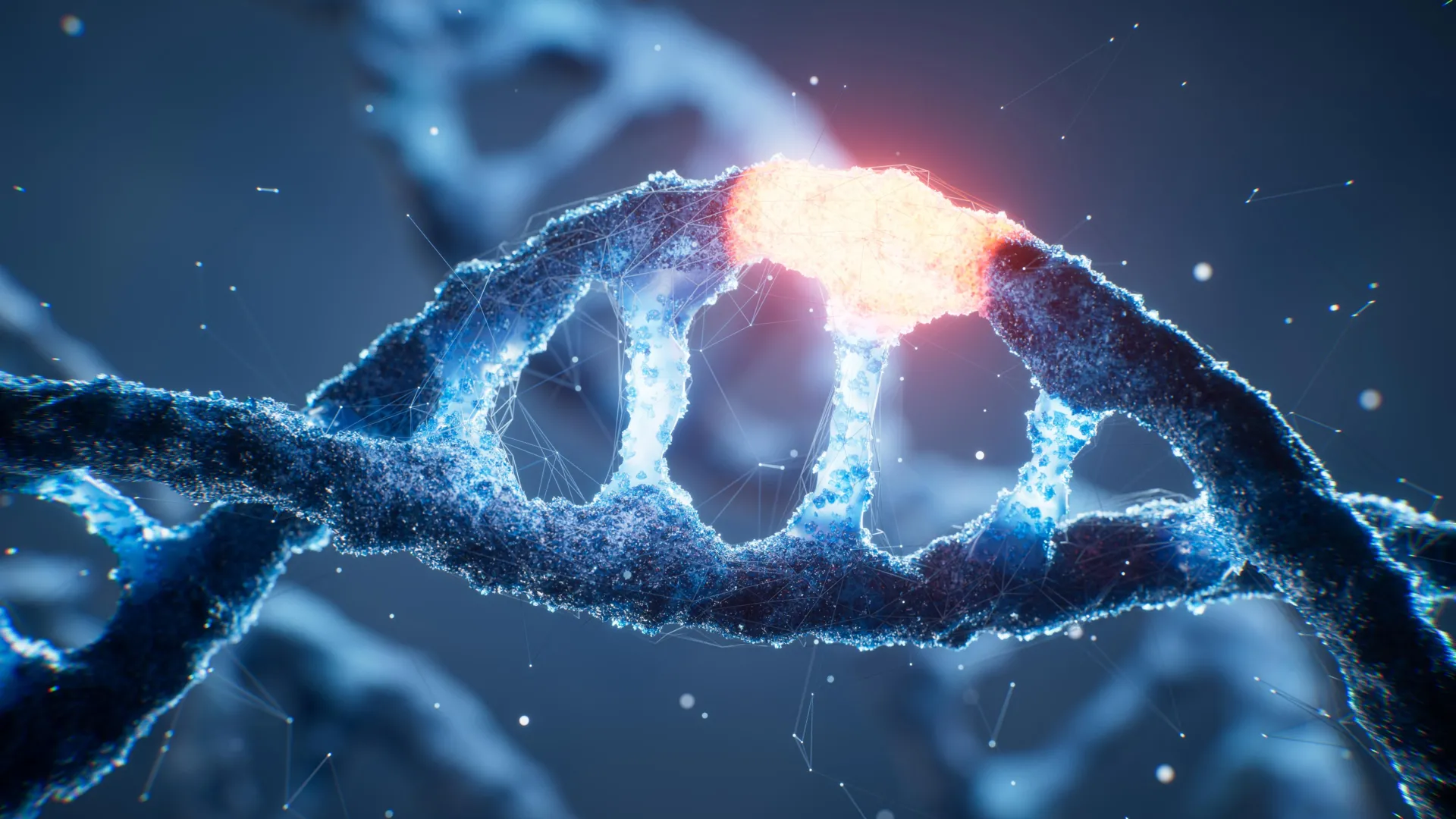
A Switch We Finally Read
For decades, molecular biologists have known that genes don’t simply turn on because someone says they should. They require a precise sequence of DNA at their starting line — an element scientists call the “initiator.” It is the molecular equivalent of a starter’s pistol, telling the cellular machinery where to begin transcribing genetic information into functional products. But until now, no one had cracked the exact code that makes it work.
A team at UC San Diego, led by graduate researcher Torrey Rhyne-Carrigg under the direction of Professor James T. Kadonaga, has done just that. By running half a million variations of the initiator through high-throughput sequencing and training a machine-learning model on the results, the researchers decoded the signature pattern. Roughly 60 percent of human genes contain it. That means more than half of the genes in every cell in your body depend on this tiny stretch of DNA to fire correctly. When the initiator misfires — or mutates — the consequences can cascade into malfunctioning cells, developmental disorders, or cancer.
The study, published this week via Science Daily, is modest in scope but significant in implication. It is one of those papers that arrives quietly and then ripples outward faster than anyone expected.
How They Did It
The approach was straightforward in principle, almost brutally so: test everything, let the pattern emerge, then let AI generalize. The team synthesized approximately 500,000 different versions of the initiator sequence and measured how each one drove gene expression. The data that rolled in was noisy, uneven, and deeply biological — the kind of dataset that would have overwhelmed earlier computational methods. But the machine-learning model was built to handle exactly that kind of messiness.
Once trained, the model could predict with confidence whether any given initiator sequence would be functional, and it could identify the subtle nucleotide patterns that make the difference between a strong promoter and a weak one. When the researchers searched the human genome using the decoded signature, about 60 percent of genes lit up. That number alone is remarkable. Most people working in gene therapy assume that regulatory elements are sparse and hard to pin down. This suggests the opposite: the initiator may be one of the most common control elements in the human genome, and its code was sitting there all along.
Why It Matters for Gene Therapy
Gene therapy has spent the last decade chasing delivery vehicles — viral vectors, lipid nanoparticles, the usual cast of characters. But the delivery problem is only half the story. The other half is regulation: how do you make sure a therapeutic gene turns on at the right time, in the right tissue, at the right level? Most current approaches rely on viral promoters pulled from the natural world, which are imprecise and often trigger immune responses or silencing over time. Synthetic promoters, designed from scratch, are the holy grail — but designing one requires knowing the rules.
This decoder ring is step one. With a reliable model of the initiator, researchers can now rationally engineer synthetic promoters with tailored activity profiles. Want a promoter that fires strongly in liver cells but stays quiet everywhere else? The initial design framework exists. Want one that responds to a small molecule trigger? Start from the initiator and build outward.
The implications extend beyond clean gene replacement. Many genetic diseases are caused not by broken genes but by mutations in their regulatory regions — including mutations in the initiator itself. The Kadonaga team’s models can now predict how a single-base change in the initiator alters gene activity. That means clinicians and researchers can look at a patient’s variant and anticipate its functional impact, rather than waiting for clinical symptoms to confirm the damage.
Who Benefits and What Breaks
The biotech firms already working in synthetic biology and gene therapy stand to gain the most immediately. Companies building AI-driven promoter design platforms will have a newly validated benchmark. Those with pipelines in rare-disease gene therapy could accelerate candidate selection by understanding how initiator mutations affect expression before ever entering the clinic. The investors who backed these platforms early get a leg up on a moat that just grew wider.
Traditional vector companies that rely on generic viral promoters face pressure. If rational promoter design becomes the standard, the old reliance on whatever promoter happened to come attached to a lentiviral backbone looks increasingly naive. That shift will take years to play out, but the direction is clear.
Diagnostic companies that specialize in interpreting non-coding variants will also benefit. Currently, a variant in an initiator region is often classified as a variant of uncertain significance — VUS, in clinician shorthand. This research gives them a tool to move many of those variants into the “likely pathogenic” or “likely benign” categories, reducing diagnostic uncertainty for families affected by rare diseases.
The Bigger Picture
Kadonaga framed the work carefully. He called the initiator model “a small but important part” of what he hopes will become a complete AI model of the human gene expression code. Six billion base pairs per cell. A regulatory program that decides which genes turn on in which cells at which times during development and throughout life. The initiator is roughly the first chapter of that book. If the pattern holds — if each new regulatory element can be decoded with the same combination of high-throughput experimentation and machine learning — then the goal becomes achievable rather than aspirational.
That trajectory would transform precision medicine. Right now, we can sequence a person’s genome and identify candidate disease mutations with reasonable accuracy. What we cannot do well is predict how those mutations affect gene regulation across different tissues and life stages. A full AI model of gene expression would close that gap. It would allow us to simulate, in silico, how a given variant alters expression in the heart versus the brain versus the pancreas. It would let us forecast drug response and toxicity before giving a patient anything.
The Kadonaga lab’s work proves the method works on a real biological problem. The next few years will show whether it scales. The funding community should be watching closely.
What Comes Next
The immediate next step is validation. The initiator model needs to be tested against known disease-associated variants and compared with experimental measurements in cell lines and, eventually, animal models. If the predictions hold, the path opens to building larger promoter libraries and feeding them into the same AI framework. Each new regulatory element — enhancers, silencers, insulators — becomes another module in the growing expression model.
For the biotech sector, the signal is simple: the era of designing gene therapies by trial and error is ending. The tools to rationally program gene expression are arriving, and the initiator is the first piece to click into place.