Thwaites Glacier Melt Doubles Sea Level Projections
New satellite data reveals Thwaites Glacier is melting far faster than models predicted, doubling projected sea level contributions by 2100. The findings rewrite climate timelines and raise urgent questions for coastal nations.
The Math Just Got Worse
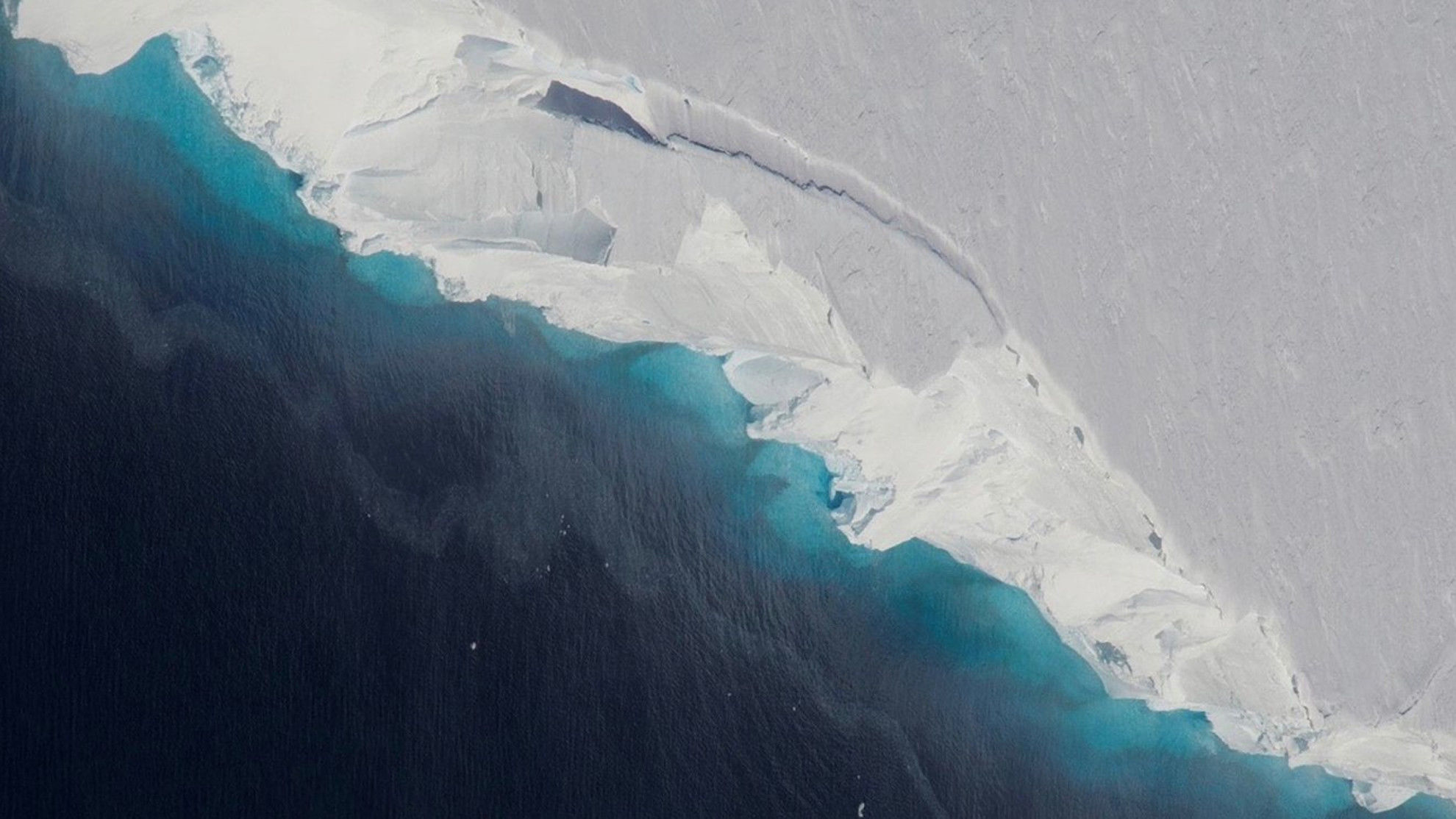
Thwaites Glacier, the massive ice formation anchoring Antarctica’s west coast, is losing ice at roughly twice the rate scientists had projected — and the implication is not incremental. It is structural.
A study published last week in Nature Communications shows that previous computer models systematically underestimated the pace of ice flow at Thwaites, dubbed the Doomsday Glacier. Where earlier projections estimated the glacier would contribute about 15 millimetres to global sea level rise by 2100, the new model puts that figure at 30 millimetres. That is not a revision. It is a doubling.
The finding forces a re-read of climate timelines that coastal planners, insurers, and governments have been using as a rough map for the coming decades.
What the Satellites Saw That Models Missed
Thwaites stretches 120 kilometres across — wide enough to cover Nova Scotia plus Newfoundland, Prince Edward Island, and a quarter of New Brunswick in ice a kilometre thick. It holds enough frozen water to raise global seas by roughly 65 centimetres on its own, and it acts as a cork for a much larger segment of the West Antarctic Ice Sheet, which could add another 2.4 metres if it were to fail.
Until now, the physics in most ice-sheet models treated the glacier’s grounding line — the point where ice lifts off the seabed and begins floating — as a relatively fixed boundary. Ocean water could only reach so far inland beneath the ice, and melting progressed in a predictable, slow retreat.
Satellite data tells a different story.
Thwaites’ grounding line does not sit still. It oscillates with the tides. As seawater pushes in at high tide, it forces its way deeper under the ice at pressure. When the tide recedes, the water retreats. The result is a grounding zone — sometimes several kilometres wide — where warm ocean water circulates vigorously beneath the glacier and accelerates basal melting far beyond what stable-grounding-line models predicted.
Lead author Mattia Poinelli, based at the University of California and NASA’s Jet Propulsion Laboratory, described the shift in understanding bluntly: the grounding line was never a narrow, stable demarcation. It is a dynamic, kilometre-scale zone of active erosion.
The Numbers on the Table
To put the doubling in context: current observations show Thwaites has contributed roughly 4 per cent of the 10 to 11 centimetres of sea level rise recorded since systematic monitoring began. That baseline is real and measurable. The projections for the century ahead were the uncertain part — and they are now materially worse.
Crucially, the new estimate of 30 millimetres by 2100 is derived from a model that matches observed ice-flow records and incorporates the physics of the grounding zone. The researchers note this increase happens even without further warming of the ocean waters around Antarctica. In other words, the glacier is already committed to a higher trajectory of loss based on mechanisms that were previously invisible to the models.
Eric Rignot, a professor of Earth system science at UC Irvine and co-author of the study, said the field has documented and quantified ice-sheet changes for decades but is now confronting a “mounting realization” of what is happening on the undersides of glaciers like Thwaites. “Most projections up to present have struggled to match the rapidity of the mass loss because of missing physics,” he said. “Our new model with more complete physics is able to match the record and then produces projections that are twice larger than before.”
Who Bears the Cost
A doubling of Thwaites’ projected contribution shifts the risk curve for hundreds of millions of people living in low-lying coastal zones. The 30 millimetres may sound small in isolation. But sea level rise does not arrive as a single number — it amplifies storm surges, overwhelms drainage systems, and compounds with subsidence and local land movement. Every additional centimetre tightens the margin between flooding and catastrophe for places like Miami, Mumbai, Dhaka, Rotterdam, and Jakarta.
Bangladesh alone is home to more than 160 million people in flood-prone areas. The Netherlands spends billions annually on water management infrastructure. Small island states face existential threats measured in fractions of a metre. None of these populations chose their exposure. Many of them contributed least to the emissions driving it.
The new data strengthens the case for adaptation budgets that were already on the table and makes a sharper argument for climate reparations. If Thwaites is already on a faster trajectory due to processes models missed, then nations facing the consequences are facing a problem that is worse than what they were told to prepare for.
What Comes Next
The study does not predict an imminent collapse of Thwaites itself. It refines the rate at which it is losing mass and raises the ceiling for sea level contribution this century. That distinction matters. A glacier that melts faster is not the same as one that collapses tomorrow — but the financial and policy timelines for coastal nations do not wait for poetic precision.
The next step is straightforward in principle and difficult in practice: model the grounding zone dynamics at other Antarctic glaciers. If Thwaites was missed this badly, the question is how many other ice streams are currently underestimating their contributions in the IPCC’s projection ranges.
What is clear is that the physical reality beneath Thwaites is more aggressive than the assumptions baked into the models for years. The ocean is reaching deeper under the ice than anyone thought possible. The ground line is not a line at all — it is a zone of violent, tide-driven erosion. And the sea level rise coming is likely to be closer to the top of previous estimates than the bottom.
For the nations standing on the front lines, that is not abstract science. It is a recalibration of risk they never asked for.