Dolly Parton's Death Marks the End of an Era
Parton died at 80, leaving behind a cultural footprint no other entertainer has matched. From country music to philanthropy, she built something larger than fame.
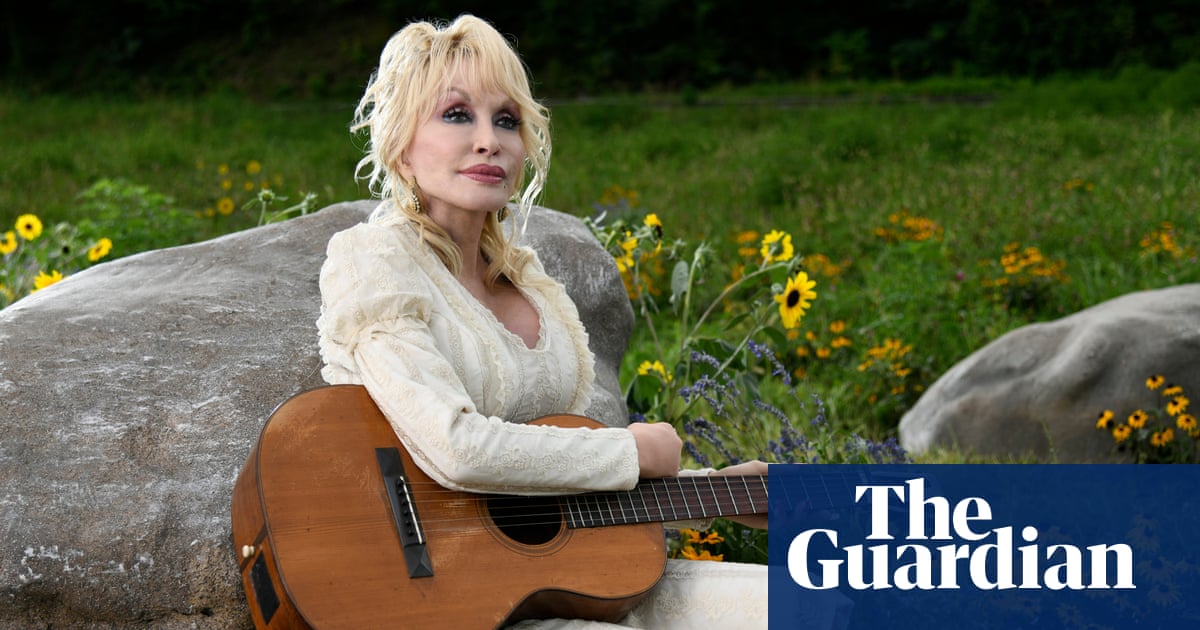
A Lifetime of Firsts
Dolly Parton died at 80. The announcement came from her nephew Brian Seaver on Instagram, and within hours the cultural machinery that has surrounded her for six decades began whirring into overdrive. But the real story here isn’t just that a giant has fallen — it’s what the size of that giant tells us about the kind of entertainer the world no longer produces.
Parton wrote two of the most covered songs in pop history — “Jolene” and “I Will Always Love You” — in a single day. She built Dollywood from a half-owned theme park into a tourism empire. She gave away more than 150 million books through her Imagination Library, which now reaches children across five countries. She was the subject of genuine public reverence while still alive, a status achieved by fewer people than could be counted on one hand.
When she dies, we lose not just a musician but a blueprint.
The Unlikely Architecture of a Career
Parton’s trajectory defies every conventional narrative of entertainment success. Born into a one-room cabin in Tennessee, the fourth of twelve children, she began performing as a child on local television and cut her first record at 13. By 16 she was introduced by Johnny Cash at the Grand Ole Opry.
She moved to Nashville at 18, signed as a songwriter, and then spent years being told she didn’t fit — too country for pop, too glamorous for traditional country, too outspoken for the industry’s version of a female star. She persisted anyway.
Her breakthrough came not through compromise but through insistence on her own terms. The rhinestones, the hair, the theatricality — all of it was dismissed by critics as artifice. They missed the point. Parton was building a character that was simultaneously authentic and performative, vulnerable and armored. She proved you could be both serious and ridiculous, and that the combination itself was the art.
The numbers are staggering even for someone accustomed to them. Twenty-five US country number ones. Forty-seven albums in the country Top 10. A crossover hit with “9 to 5” that became an anthem for working women. A Grammy-winning collaboration with Linda Ronstadt and Emmylou Harris that remains one of the great country-pop recordings ever made. An acting career that produced a Golden Globe nomination and a place in film history despite Hollywood’s habit of discarding women who refuse to shrink themselves.
But the numbers miss what actually made her unique. Parton didn’t just participate in multiple industries — she transcended them. She was a songwriter who became a performer, a performer who became an actress, an actress who became a businesswoman, a businesswoman who became a philanthropist. Each phase fed the others.
The Business Behind the Glamour
Few people in entertainment understand business the way Parton does. She co-founded Sandollar Productions, which went on to produce television shows and films that generated revenue long after she left the set. She bought into Silver Dollar City and transformed it into Dollywood, a venture that now employs thousands and anchors the economy of eastern Tennessee.
The Dollywood Foundation, established in 1988, started with scholarships and high school completion programs. It evolved into the Imagination Library in 1995, a literacy initiative that sends a free, age-appropriate book to every child from birth to age five in participating communities. Nearly 25 million books are distributed annually across the United States, Canada, Australia, the United Kingdom, and Ireland.
Jeff Bezos gave her foundation $100 million in 2022. That’s not charity — it’s an acknowledgment that Parton built something the charitable sector couldn’t replicate on its own.
Her philanthropy was never performative. She funded a hospital in her home county. She donated to bald eagle preservation. She supported HIV/AIDS charities. She funded COVID-19 research at Vanderbilt that contributed to the Moderna vaccine. She opposed North Carolina’s transgender bathroom bill and supported Black Lives Matter. The philanthropy was continuous, specific, and often understated.
What We Lose When She Goes
Parton’s death arrives at a moment when the entertainment industry is more fragmented, more risk-averse, and more focused on temporary virality than on building lasting careers. Streaming has changed how music is consumed. Social media has changed how stars are discovered. The attention economy rewards novelty over depth.
In that context, Parton’s life looks almost anachronistic. She built a career across sixty years — not through algorithmic optimization or trend-chasing but through a stubborn commitment to craft, image, and relationship with her audience. She released albums that crossed genres without abandoning her roots. She acted in movies that were neither critical nor commercial triumphs but that she clearly enjoyed making. She stayed in public life even as younger artists took her place on the charts.
The younger generation of artists — Miley Cyrus, her goddaughter; Kesha; countless others — have cited Parton as an influence. She appeared with them, learned from them, and proved that mentorship doesn’t require hierarchy.
What’s striking is that Parton never stopped being relevant by trying to be young. She leaned into her age, her history, her identity as an older woman in an industry that typically discards women like her. The album “Rockstar” came out in 2023. She was headlining Las Vegas residencies into her seventies. She was still touring, still recording, still present.
The Last Original
There have been many singer-songwriters of extraordinary talent since Parton emerged in the 1960s. There have been actresses who balanced music and film. There have been philanthropists who used their wealth to change communities. But the convergence of those identities — the way they reinforced each other, the way they created a person who was more than the sum of her parts — remains singular.
Parton’s death closes a chapter that began when she stepped off a bus in Nashville at 18 with a guitar she’d strung herself and a conviction that stardom was inevitable. She was right. Not because she was privileged or protected, but because she understood something about herself and her audience that most people spend their entire careers failing to grasp: that authenticity doesn’t require simplicity, that glamour can carry intelligence, and that generosity and ambition are not opposites.
The world will mourn Dolly Parton. It should also study her. Not to replicate what she did — that’s impossible — but to remember what’s possible when someone refuses to be diminished by the constraints placed on women, on country artists, on poor people from rural America, on anyone told to make themselves smaller.
She looked this cheap. It took a lot of money. She kept going until the end.