How Seo In-young Turned Her Divorce Into a Netflix Redemption Pitch
A new Netflix variety show weaponizes Seo In-young's notorious reputation and very public divorce into a global-ready redemption arc. What the project reveals about K-entertainment's streaming future.
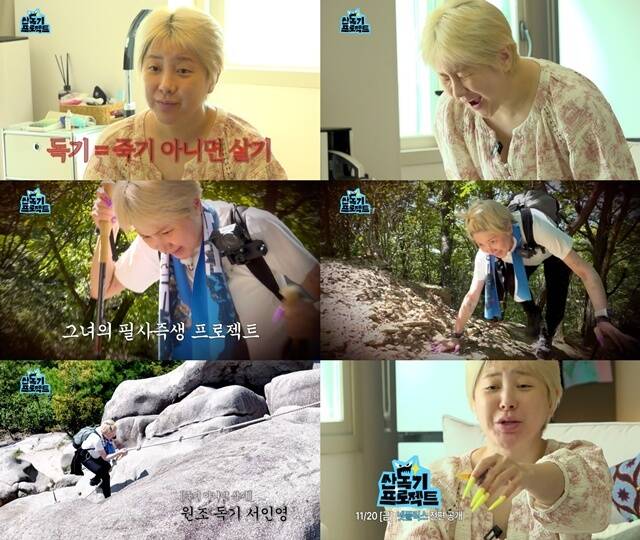
The Villain Who Won
Seo In-young walked into a Netflix-produced variety show and told the world: I got divorced, and I survived.
Her character teaser for the upcoming “산독기 프로젝트” (Sansaengg-i Project, or Mountain Vibe Project) didn’t shy away from her reputation. Instead, it leaned into it. The tagline called her “queen-is-back” and “원조 독기” — the original toxic one. She screamed at her invitation to appear, declaring she hated both the negativity and the mountains. Then she made a vow that turned a personal history into brand content: if the project fails, she will shut down her YouTube channel.
She even threatened her own life on camera — a theatrical gesture, perhaps, but one that maps neatly onto a genre globally recognized and rewarded: the redemption arc.
The show, produced by TEO, premieres in full on Netflix on November 20. It stars Hong Jin-kyung, Seo In-young, actress Lee Sun-bin, and actor Lee Yeon, all navigating hiking, trail running, and backpacking across Korea’s natural landscapes. The premise is simple: physical exertion as emotional detox. But the real story here is who has been assembled and why they have been assembled.
Hong Jin-kyung’s Blueprint
Hong Jin-kyung is the template this show implicitly follows. Once dismissed as a sharp-tongued, unpredictable variety presence, she spent years slowly rebranding herself from internet nuisance to respected broadcaster through sheer persistence and visibility on cable shows. Her arc — controversial figure, gradual rehabilitation, industry acceptance — played out over more than a decade and has been widely observed by Korean media scholars as a rare case of organic reputation repair in a culture that still punishes public scandal severely.
Now, Hong Jin-kyung is sitting at the same table as Seo In-young, and the parallel is unmistakable. The show isn’t just using their notoriety as entertainment value; it is structuring their public narratives around a single formula: endure the mountain, shed the toxicity, emerge whole.
That formula translates easily across borders. A Korean divorce story, properly framed, becomes universal content for streaming.
독기 as Cultural Product
The title itself does the heavy lifting for international audiences who won’t immediately grasp what “산독기” means. 독기 is a Korean term carrying layered meaning: it refers to a poisonous aura or malicious energy, but in contemporary usage it also describes fierce determination — the kind of stubborn, almost self-destructive drive people admire in athletes and artists. The project’s conceit is that nature, specifically mountain hiking, acts as a neutralizer. You climb until the 독기 burns off.
Seo In-young’s version of 독기 is blunt: “죽기 아니면 살기” — die or survive. She frames her divorce as proof she can handle the worst. Lee Yeon defines it differently: an unstoppable energy that requires rest as much as effort. These aren’t just personality quips; they are positioning statements for two very different kinds of celebrities trying to control how the public remembers them.
For a global audience unfamiliar with the specifics of Seo In-young’s 2022 divorce from fellow entertainer Jung Joon-ha, the reference will likely land as background texture — a scandal acknowledged but not deeply interrogated. That ambiguity works in the show’s favor. It removes the need for context while preserving the emotional weight.
Why Netflix, Why Now
TEO is an independent production company that has built a track record of creating format-ready Korean content. Its involvement signals a deliberate strategy: produce something visually driven, personality-led, and structurally simple enough to travel without heavy localization. The November 20 full-drop release on Netflix — not a weekly episode schedule but a complete season at once — aligns with how the platform typically rolls out Korean variety and documentary content aimed at international audiences.
This is part of a broader pattern. Korean streaming content has shifted from drama-heavy catalogs to personality-driven formats that require less linguistic immersion. A hiking show doesn’t demand fluent Korean. It demands recognizable faces, physical struggle, and emotional moments that land in any language.
But the formula isn’t neutral. Casting celebrities known for controversy or personal turmoil as the emotional cores of wellness-oriented content carries real implications. It risks turning genuine personal hardship — divorce, public backlash, career crisis — into consumable branding material. Seo In-young’s promise to cancel her YouTube channel if the project fails is performative vulnerability dressed as commitment. Whether that distinction matters to viewers will depend on how honestly the final episodes handle her actual reflections versus produced moments.
Who Wins, Who Loses
Seo In-young wins if the show reframes her public identity from scandal figure to resilient survivor. Hong Jin-kyung wins by cementing her return to mainstream credibility. Lee Sun-bin and Lee Yeon gain exposure through association. TEO gains a portfolio title with international distribution. Netflix gains another Korean-language original with low dubbing costs and high personality appeal.
The cost falls on the nuance of their actual stories. Redemption arcs on streaming platforms tend to flatten complexity into satisfying narratives. Divorce becomes a plot point, not a lived experience. Toxic energy becomes a theme to be cleansed, not a pattern to be examined.
What happens next depends on whether the full season matches the honesty of its teasers. If it does, this could mark the beginning of a new subgenre in Korean streaming: celebrity-driven nature recovery shows that export personal rehabilitation as entertainment. If it doesn’t, it will be remembered as another polished attempt to monetize a celebrity’s lowest moment.
Either way, the strategy is clear. Korean entertainment is no longer asking global audiences to learn its context. It is packaging its context so tightly that the audience doesn’t need to.