Dolly Parton lived fully. That was the whole point.
Dolly Parton died at 80, leaving behind more than records and hits. Her life offers a blueprint for cultural icons in the streaming era — one where brand integrity and generosity matter as much as chart performance.
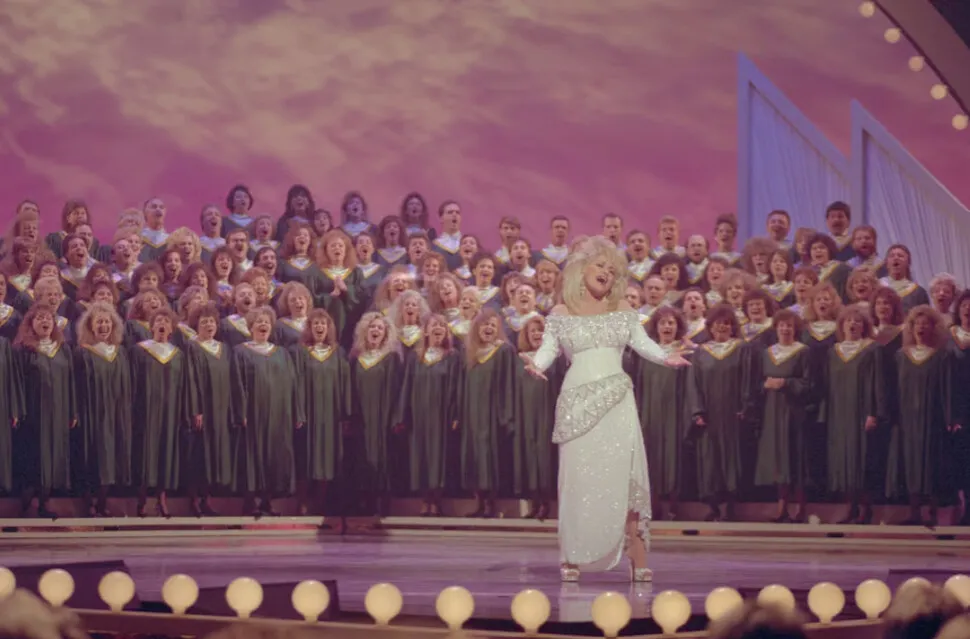
She never stopped performing
Dolly Parton died at 80 on a Thursday morning in her Nashville home. Her family released a statement the same day confirming the death but withheld the cause. A few days earlier, she had sat down with People magazine and acknowledged having health issues without naming them. She said she would keep working.
That line — that refusal to step away — is the throughline of a career that spanned six decades and defied easy categorization. She was a country singer who crossed over to pop. A songwriter whose catalog of roughly 3,000 compositions makes her one of the most prolific creators in American music history. An actress, a theme park entrepreneur, a philanthropist who quietly funded some of the most impactful literacy programs in the United States.
What makes her story worth examining now, beyond the immediate grief of a generation of fans, is what she built. Not just songs. A self-sustaining cultural ecosystem that has survived genre shifts, technological disruption, and the fragmentation of mass audiences.
The blueprint
Parton was born in 1946 in Sevier County, Tennessee, the twelfth of thirteen children in a family that lived in a one-room cabin. She began writing songs at six. By eleven, she was performing on local radio. After high school, she moved to Nashville and found her first major collaborator in Porter Wagoner, whose television show gave her a national platform in 1967.
What happened next was not accidental. Parton wrote all of her own hits. She controlled her image — those towering wigs, those glittering costumes were not the result of a marketing team’s focus group. They were choices she made, calculated to create something instantly recognizable in an era when visual identity was harder to achieve without television. She understood that being memorable is its own form of currency.
She also understood that joy could be a business strategy. When other artists were wrestling with the tension between artistic credibility and commercial appeal, Parton simply refused to feel guilty about success. Her persona — unapologetically bright, relentlessly optimistic, deeply rooted in Southern tradition — allowed her to occupy space in American culture that no one else could fill.
The numbers don’t lie
She has sold more than 100 million records worldwide. She has won eleven Grammy Awards. Twenty-five of her songs reached number one on the Billboard Hot Country Singles chart. She was inducted into the Songwriters Hall of Fame and the Rock and Roll Hall of Fame. In 2007, she received the Johnny Mercer Award, the highest honor the songwriting community bestows.
None of this accounts for Dollywood, the theme park she built in her hometown of Pigeon Forge, Tennessee, which has become one of the state’s top tourist destinations. None of this accounts for her role as an early backer of Moderna’s vaccine research during the pandemic, contributing $1 million to Vanderbilt University’s efforts. None of this accounts for the Dollywood Foundation, which has donated millions to literacy programs across the United States, Canada, the United Kingdom, and Ireland.
The library that keeps growing
In 1995, Parton founded the Imagination Library, a program that mails free books to children from birth until they start school. The program has delivered more than 200 million books to children worldwide. That is not charity as a PR gesture. That is a sustained investment in the idea that literacy changes outcomes — an idea that has been proven true again and again.
In 2020, when the world was reeling from COVID-19, Parton’s donation to Vanderbilt helped accelerate the development of the Moderna vaccine. She did not announce the gift with fanfare. It was reported, then largely forgotten by the press cycle. That is exactly how philanthropy should operate: quietly, effectively, without demanding constant attention.
Nashville responded by erecting a life-size bronze statue of Parton in front of the courthouse. It is a fitting tribute to a woman who rose from a cabin with no running water to become one of the most recognizable faces in American entertainment.
What survives the algorithm
The streaming era has made it harder for artists to build careers the way Parton did. Her breakthrough came in an age when albums were the primary unit of consumption, when radio play could launch a career, when a single television appearance could reach millions of households simultaneously. Those pathways no longer exist in the same form.
What she built — a personal brand so tightly woven with her music, her persona, and her values — is something that can survive technological disruption. The name Dolly Parton means something. It signals quality, warmth, authenticity. Those associations do not disappear when a new distribution model emerges.
For younger artists navigating an industry that rewards virality over longevity, Parton’s career offers a counter-example. She never chased trends. She never tried to be something she was not. She built something durable by being exactly herself, loudly and consistently, for over fifty years.
The song remains
In her autobiography, Parton wrote that she feels closest to God when she writes lyrics. She said she wants to be remembered as a good singer-songwriter, that music is her legacy.
That humility is itself remarkable. A woman who shaped American culture for six decades, who touched millions of lives through her music and her philanthropy, reduced her ambition to a simple desire to be known as a good writer. She wrote songs about love, about loss, about ordinary people living ordinary lives. “I Will Always Love You,” “Jolene,” “9 to 5,” “Coat of Many Colors” — these are not just hits. They are cultural touchstones that defined how millions of people understood their own experiences.
When Parton died on that Thursday morning, she left behind a catalog that will continue to generate revenue, inspiration, and connection for decades. But the more important measure of her legacy may be simpler: she made people feel seen. She made them laugh. She gave them permission to be unapologetically themselves.
That is a harder thing to replicate than a chart-topping song.