Dragon Ball Meets Riyadh Money: What the Paris Theme Park Really Signals
A Dragon Ball theme park near Paris backed by Saudi investment looks like a pop-culture novelty — but it is actually a window into Riyadh's soft-power strategy and a signal about how Japanese IP is being monetized globally.
The headline says theme park. The real story is about who is paying.
A Dragon Ball theme park is coming to the Paris region. The announcement, confirmed by French President Emmanuel Macron on X, was picked up by Reuters and other international outlets. The figures are easy to spot: €6 billion in investment, 22,000 jobs expected, and a park described as the largest leisure project seen in France since Disneyland Paris.
What most reports leave out is who is writing the check and why a Japanese anime IP is landing on French soil with Saudi money.
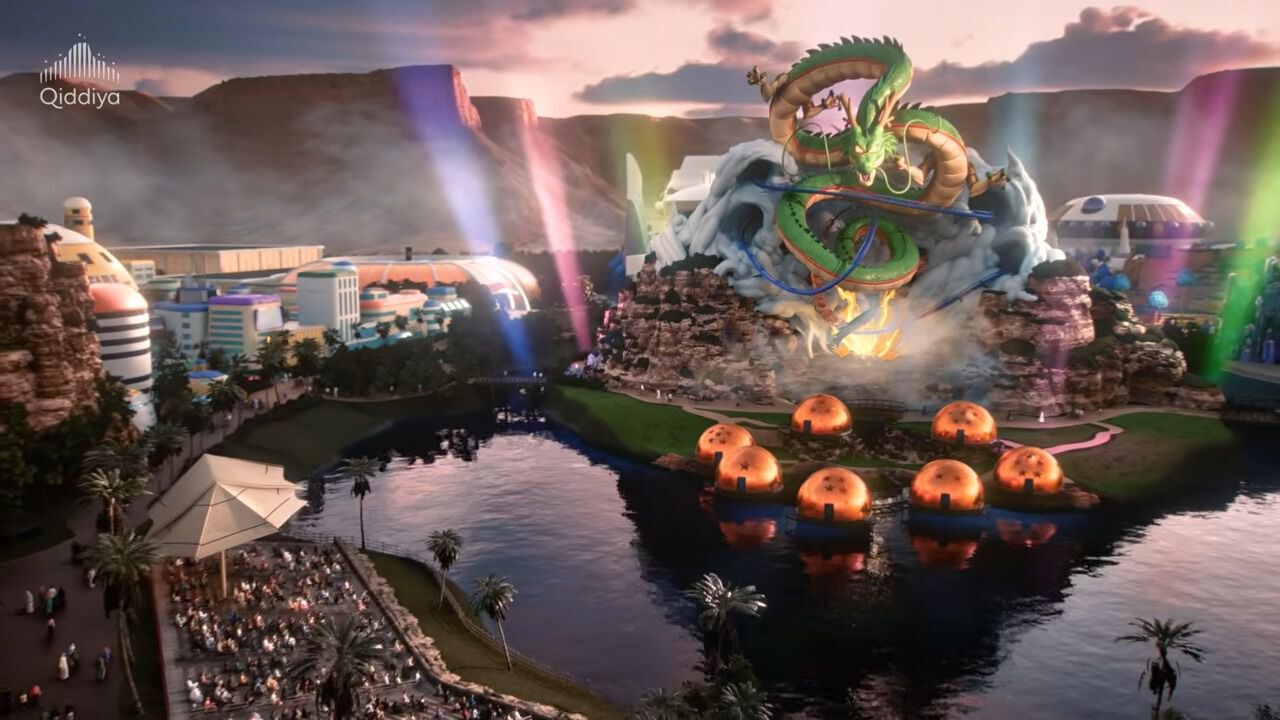
Qiddiya is not a theme-park developer. It is a state strategy vehicle.
The park is being built under the umbrella of Qiddiya Investment Company, a Saudi entity advancing what Riyadh calls its “giga projects.” These are not commercial real-estate plays. They are instruments of national repositioning — designed to shift Saudi Arabia’s global image away from oil and toward entertainment, sports, and culture.
The Dragon Ball park is only one piece. France and Saudi Arabia have agreed to build three theme parks together. The other two remain undisclosed. That pattern — multiple IPs, multiple sites, multiple conversations — is consistent with a strategy of building an entertainment portfolio, not a one-off attraction.
Qiddiya itself, located outside Riyadh, is already under construction as a massive entertainment and sports complex. The Paris park represents a deliberate extension of that playbook into European territory. It is not coincidental that this is happening now, during a period of renewed Franco-Saudi strategic partnership. President Macron has cultivated close ties with Riyadh across energy, defense, and infrastructure. Entertainment investment fits neatly into that architecture — a way to embed Saudi capital in Western cultural life while generating diplomatic goodwill.
The location choice is deliberate, not accidental.
Building near Paris gives the project immediate European accessibility and symbolic weight. It places a Saudi-funded, anime-themed development in the backyard of one of the world’s most visited cities. That is not a random commercial decision. It is a branding move.
Saudi Arabia has already invested heavily in Western sports assets — golf, F1, boxing promotions. An anime theme park in Europe operates in the same logic: acquire cultural credibility in markets where soft power is currency. The difference this time is the IP. Dragon Ball is not a French property or a Middle Eastern one. It belongs to Bird Studio, Shueisha, and Toei Animation — one of Japan’s most valuable and long-running entertainment franchises.
There is also a practical dimension. France already understands large-scale theme park operations through Disneyland Paris, which opened in 1992 and has weathered decades of financial turbulence. European regulators, construction norms, and visitor expectations are familiar terrain for both the French government and the developers. Starting in Paris de-risks the project compared to building entirely new infrastructure in an unfamiliar market.
The IP side is where most observers miss the mechanics.
Dragon Ball is not a single-company asset. It is shared across multiple rights holders, and theme-park licensing requires coordination between them. Toei Animation holds the animation rights and is the primary commercial face of the franchise. Shueisha controls the manga source material. Bird Studio, founded by Akira Toriyama, retains authorship oversight. Any major theme-park deal requires alignment across all of them — and that alignment is never automatic.
The fact that this agreement exists at all suggests a level of coordination that is unusual for an IP of this age and complexity. Dragon Ball’s peak popularity in the West was decades ago. Maintaining relevance requires constant commercial management. A theme park of this scale is a commitment that goes beyond licensing fees — it signals that the rights holders see the franchise as a living global brand, not a nostalgia product.
For Toei Animation, the implications are concrete. Theme-park revenue diversifies income away from television and merchandise cycles. It also anchors the brand in physical spaces where fans spend hours, not minutes — which changes the economics of merchandising inside the park. That matters for a company whose stock has historically tracked anime release calendars and game launches.
The numbers deserve a closer look.
€6 billion is a large sum for a single theme-park project. For comparison, Disneyland Paris cost roughly €4.4 billion when it opened in 1992 — adjusted for inflation, that is closer to €8–9 billion today. The Dragon Ball park is being framed as comparable in ambition but different in model. It is Saudi capital, French land, Japanese IP, and European visitors. That structure is the story.
The park will cover more than 500,000 square meters across seven areas. Attractions include five ride-type experiences and over thirty total offerings. The centerpiece is a 70-meter-tall Shenron statue with a jet coaster running through it. Those specifics matter because they reveal a design philosophy: this is not a small anime plaza tacked onto an existing park. It is a destination built from scratch around a single IP.
That design choice carries financial risk. Single-IP parks have a mixed track record. Universal Studios’ Harry Potter lands succeeded because the franchise had enormous existing global momentum. But standalone IP-driven parks have also faltered — consider the struggles of several Nickelodeon-themed areas or the limited footprint of one-off attractions scattered through larger resorts. Dragon Ball’s fanbase is devoted but niche compared to something like Marvel or Star Wars. The question is whether the Saudi backing and the Paris location provide enough advantage to overcome that limitation.
Second-order effects ripple outward.
The announcement shifts expectations across the theme park industry. Competitors will take notice. Six Flags, Merlin Entertainments, and the Oriental Land Company — which operates the Tokyo Disney resorts and has long shown interest in non-Disney properties — are all watching how a Saudi-backed, anime-focused park performs in Europe. If the project delivers on attendance projections, it validates a model that other Gulf investors may replicate with different IPs.
It also puts pressure on Japan’s own theme park strategy. Japan has historically been cautious about exporting its anime IP in large-scale physical form, preferring smaller attractions within existing resorts like Tokyo Debana World or the Gundam bases. A Dragon Ball park in Paris, funded by foreign capital and operating outside Japan, could complicate that positioning. It raises the question of whether Japanese IP holders should be more aggressive about global physical expansion — or whether they should be worried about ceding control of their most valuable franchises to foreign operators.
There is also a cultural dimension. An anime theme park in Europe, paid for by a Gulf state, normalizes a particular kind of soft-power exchange that has been building for years. Saudi investment in Western pop culture is not entirely new — the kingdom has funded film productions, music events, and sports entertainment. But a permanent physical landmark of this scale is a step beyond temporary sponsorship. It embeds Saudi presence in the cultural landscape of one of the world’s most iconic cities.
What happens next is harder to predict.
The opening date has not been announced. Construction timelines for projects of this scale in Europe routinely face delays — permitting, environmental review, labor negotiations. The three-park agreement with France also means resources may be spread across multiple sites. None of this is unique to Dragon Ball, but it does temper the sense that this is a quick win.
What is clearer is the direction of travel. Saudi investment in entertainment is not new — NEOM, the Qiddiya project, and prior sports deals show a sustained push. What is new is the willingness to partner with European governments and license Japanese IP rather than build entirely from scratch. That is a more efficient soft-power model: borrow cultural gravity instead of inventing it.
The takeaway runs deeper than a roller coaster.
A Dragon Ball theme park in France sounds like a novelty. It is actually a signal — of Saudi strategy, of Japanese IP globalization, and of how entertainment assets are being mobilized for diplomatic and economic purposes. The fans will get a roller coaster through a dragon statue. The investors are playing a longer game.
The real measure of this project will not be attendance figures or merchandise revenue, however impressive those may be. It will be whether it changes how the world sees Saudi Arabia — not as an oil state making occasional cultural gestures, but as a permanent investor in global entertainment infrastructure. If that perception shifts, the Dragon Ball park is doing exactly what it was designed to do. If it stalls, falters, or disappoints, the lesson will be more complicated. Either way, the attempt itself reveals a country willing to spend aggressively and think long-term about its place in the world.