Ebola’s Real Battleground: Why DRC’s Crisis Exposes Global Health’s Blind Spot
The DRC’s Ebola outbreak is the deadliest in the country’s history, but the crisis reveals something deeper than a failing contact-tracing program. Where armed groups control the land, public health has no jurisdiction — and the world keeps acting like it does.
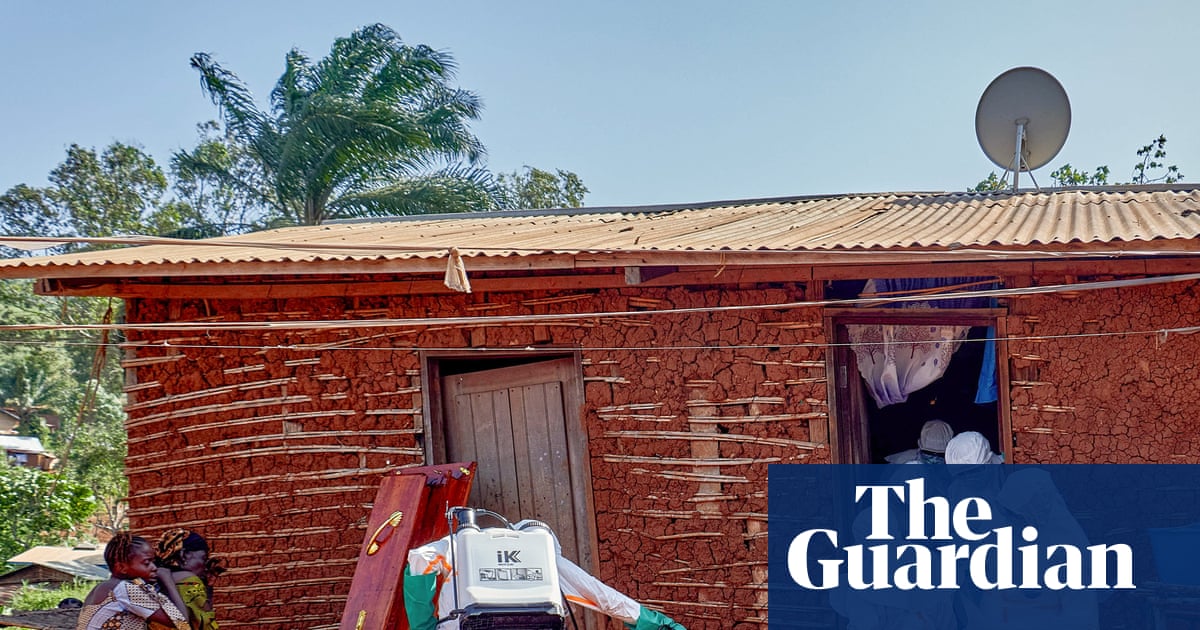
The outbreak that outpaced the response
The Democratic Republic of Congo is facing its worst Ebola epidemic by far. Almost 5,000 confirmed cases and more than 2,300 deaths since the outbreak was declared on 15 May. But those figures are almost certainly a floor, not a ceiling.
Dr. Jean Kaseya, director general of the Africa Centres for Disease Control and Prevention, said in mid-August that this is on track to be the largest Ebola outbreak in world history. Dr. Tedros Adhanom Ghebreyesus of the WHO offered a blunter assessment: the virus had been circulating unreported for months before the official declaration. “It had a big head start,” Tedros said. “We are still playing catch-up.”
The disease itself makes the problem harder. The Bundibugyo strain causes Ebola, but unlike the Zaire strain that has driven most previous outbreaks, there is no licensed vaccine or approved medicine specifically for it. Responders are left with the oldest tool in the epidemiological toolkit: find every case, isolate them, trace every contact. The WHO’s target for contact tracing is 95%. Africa CDC estimates the DRC response is managing about 12%.
The gap between target and reality is not a technical failure. It is a geography problem.
Where the state ends, the virus begins
The hardest-hit provinces are Ituri and North Kivu, eastern DRC territories where the central government exercises nominal sovereignty but limited control. Armed groups, including the M23 rebel movement and a patchwork of local militias, operate freely across large swaths of both provinces. The conflict has displaced tens of thousands, fracturing communities and scattering populations into forests and makeshift camps.
This is not background noise to the epidemic. It is the epidemic’s infrastructure.
Contact tracing requires people to move predictably: to live in the same village, attend the same clinic, share the same market. When militias control roads, when checkpoints extort travelers, when entire populations have fled their homes, the social map that epidemiologists rely on dissolves. Responders cannot reach contacts they cannot find. Contacts hide from responders they do not trust.
Uganda offers a counterpoint. When travelers from the DRC imported the virus into Uganda, the response identified 20 cases and two deaths before declaring the outbreak over. Uganda did not have the M23 to contend with. It had functioning borders, cooperative communities, and a health system that could actually reach people.
The comparison is not meant to suggest Uganda solved Ebola through sheer competence. It is meant to show how much the DRC’s crisis is shaped by what is happening on the ground — and how little global health architecture accounts for that reality.
The trust deficit
Even in areas where responders can physically reach communities, trust is scarce. The DRC government has little presence in Ituri and North Kivu outside of sporadic military patrols. Communities have spent years managing cholera, malaria, and malnutrition without reliable state support. When Ebola response teams finally arrive, the question on many lips is not gratitude but suspicion: why are you here now?
That suspicion has concrete consequences. Infected people delay seeking treatment or avoid it entirely. Some flee treatment centers. Families choose home care and traditional burials that involve direct contact with the body — the most efficient way Ebola spreads. In the hardest-hit areas, the case-fatality rate has climbed to 47%, up from earlier levels, suggesting that the people who are getting sick are those who present late, when intervention is least effective.
The response is pivoting to a door-to-door, village-by-village model, appointing local residents as frontline agents. That approach requires deep community knowledge and sustained presence — exactly what the current security situation makes difficult to maintain.
The financing gap
Money has been promised. It has not arrived.
Africa CDC estimates that $518 million is needed for the direct health response and another $882 million to address the surrounding humanitarian crisis. Donors, including the US, the EU, the African Union, and the World Bank’s Pandemic Fund, have pledged more than enough to cover both figures. But as of mid-August, only $264 million of the $518 million health response allocation had been disbursed, according to Tedros.
The funding delay is not abstract. Frontline workers — nurses, safe burial teams, community health volunteers — have gone on strike over unpaid wages. Banknotes are physically unavailable in remote areas. The airport in Bunia, the capital of Ituri province, has been closed to commercial flights for months, cutting off one of the few supply routes. There are no banks in the affected villages. Mobile money does not reach them. Responders are being asked to work in conditions of extreme risk without compensation they can actually access.
Prof. Yap Boum of Africa CDC put it plainly: without cash in the cities, there is no cash in the villages. Without cash in the villages, operations stall.
Tools exist. Access does not.
There is, at least, reason for cautious optimism on the medical side.
Testing is now available in Ituri rather than requiring samples to be shipped to Kinshasa, cutting days off diagnostic turnaround. Safety trials have begun on two vaccines designed specifically for the Bundibugyo strain. Meanwhile, evidence is emerging that Ervebo, the existing vaccine for the Zaire strain, may offer partial cross-protection against Bundibugyo — enough to reduce mortality even if it does not prevent infection. Officials plan to roll it out on that basis.
Drug trials for both treatment and post-exposure prophylaxis against Bundibugyo are underway. The international pandemic preparedness framework, launched after COVID-19 with a goal of delivering diagnostics, therapeutics, and vaccines within 100 days of any new outbreak, is not going to meet that benchmark for this event. But the incremental progress is real.
What remains uncertain is whether these tools will reach the people who need them. Trials are one thing. Distribution in remote, conflict-affected terrain where health workers are striking over unpaid wages is another.
What happens next
The outbreak will not be over by December. WHO officials hope the intensified village-level approach and the rollout of available interventions will reverse the trajectory within three months. A falling case-fatality rate would be an early signal that people are reaching treatment centers sooner. Stalled or declining case counts would suggest contact tracing is improving. Any further spillover into South Sudan — already grappling with its own humanitarian crisis — would be a warning sign that the outbreak is expanding beyond Congo’s borders.
If current efforts falter, the death toll could surpass the 11,000 killed in West Africa between 2014 and 2016, making this not just the deadliest outbreak in DRC history but the deadliest in recorded history.
The more important question, though, is what this outbreak reveals about the system designed to prevent the next one. Global health security architecture treats outbreaks as biological events that can be contained through surveillance, vaccines, and logistics. That model works when states can project authority over their territory. It breaks down when armed groups control the land, when communities do not trust the government, and when the money pledged for a response never reaches the people executing it.
The DRC’s Ebola crisis is not a failure of epidemiology. It is a failure of governance — and a reminder that no amount of diagnostic speed or vaccine development can substitute for the basic conditions that make a health response possible: safe roads, trusted institutions, and workers who are paid to show up.
The world spent a decade building pandemic preparedness frameworks after COVID-19. This outbreak is testing whether those frameworks were built for the world as it is, or the world as planners wish it to be.