Egypt Warned Israel About Oct 7. Netanyahu Didn't Share It.
New reporting reveals Egypt's intelligence chief made a secret trip to Israel 11 days before the October 7 attacks — and that the UAE also warned Netanyahu. The question isn't whether Israel was warned. It's why those warnings never reached the people responsible for preventing an attack.
The warning came from Cairo, not Tehran.
Egypt’s intelligence chief didn’t send a cable. He didn’t call. On September 26, 2023, Abbas Kamel got on a plane and flew into Israel for a 67-minute meeting that neither Netanyahu nor any senior Israeli security official disclosed publicly at the time — or for years afterward.
The Atlantic reported the visit on Saturday, November 2024, citing officials from seven countries who said Kamel came explicitly to warn that Hamas was planning a significant attack. The warning contained no specifics. No troop movements. No dates. Just a general alarm.
Kamel left. The attack came eight days later.
Then there was the UAE.
On Saturday as well, the New York Times confirmed what Haaretz had reported weeks earlier: UAE President Mohammed bin Zayed called Netanyahu 10 days before October 7 to say that Sinwar was planning a major assault. The call lasted 45 minutes. Netanyahu allegedly reacted with calm and told bin Zayed Israel was prepared.
But here’s the detail that should keep Israeli voters awake: Netanyahu did not pass the warning to his security chiefs.
No briefing to the Mossad director. No note to the IDF chief. Nothing that would trigger a defensive posture, a heightened alert, a reconsideration of the assumptions that had calcified over two years into strategic blind spots.
The prime minister’s office called both reports false. On October 11, 2023, they said Netanyahu had neither met nor spoken with Kamel since taking office. On Sunday, they repeated the denial and accused the Atlantic of recycling material to manipulate Israeli public opinion.
The Sinwar message was even more explicit.
Yoav Gallant, Israel’s former defense minister, told Army Radio on Sunday that Hamas leader Yahya Sinwar had sent a message through Shin Bet channels in the weeks before the attack. The messenger was a former senior Fatah official involved in secret prisoner exchange negotiations. The content: Sinwar said he would “shake the prisons.”
Gallant was not in the room when this message arrived. He was defense minister at the time. He learned about the foreign warnings — from the UAE and from Egypt — from media reports, not from Netanyahu.
“Assuming these things are true,” Gallant said, “such a warning that a prime minister receives from the leader of a country is not a political asset; it is a fundamental failure in the overall assessment of the situation.”
Who was cut out of the loop.
Gallant’s remarks pointed to a second failure, one that goes beyond intelligence and into the architecture of decision-making inside the Israeli government. He said he learned about sensitive conversations between Netanyahu and Washington — on hostage deals, on ammunition — only after American officials called him to verify what had been said. “Their trust in the prime minister was low,” Gallant noted.
This is not a marginal complaint. It suggests that the person responsible for Israel’s defense was sidelined from the very conversations that determined the country’s war strategy, and that foreign governments found it necessary to circumvent the Israeli prime minister to reach Israel’s own defense establishment.
The pattern is consistent: warnings arrive at the top, stop there, and never reach the institutions designed to act on them.
What Egypt’s visit reveals.
The most important implication of Kamel’s trip is not that Egypt warned Israel — that alone would be troubling but manageable. It is that an Egyptian intelligence chief physically entering Israel for a closed-door meeting with no record should have been impossible to conceal in a country where the security establishment is vast and competitive. Shin Bet, Mossad, Military Intelligence, the PMO — these agencies do not typically agree on threats, and they do not typically stay silent about rivals receiving foreign visits of this nature.
The fact that no one blew the whistle suggests either coordination at the highest level or paralysis at every level below it.
The Atlantic reported that Egyptian warnings continued up to two days before the attack. Still no specifics. Still no escalation.
This raises a question that Israeli courts and eventually voters will have to answer: who received these warnings, and why did they not translate into action?
The election changes everything.
Israel votes on October 27. The opposition has already called for a government inquiry. Netanyahu has refused. His UN speech on Thursday was widely understood as a domestic performance — a hardline defense aimed at voters, not diplomats.
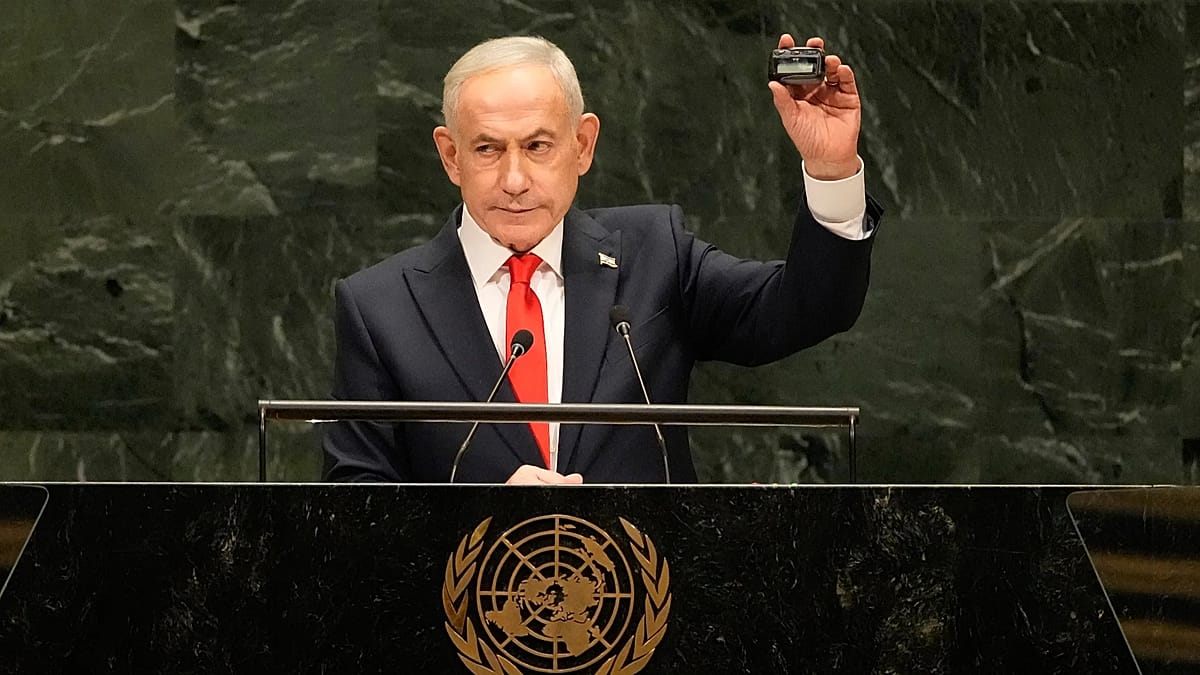
He mocked Hezbollah with a pager. He threatened Qatar with accusations of brainwashing. He told Recep Tayyip Erdoğan he would never rule Jerusalem. And he told delegates who walked out: if any moral cowards remain, please leave now.
But walking out of the UN is easy. Staying informed about an attack on your own country is not.
The harder question.
The UAE president called Netanyahu directly. Egypt’s intelligence chief flew into Israel. A Hamas leader sent a threat through Israeli security channels. Three separate warnings, three separate sources, zero institutional response.
The most uncomfortable implication is that the warning system worked — it just worked for the wrong person. It delivered information to the political leadership and failed to penetrate the security apparatus that was supposed to act on it.
That is not an intelligence failure. It is a governance failure.
Netanyahu’s office will continue to deny. The opposition will continue to demand answers. But the record, as it stands, suggests that on the threshold of October 7, Israel’s enemies were not the only ones who saw what was coming.
Some of Israel’s closest partners did too.