Estonia Closes Russian Borders — What It Means for Europe
Estonia has shut its five road checkpoints with Russia, citing a GRU-linked arson attempt. The move fractures a tightly woven border community and raises uncomfortable questions for Schengen's eastern edge.
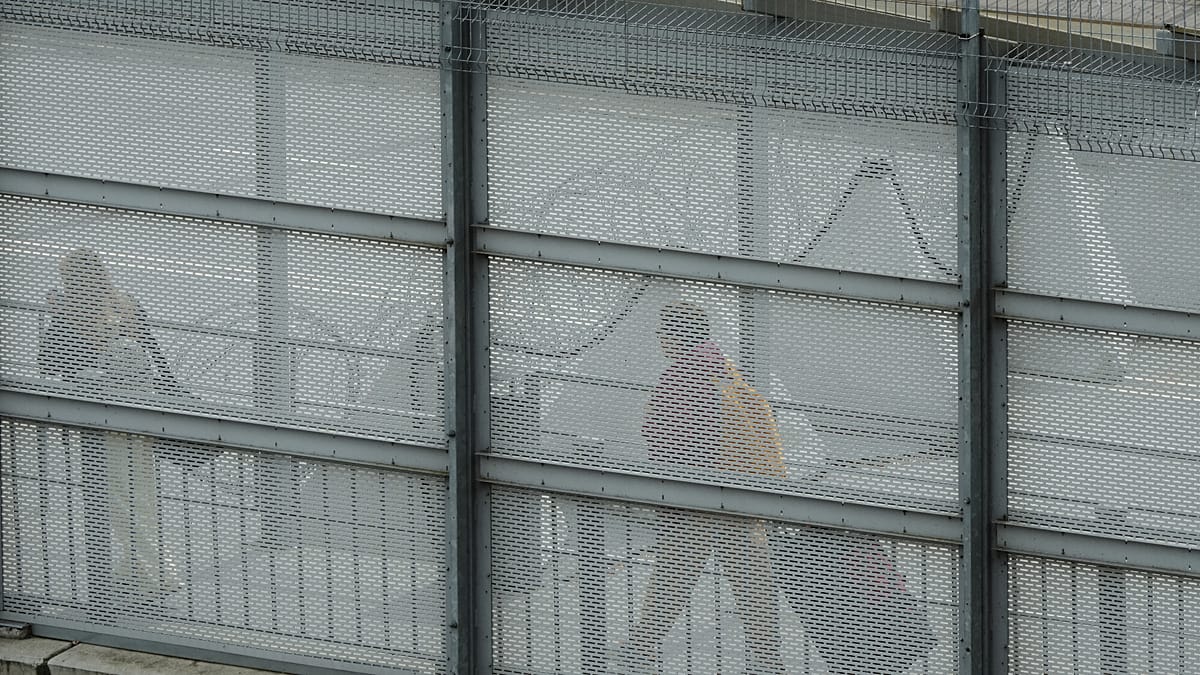
The Day the Narva Bridge Fell Silent
Every morning for decades, a steady stream of pedestrians flowed between Narva and Ivangorod across the Narva River bridge. Nurses in one town caught buses to work in the other. Grandparents crossed to visit grandchildren who spoke different languages and held different passports. Tourists used the narrow crossing as the cheapest route from Helsinki into St Petersburg — a shortcut that bypassed expensive rail fares and long detours through Latvian territory.
Starting 1 December, none of that crosses by road anymore.
Estonia announced on 20 November that it would suspend all five road border checkpoints with Russia for six months. The decision lands on the same bridge that has served as both chokepoint and lifeline for these divided twin cities for generations. It follows an attempted arson attack on Threod Systems, a drone manufacturer in Viimsi north of Tallinn, on 14 November. Eight Latvian citizens were detained at the scene. Estonian intelligence says the GRU orchestrated the operation as part of a broader sabotage campaign targeting defense-industry infrastructure across the region.
Moscow called the accusations unfounded. Foreign Ministry spokesperson Maria Zakharova compared the planned closures to the construction of a new Iron Curtain during a press briefing that drew sharp visual imagery for Kremlin-aligned media. She was not wrong about the symbolism — and Estonia knows exactly how much weight imagery carries in this corridor, where every barrier erected sends signals far beyond its physical footprint.
The Numbers Hide the Human Cost
Annual border crossings between Estonia and Russia fell from over four million before 2022 to roughly 760,000 in 2026, according to Estonian public broadcaster ERR. The Narva–Ivangorod crossing alone accounted for 447,000 of those trips. Russian nationals made up 307,000 of them. Estonian citizens crossed 175,000 times. Another 54,000 came from Finland, drawn by the proximity that made daily commuting economically viable for thousands of families.
Those are averages. They do not capture who actually relies on daily passage or what happens when that rhythm breaks. Narva has a population exceeding 50,000. A significant share of its residents — many of them ethnic Russians who have lived in the city for generations — work in Russia, study there, or maintain family obligations across the river that divides nothing but political jurisdiction. Mayor Jaan Toots has already urged the government to carve out humanitarian exemptions for people visiting elderly relatives, attending funerals, or handling urgent personal matters that cannot wait six months.
Russia itself suspended vehicle traffic through Narva back in February 2024, citing security concerns of its own. Pedestrians kept crossing until now. Estonia’s decision closes the remaining loophole and eliminates what was left of normalcy in a crossing that never fully recovered from the war in Ukraine.
Why This Isn’t Just Another Security Measure
The Threod Systems attack was real enough. Sabotage of critical defense-industry infrastructure is a familiar playbook for Russian intelligence — one that has surfaced repeatedly across Eastern Europe since 2022, from warehouse fires in Poland to radar station disruptions in Romania. But the scale of Estonia’s response points to something larger than a single failed arson attempt. It reflects a recalibration of threat assessment across the entire northern flank of NATO.
Border regions have always been porous, even within supposedly tight security frameworks. The Schengen ideal treats internal borders as invisible, assuming that trusted partners eliminate the need for checkpoints. Reality here proves otherwise: the Estonia–Russia frontier runs directly through populated areas where a grandmother lives in Narva and her son lives ten minutes away in Ivangorod. Surveillance systems can flag suspicious movement patterns. They cannot easily distinguish a spy recruiter approaching someone at a market stall from a grandson picking up his grandmother for dinner after church.
Estonia’s interior ministry framed the closure as a way to make it harder for Russian services to recruit and influence people crossing into the country, while also blocking sanctions-evasion routes that have grown increasingly sophisticated. Goods declared as Finnish or German origin that actually originated elsewhere have been intercepted at checkpoints. Both goals are defensible. So is the cost — and the cost is about to become visible in ways that policy documents rarely capture.
The six-month window invites scrutiny. Short-term closures are politically easier to justify than permanent ones because they carry an implicit promise of return. But short-term measures create long-term ripples that no one planning the announcement fully anticipated. Businesses in Narva that depend on cross-border foot traffic — hotels, restaurants, border-zone employers — will feel the blow immediately. Border guards and customs officers, many of whom live in the area and commute across the same checkpoints they staff, face disrupted livelihoods. Reopening after six months does not undo damage done to informal networks that held this region together for decades. Social capital erodes faster than legislation can rebuild it.
Economic Fractures Beyond the Checkpoint
The economic fallout extends well beyond the immediate border zone. Narva’s local economy, already strained by years of reduced traffic, faces a second shock. Hotels that relied on Russian tourists passing through to St Petersburg report that bookings had begun recovering slowly before the announcement. That recovery halts overnight. Restaurants, taxi services, and small retailers that catered to cross-border customers now face empty premises during hours that were previously their busiest.
Insurance companies and logistics firms are reassessing risk models for the entire Baltic corridor. Contracts that assumed continued — if restricted — connectivity are being renegotiated. Some Finnish businesses that maintained operations on both sides of the border are evaluating whether the economic calculus still holds when the most direct route disappears entirely. The alternative — routing through Latvia — adds hundreds of kilometers and significant fuel costs to shipments that were previously time-sensitive.
Meanwhile, Russian-side merchants in Ivangorod, a town of roughly 30,000 that depends almost entirely on its border relationship with Narva, face their own contraction. Cross-border trade was already diminished. Now the pedestrian flow — visitors who shopped, ate, and spent money in Ivangorod — is gone. Local politicians on the Russian side have complained about declining revenue and increasing pressure on municipal budgets.
Who Wins, Who Loses, What Comes Next
In information-space terms, Moscow wins early. Zakharova’s Iron Curtain framing gives Kremlin outlets a simple narrative that travels well: Western paranoia cuts families apart, erects walls, abandons liberal values. Images of elderly travelers stranded at newly sealed checkpoints travel faster than policy briefings on sanctions enforcement. State television in Russia has already produced segments featuring crying grandmothers and confused students, formatted for maximum emotional impact. The footage circulates across Russian social media platforms without fact-checking apparatus to slow it.
Estonia gains a cleaner operational picture. Closing the road checkpoints buys time to recalibrate screening protocols, reassess which crossing patterns carry genuine risk, and build pressure off the entire five-point chain. Rail freight continues subject to existing restrictions and customs checks. Goods movement does not halt entirely, though it slows considerably. That distinction matters for businesses tracking supply chains but not for the symbolic stakes at play.
Latvia and Finland will watch closely. Neither shares a land border with Russia as directly compressed as Estonia’s, but both host sensitive infrastructure and face identical hybrid-threat profiles. If Estonia’s six-month experiment stabilizes without catastrophic spillover, other NATO members may emulate it — particularly countries facing similar reconnaissance and sabotage campaigns. If it collapses under humanitarian pressure or produces unintended security gaps, the precedent weakens across the alliance.
The European Union itself faces a structural question. Schengen rules permit temporary border controls for reasons of public policy or national security, but the legal framework was designed for discrete threats — terrorist attacks, major sporting events, health emergencies — not for sustained hybrid campaigns that blur the line between wartime and peacetime. Estonia’s action tests whether existing provisions are adequate for threats that operate below the threshold of armed conflict yet above the reach of ordinary policing.
What happens next depends heavily on the review scheduled for early June. The Estonian government has committed to reassessing the security situation then and deciding whether to extend, modify, or lift the restrictions. Until that decision arrives, Narva exists in limbo — a city separated from its mirror image, dependent on alternatives that are longer, more expensive, and often impractical for those without cars. Family visits require either flights through Tallinn or lengthy bus journeys through Latvia. Students must find new routines. Workers facing job losses on one side of the river confront uncertain commutes that may no longer be viable.
The broader lesson reaches past Tallinn. Hybrid warfare no longer requires tanks at the border or declared invasions. A bomb scare at a drone factory, a few detained recruits, and a ministerial press conference are enough to sever a vital artery that connected two communities for generations. Estonia’s closure demonstrates that even small NATO states on Russia’s flank possess the institutional capacity to impose sudden, sweeping mobility restrictions — and that the fallout will be measured in human terms long after the headlines fade. The real question is whether Europe’s institutions are prepared for a world where borders become weapons not just of defense but of social engineering, and where the cost of security is paid not only in euros but in the gradual unraveling of connections that took decades to build.