EU’s Leipzig Summons Signal a Shift in Countering Russian Hybrid Warfare
The EU is treating the failed Leipzig drone attack as a casus belli for diplomatic escalation, not just a law enforcement matter. What Germany and Brussels do next will redefine how Europe responds to Kremlin hybrid operations on its soil.
The Leipzig Strike Was Never Just About an Airport
When an explosives-laden drone struck at Leipzig/Halle Airport last month, it was immediately obvious something darker than aerial sabotage was underway. The EU now treats it as such.
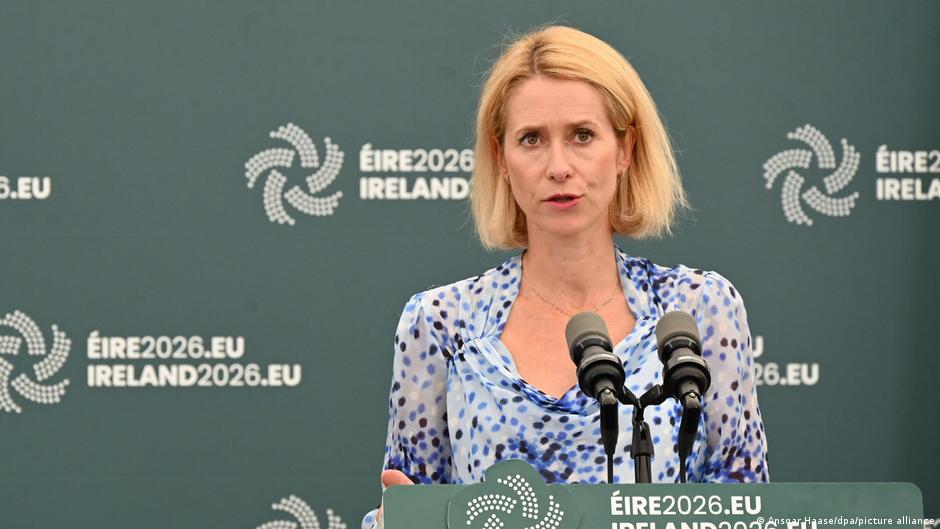
European Union foreign policy chief Kaja Kallas confirmed Wednesday that Brussels summoned Russia’s envoy over the incident, calling it “all the hallmarks of state-sponsored terrorism.” France followed suit. German Interior Minister Alexander Dobrindt and Foreign Minister Johann Wadephul released a joint statement tying the drone’s configuration, components, and detonation system directly to known Russian hybrid operations against Ukraine.
The implication is stark: Europe is no longer treating Russian covert attacks on its soil as background noise. It is escalating — diplomatically, and soon, materially.
Why Leipzig Matters Beyond the Tarmac
Leipzig/Halle is one of Europe’s busiest freight hubs and a critical logistics node for Ukrainian aid. Antonov, the Ukrainian airline and aircraft manufacturer, operates out of the airport, transiting material to Ukraine through eastern Germany. A successful strike could have severed a supply line that Moscow has long tried to choke.
But the political target was likely bigger than cargo planes. The attack was designed to test European resolve — to see whether Berlin, Paris, and Brussels would fracture under pressure or respond in unison. So far, they have done the latter.
The choice of Leipzig was no accident. The city sits in former East Germany, a region where Russian influence operations have found fertile ground through energy dependency, disinformation networks, and sympathetic political actors. Striking there sends a message that the Kremlin can reach deep into the heart of Europe’s post-communist flank — and that the EU can now see it coming.
The EU Is Forging a New Norm
What makes this moment distinctive is not just the accusation — it is the speed and coordination of the response. Within days, Germany issued a public verdict. The EU summoned Russia’s ambassador. France moved independently but in lockstep. And Kallas announced that a new sanctions package of roughly 1,600 listings is already under development, with more additions likely.
For years, Russia has exploited the gap between EU member states’ threat perceptions. Hybrid attacks on Polish border zones, cyber operations against French hospitals, and sabotage campaigns across the Baltics were often met with fragmented reactions. That fragmenting pattern is now being challenged.
“Pressure on Russia is being stepped up and support for Ukraine also remains at a high level,” said Wadephul. “That is the unity we are demonstrating at this time.”
The inclusion of non-EU foreign ministers — from Ukraine, the UK, Canada, Norway, Iceland, and Switzerland — at Wednesday’s talks in Ireland signals that the coalition is widening, not narrowing. This is a deliberate construction of a broader democratic front, one that extends the EU’s diplomatic architecture beyond its formal borders and into the networks of like-minded partners who have long watched Russian hybrid operations with alarm.
The second-order effects are already visible. Defense industries across the continent are seeing renewed urgency in procurement debates that had stalled after the initial surge of 2022. Airspace security budgets, typically a backwater in ministerial discussions, are being elevated. And intelligence-sharing frameworks between EU member states are being stress-tested and, in some cases, rebuilt.
The Shadow Fleet Is Next
French Foreign Minister Jean-Noel Barrot did not stop at diplomacy. He pointed directly at Russia’s shadow fleet — the network of aging tankers and cargo ships used to circumvent energy sanctions — as the next target for EU action.
This is a significant pivot. The shadow fleet has been a persistent thorn in the side of EU energy policy, and while discussions about tightening controls have circulated for months, a concrete proposal linked to a hybrid attack on German soil gives the Commission political cover to move aggressively. The timing is strategic: by tethering energy enforcement to a security incident, Brussels sidesteps the usual accusations that sanctions policy is driven by economic protectionism rather than defense.
Expect targeted designations, insurance restrictions, and possibly port access bans in the weeks ahead. Shipping insurers, already strained by the complexities of the Ukraine war, will face new compliance burdens that could quietly shrink the operational range of the shadow fleet. Smaller flag states that have turned a blind eye to vessel origins may find themselves facing secondary sanctions risk, forcing a reckoning in maritime hubs from Malta to Liberia.
Moscow’s Response: Denial and Defiance
Russian officials, including President Vladimir Putin, have dismissed the allegations as fabrications. That is the standard Moscow playbook: deny, deflect, and hope Western consensus frays over time.
But the calculus here may have shifted. In previous hybrid incidents, Russia bet that Europe would prioritize economic stability and diplomatic caution over retaliation. The Leipzig response suggests that bet is no longer safe.
Moscow’s denials have so far been categorical, but the specificity of the evidence trail — drone component origins, detonation system signatures, operational patterns linking the attack to GRU-affiliated networks — makes a full dismissal increasingly costly for Russian officials who might otherwise prefer ambiguity. Western intelligence agencies are expected to release additional forensic findings in the coming weeks, which could further constrain Kremlin narrative control.
There is also the question of what Moscow does next. The Kremlin may recalibrate, pulling back from direct attacks on EU soil while intensifying cyber and disinformation campaigns that are harder to attribute. Or it may double down, testing whether Europe’s newfound unity holds under sustained pressure. Both scenarios represent a departure from the status quo that has characterized hybrid warfare since 2014.
Who Wins, Who Loses
Europe wins credibility. By treating a drone attack on its territory as an act of war-by-other-means, the EU is closing the ambiguity that Russia has relied on for years. The message to Kiev is equally vital: the West is watching, and it is responding collectively. That message carries weight not only for Ukrainian morale but for the dozens of partner nations that have watched Russian hybrid operations with mounting anxiety.
Russia loses plausible deniability. The clearer the evidence trail becomes — drone components, detonation systems, operational patterns — the harder it will be for Moscow to maintain its narrative of non-involvement without exposing itself further. Every denial strengthens the case for those who argue that attribution is not the problem it was once thought to be.
The Eastern flank states — Poland, the Baltic nations, Romania — have long argued for a harder line on Kremlin covert operations. Leipzig gives those voices institutional weight inside the EU framework. Their perspective is no longer peripheral; it is shaping the center.
What Comes Next
The immediate follow-through will be the new sanctions package. Expect announcements in the coming weeks targeting individuals, companies, and possibly shipping entities linked to the drone attack. The 1,600 listings Kallas referenced will likely include dual-use technology exporters, drone manufacturers, and financial intermediaries who have facilitated the procurement chains that made the Leipzig attack possible.
Longer term, the Leipzig precedent could reshape European security doctrine. If hybrid attacks trigger unified diplomatic and economic responses rather than piecemeal national reactions, Russia’s cost-benefit analysis for future operations changes fundamentally. The threshold for what constitutes a red line has moved from the battlefield to the airport tarmac, and that shift will reverberate through every subsequent incident.
NATO’s eastern flank — Poland, the Baltic states, Romania — has long argued for a harder line on Kremlin covert operations. Leipzig gives those voices institutional weight inside the EU framework. We may also see the emergence of a dedicated EU hybrid threat coordination unit, modeled on existing structures but empowered with faster decision-making authority and a broader mandate.
Aviation security at European freight hubs will face immediate pressure to upgrade. Leipzig/Halle, like many major cargo airports, operated with screening protocols designed for a pre-drone era. The attack exposes vulnerabilities that will demand investment — in drone detection systems, in airspace monitoring, in personnel training. Airlines and logistics companies that have resisted such spending will now face regulatory and market pressure to comply.
The drone may have failed. But the political message it carried has landed squarely, and Europe is only beginning to process its implications.
The Unseen Stakes
Beyond the sanctions and the summits lies a deeper transformation. For two decades, the EU operated on an assumption that its neighborhood would remain stable enough for commerce to flourish, that economic interdependence would deter aggression, and that Russian covert actions would stay below the threshold that demanded a collective response. Leipzig shattered that assumption.
The EU’s response will be judged not by its rhetoric but by its follow-through. Will the sanctions package survive the next energy price spike? Will member states commit to the budget increases that enhanced airspace defense requires? Will the coalition hold when Moscow shifts tactics rather than escalates?
These are the questions that will define whether Leipzig marks a turning point or merely a moment of fury. The summons has been issued. The real test is what comes after.