Final Fantasy VII Revelation's Spring Window Signals the End of an Era
Square Enix confirms FF7 Remake's finale lands this spring. What English-language audiences miss: the trilogy has quietly become the most ambitious retelling in gaming history, and its conclusion will reshape how the industry approaches licensed reimaginings.
The Trilogy Is Finishing What It Started
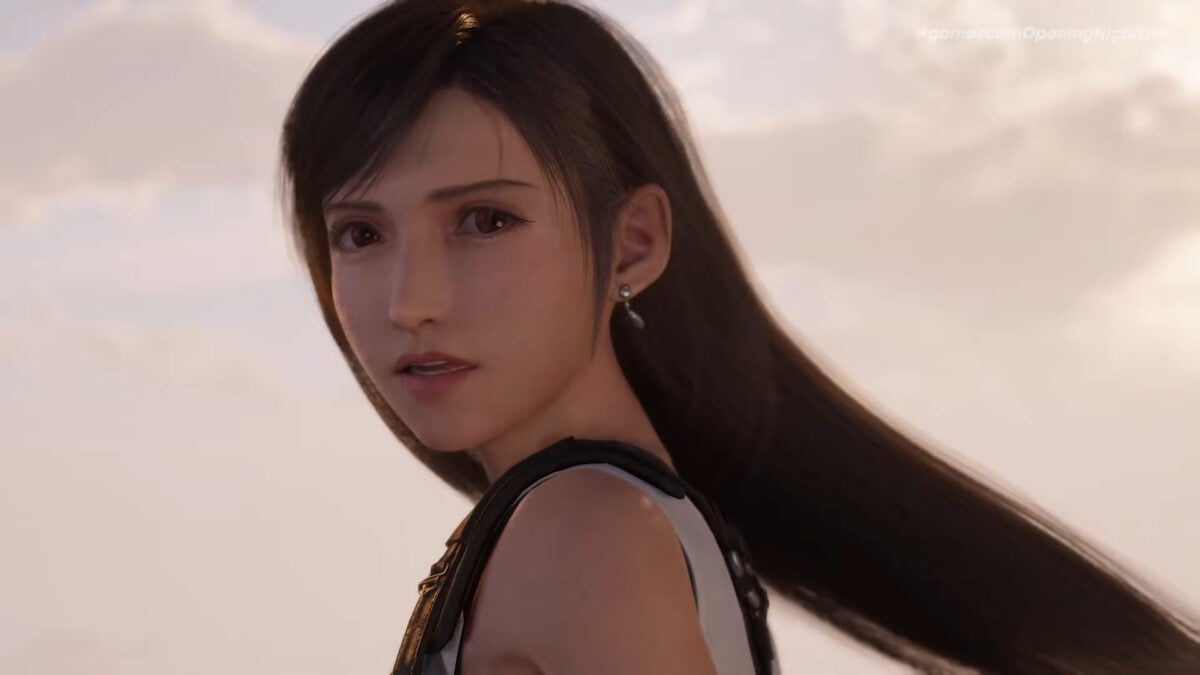
Square Enix has confirmed that Final Fantasy VII Revelation — the third and final chapter of its ambitious FF7 Remake project — will arrive this spring. No specific date yet. The announcement came alongside a new trailer spotlighting the game’s planetary guardians, the Weapons, with close-ups of Ruby, Emerald, and the towering Ultima Weapon.
But the bigger story isn’t the boss roster. It’s that a 1997 PlayStation era game has somehow become the most consequential remake project in living memory, and it is finally approaching its conclusion.
The original Final Fantasy VII sold over nine million copies worldwide and fundamentally altered Western perceptions of what Japanese role-playing games could be. Its impact rippled through the industry for years — spawning imitators, influencing narrative design across multiple genres, and establishing the template for cinematic gaming. Nearly three decades later, Square Enix is completing its meditation on that same cultural artifact, and the stakes have never been higher for an industry still searching for post-pandemic anchor titles.
What Western Audiences Miss About This Franchise
For readers outside Japan and Korea, Final Fantasy VII Remake may look like another licensed reimagining — a nostalgia play dressed in ray-traced graphics. That reading undershoots what Square Enix has actually built.
The trilogy has operated under a self-authored premise that the original game’s timeline was only one branch of a larger multiversal structure. Zack Fair, a character whose death was a turning point in the 1997 version, now walks alongside Cloud in ways that recontextualize nearly everything that came before. Rebirth — the second installment — left players in a deliberate state of narrative ambiguity, with trailers and promotional material offering no clear explanation of what is canonical and what exists in some altered reality.
This is not incremental DLC. This is a three-game deconstruction of a single existing property, each entry expanding and contradicting the last, and the company has bet its flagship franchise on the idea that players will stay for the payoff.
What distinguishes this project from other remakes — God of War, Resident Evil, Silent Hill — is its willingness to fracture its own source material rather than preserve it intact. Most licensed reimaginings treat their originals as sacred texts. Square Enix has treated FF7 as a living document, one that can be revised, reinterpreted, and ultimately transcend. That approach has generated as much criticism as praise, with long-time fans divided over whether the trilogy honors or betray’s the game’s legacy.
The Stakes Are Higher Than One Release
FF7 Remake and Rebirth both exceeded commercial expectations. Rebirth, in particular, became one of the fastest-selling entries in the series and demonstrated that a triple-A JRPG could capture mainstream Western attention in a way that had seemed impossible even five years earlier.
Revelation carries the weight of that momentum. A stumble here doesn’t just hurt one game — it damages the commercial logic behind the entire approach to remaking classic franchises. The industry has been watching closely, and the results will influence how other publishers treat their back catalogs.
Beyond the immediate financial implications, the trilogy’s conclusion will determine whether Square Enix’s creative gamble validates a broader industry trend toward meta-remakes — games that don’t simply recreate their originals but actively argue with them. If Revelation succeeds, expect other Japanese publishers to pursue similar ambitious revisions of classic IP. If it fails, the industry may retreat to safer, more conservative approaches to legacy properties.
The timing matters too. Spring 2027 places Revelation in competition with several major AAA releases, and its performance will signal whether JRPGs can still compete in a market dominated by live-service models and seasonal blockbusters.
Design Choices That Signal Ambition
The new trailer emphasizes the “world without boundaries” concept, showing the party piloting the Highwind airship and parachute-dropping into open terrain. It’s a design philosophy that pushes against the corridor-heavy structure of Rebirth’s mid-section and aims for something closer to the original game’s sense of global scale.
New playable characters include Cid and Vincent Valentine — both fan favorites with complicated histories in the source material. Cid’s inclusion suggests the narrative will engage directly with the Lifestream sequences and the game’s cosmology. Vincent, whose backstory involves transformation and existential dread, may serve as a narrative mirror to Cloud’s own fractures in identity.
The Weapons themselves represent one of the original game’s most iconic set pieces. Watching them rendered in real time, with Ruby and Emerald getting screen time ahead of Ultima, signals that the game will attempt something the 1997 version could only suggest: making planetary-scale threats feel visceral and immediate.
Combat designers have also hinted at a synthesis of Rebirth’s action-oriented sequences and the original’s turn-based tactical depth. Early previews suggest players will fluidly switch between real-time command execution and strategic pause states, creating a system that honors both eras of gaming design without fully committing to either.
The Silence Around Narrative Is Intentional
What’s striking about the promotional cycle is what hasn’t been said. No trailer has addressed the metaphysical questions raised by Rebirth. No developer interview has explained whether the metaverse-like concepts are thematic devices or literal plot mechanics. This silence feels calculated.
If Square Enix wanted players to accept a straightforward retelling, they could have offered clarity. The fact that they haven’t — across multiple trailers and months of marketing — suggests the final game will double down on ambiguity rather than resolve it. That is a bold creative choice for a franchise built on cinematic set pieces and emotional climaxes that hundreds of millions of players already consider sacred.
This narrative restraint mirrors the original FF7’s own approach to mystery. Throughout the 1997 game, players discovered plot revelations organically, through exploration and dialogue rather than explicit exposition. Revelation appears to be extending that philosophy to its promotional strategy, trusting players to piece together meaning rather than being handed it.
Who Wins, Who Loses
Square Enix wins if Revelation delivers on the narrative promise the trilogy has been building. A successful conclusion validates the Remake approach and gives the company a template for future projects — potentially including other classic titles like Final Fantasy X or IX.
Competitors lose if the trilogy concludes strongly. The JRPG market has been starved for flagship single-player experiences on console. Revelation’s success would deepen that gap and make it harder for other publishers to justify similar investments.
Players win only if the game earns the emotional investment it demands. Three entries across six-plus years require sustained engagement. A weak finale wouldn’t just disappoint — it would make the entire endeavor feel like an exercise in wasted potential.
The broader community of RPG enthusiasts also stands to benefit or suffer. A triumphant conclusion would reinforce the idea that legacy IP can be treated as collaborative art rather than preserved artifact, potentially opening doors for similar ambitious projects across gaming.
What Comes Next
Spring 2027 is still a way off. Square Enix has a track record of polishing its projects through multiple delays, and Revelation could slip further. But the confirmed window signals confidence that the studio sees a finish line.
Beyond the immediate release, the trilogy’s conclusions will echo through gaming history. The original FF7 shaped a generation of RPG players. Its remake has done something rarer: it has convinced a new generation that classic games are worth revisiting through entirely new creative lenses. How Revelation resolves its own narrative questions will determine whether that belief endures.
If the final chapter succeeds, we may see Square Enix approach other legendary titles with the same revisionist spirit. If it falters, the industry will likely revert to more conservative preservation models, prioritizing fidelity over innovation.
The Weapons are waiting. So is the rest of us.