Why the First Glucose-and-Ketone Wearable Changes Everything for Diabetes Care
Abbott's Libre Duo 10 Day received FDA approval as the first wearable to continuously track both blood glucose and ketone levels — a device that could prevent thousands of diabetic ketoacidosis emergencies annually.
A Window Into a Silent Crisis
For decades, people with Type 1 diabetes who cannot produce their own insulin have faced a terrifying blind spot. Blood glucose meters and continuous glucose monitors (CGMs) tell you your sugar level — the speedometer, as Abbott calls it. But they offer no equivalent dashboard warning for ketones, the acidic byproducts that surge when the body begins burning fat for fuel instead of glucose. When ketone levels climb unchecked, the result is diabetic ketoacidosis (DKA), a life-threatening condition that can develop with startling speed.
Until now, ketone tracking has meant finger-prick blood tests or urine strips — snap decisions made at single moments in time. There has been no way to see whether ketones were rising or falling across the span of a day. That changed on August 26, 2026, when the FDA authorized Abbott’s Libre Duo 10 Day, the first wearable device capable of measuring both glucose and ketones continuously from the interstitial fluid just beneath the skin.
Why This Matters Beyond the Usual Hype Cycle
The significance here is not incremental. It is structural.
DKA remains one of the leading causes of hospitalization for Type 1 diabetes worldwide. In the United States alone, an estimated 100,000 to 200,000 DKA episodes occur annually, with a mortality rate of roughly 1 to 3 percent among inpatients — higher in cases where onset is rapid and unrecognized. The problem is not that DKA is unpredictable. It is that the warning signs have always been invisible between test events.
A CGM gives you a real-time glucose trend. A ketone meter gives you a photograph. Libre Duo 10 Day gives you a film.
Jennifer Shera, a pediatric endocrinologist at Yale School of Medicine who was not involved in the device’s development, noted in an interview that clinicians regularly witness how swiftly DKA can progress — and how often early ketone signals go undetected because patients simply do not have a reason to test at the right moment. Background ketone collection eliminates that gap.
The Device Itself
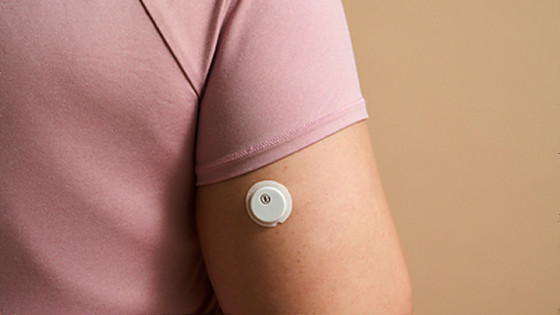
Libre Duo 10 Day is a patch-style sensor worn on the back of the upper arm. It measures glucose and ketone concentrations in subcutaneous interstitial fluid once per minute and transmits the data wirelessly to a paired smartphone. The sensor lasts for 10 days before replacement. Abbott says the device is indicated for diabetes patients aged two and older.
The company’s Diabetes Care executive vice president Chris Schogginz framed the concept plainly: glucose is the speedometer, ketones are the check-engine light. Together on a single dashboard, they give patients and clinicians information neither provides alone.
Crucially, the system can be configured to trigger automatic alerts when ketone levels cross predefined thresholds. This is not a passive data stream. It is an active early-warning system — and for a condition like DKA, where hours can matter, that design choice is the difference between an adjusted insulin dose at home and an emergency room visit.
Why a Japanese Tech Outlet Reported This First
GIGAZINE broke the story of the FDA approval on its Japanese-language platform. That is not a coincidence worth overlooking. Japan is both a major market for Abbott’s diabetes products and home to one of the most sophisticated consumer health-technology ecosystems in the world. Japanese coverage of US medical-device approvals tends to carry more weight than elsewhere because the pipeline from approval to commercial availability in Japan — often within months, sometimes weeks — directly affects pricing, access discussions, and clinical guidelines on both sides of the Pacific.
In practical terms, this means the device will likely reach Japanese patients far faster than similar dual-parameter monitors have in the past. And because Abbott has publicly stated it is already working with major insulin pump manufacturers to integrate Libre Duo 10 Day with automated insulin delivery systems, the implications extend well beyond any single market.
Who Wins, Who Loses
Type 1 diabetics win — especially those who have experienced DKA or know someone who has. The reduction in anxiety around unmonitored ketone spikes should not be underestimated as a quality-of-life improvement. Pediatric patients and their parents benefit disproportionately, given that DKA onset in children can be aggressive and difficult to anticipate.
Hospital emergency departments and inpatient wards also benefit, though the savings may not appear in quarterly reports. Fewer DKA admissions mean freed beds, reduced staffing pressure, and lower costs across the system.
The losers are harder to name but real nonetheless. Companies that have built businesses around intermittent ketone testing — finger-stick ketone meters, ketone urine strips, stand-alone breath-ketone sensors — face a steep demand curve ahead. Their products are not obsolete overnight. But the trajectory is clear: continuous dual monitoring will become the standard of care, and point-in-time ketone tools will be relegated to backup status.
Pump manufacturers that have been slow to integrate ketone data into algorithmic insulin delivery also face a competitive squeeze. Abbott’s explicit collaboration with major pump makers suggests a closed ecosystem advantage for partners already at the table.
What Happens Next
Abbott plans to launch Libre Duo 10 Day in the United States later in 2026. Regulatory clearance in other markets has not yet been announced. Pricing and insurance coverage details remain undisclosed.
The more consequential development is the push toward automated insulin delivery integration. A dual-parameter sensor that feeds both glucose and ketone trends into an algorithm capable of adjusting insulin dosing in real time would effectively close the loop on the most dangerous complication of Type 1 diabetes. That integration is still in development, but the direction is unambiguous.
One question worth watching: will the device’s ketone measurements prove reliable enough for clinical decision-making without periodic confirmation via laboratory testing? Abbott has not released head-to-head comparison data against reference methods at the time of writing. Clinicians will likely adopt a cautious posture until real-world validation accumulates.
What is certain is that the architecture of diabetes management has shifted. For the first time, two vital metabolic signals — glucose and ketones — can be observed simultaneously and continuously from a single patch on the arm. The technology existed only as a concept inside laboratories a few years ago. Today it is FDA-approved, commercially imminent, and already reshaping the conversation around what continuous monitoring can prevent.
The Bigger Picture
Libre Duo 10 Day is one device. Its impact will multiply through integration with pumps, alerts, and clinical workflows over the coming years. But its existence marks a turning point in chronic disease technology: the move from single-parameter monitoring toward integrated metabolic sensing.
If the model holds, the next question is not whether additional dual-metric wearables will follow, but how quickly they arrive — and whether other chronic conditions that depend on the same kind of paired metabolic insight, such as metabolic syndrome or fasting-related disorders, will benefit from the same architecture.
The speedometer and the check-engine light were never meant to be read separately. Neither should the future of diabetes care.