Japan Launches Bold Phobos Mission as NASA Stumbles
Japan's MMX probe has lifted off toward Mars' moon Phobos in a mission that could redefine scientific leadership in space — especially as NASA's own Mars sample return falters and China waits in the wings.
Japan Just Made a Move the Rest of the Space World Didn’t See Coming
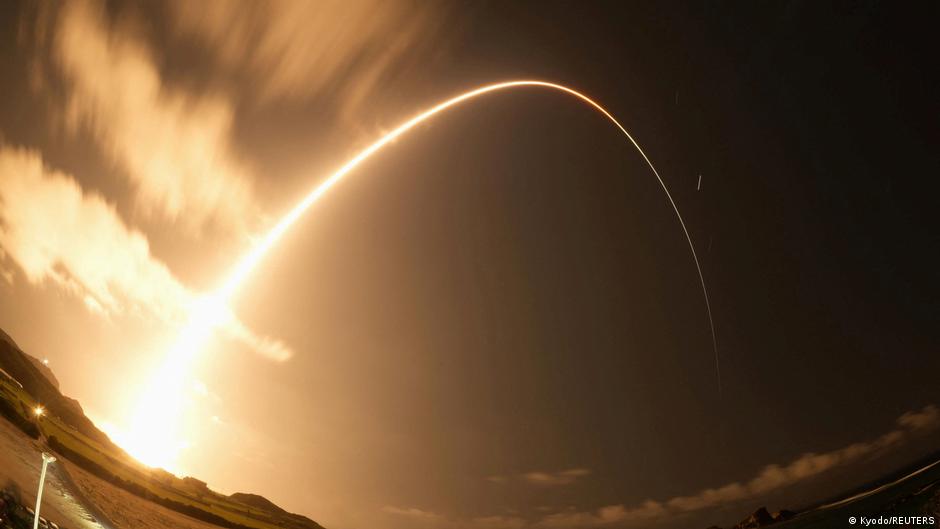
At 4:41 a.m. local time on Monday, a Japanese spacecraft named MMX climbed into a pitch-black sky from the Tanegashima Space Center and began its long journey toward one of Mars’ moons. Inside the control room, flight controllers stood up, applauded, and shook hands. Thousands more watched a livestream despite the hour. An hour later, JAXA confirmed the probe had separated from its H3 rocket and was beginning what would be the first-ever round trip to the Martian system.
What makes this launch matter goes far beyond the applause. Japan is about to attempt something no other nation has done: land on a Mars moon, collect surface material, and bring it back to Earth. And it’s doing so at a moment when the two largest players in Mars exploration — the United States and China — are both struggling to execute their own sample-return ambitions.
The Cancellation That Opened the Door
NASA’s Perseverance rover has been drilling core samples from the Jezero Crater on Mars since February 2021. Those capsules, sealed and waiting on the Red Planet’s surface, represent one of the most scientifically valuable collections ever assembled. They were supposed to be retrieved and returned to Earth through a complex relay operation involving a lander, an ascent vehicle, and an orbital catcher — the Mars Sample Return campaign.
That campaign died in January, when President Donald Trump’s administration cancelled it following a congressional vote. The reasons were familiar: spiraling costs and repeated schedule slips. But the effect was stark. The samples Perseverance gathered are still sitting on Mars, and there is no funded mission to bring them home.
China, meanwhile, has its own plan. The Tianwen-3 mission, a joint effort between the China National Space Administration and the European Space Agency, is designed to land on Mars, collect samples, and return them — potentially landing on Earth as early as 2031. That timeline now looks more achievable than NASA’s canceled architecture.
Into this gap stepped Japan.
Why Phobos, and Why It Matters
MMX — the Martian Moons eXploration mission — is not aimed at the Martian surface. It is aimed at Phobos, the larger and closer of Mars’ two moons, a lumpy potato-shaped rock roughly 22 kilometers across that orbits the planet three times every Earth day.
The choice of target is scientifically deliberate. There are two competing theories about how Phobos and Mars’ smaller moon, Deimos, came to be. One says they formed from debris after a massive impact on early Mars — much like Earth’s Moon. The other says they are captured asteroids, probably from the outer belt, pulled in by Mars’ gravity. The answer matters because it tells us something fundamental about how the inner Solar System evolved and whether habitable conditions arose through common mechanisms or rare accidents.
If Phobos is indeed a captured body, it could preserve pristine material from the early Solar System — material that never got scrambled by planetary formation. That would make it arguably more valuable, per gram, than any surface sample from Mars itself.
The mission will spend about two hours collecting at least 10 grams of Phobos surface material. A French-German rover called IDEFIX — named after the dog in the Asterix comics, no less — will go ahead to scout the terrain and ensure a safe landing. Once the sample is secured, MMX launches back into space, performs flybys of the smaller moon Deimos, and heads home, aiming for an Earth return around 2030.
A Japanese Statement in the Stars
This is not just a science mission. It is a declaration that Japan intends to be a leading space power, not a passenger in someone else’s architecture.
JAXA has long operated in the shadow of NASA and Roscosmos. Its contributions to the International Space Station have been indispensable, but the agency has rarely set the pace. The H3 rocket that carried MMX skyward is itself a symbol of that ambition — a domestically built launch vehicle designed to replace the older H-IIA and H-IIB, and to prove that Japan can put heavy payloads on interplanetary trajectories without relying on foreign launchers.
The mission is collaborative — European and American agencies are involved, and a French-German rover rides along — but the mission is Japanese in command, funding, and intent. That distinction is significant in a geopolitical context where space capability increasingly maps onto economic and diplomatic influence.
Nicky Fox, NASA’s administrator of the Science Mission Directorate, acknowledged the moment on the JAXA livestream. “The samples from MMX will bring forth paradigm-shifting science on the Mars system for generations to come, especially as NASA prepares to send the first humans to Mars,” she said. The qualifier — “as NASA prepares” — carries weight. NASA is preparing for human Mars missions through the Artemis program, which targets the Moon first as a proving ground. But Artemis has its own delays, and the human Mars timeline remains uncertain. Japan’s robotic mission, by contrast, has a fixed destination and a clear return date.
What Happens Next
If MMX succeeds, Japan will join an exclusive club of nations that have returned extraterrestrial samples to Earth. China’s Chang’e missions have already done this for the Moon. NASA’s Genesis and Stardust missions brought back solar wind and cometary dust. But no one has ever returned samples from Mars or a Mars moon. That record would belong to Japan.
The timing is advantageous. China’s Tianwen-3 is still years away, and its sample-return architecture has not been flight-proven. Russia’s cancelled Luna-25 mission demonstrated how quickly things can go wrong. Europe has no independent sample-return capability. The United States has the samples but no return vehicle.
MMX’s success would also reshape the conversation around the H3 rocket. The launcher’s debut had been marred by anomalies on previous flights, and critics questioned whether Japan could sustain its space ambitions with an unreliable booster. The clean flight of MMX silences those doubts — at least for now.
There is, of course, no guarantee of success. Phobos is a low-gravity, irregularly shaped body. Landing on it is harder than landing on the Moon or Mars. The sample collection mechanism has never been tested in such an environment. The two-hour window for collection leaves no room for error. And the journey home — a three-year cruise from the Martian system back to Earth — introduces its own set of risks.
But the risk is the point. In a moment when the leading space powers are retrenching or redesigning, Japan chose to go first. The world will be watching to see whether that bet pays off.
The Bigger Picture
MMX is not the only mission redefining who gets to lead in space. China’s planned crewed lunar landing by 2030, India’s growing constellation of planetary missions, and the private sector’s accelerating role all signal a multipolar space age.
But MMX is distinctive because it targets a frontier that no major power has yet reached — the surface of a Mars moon — and does so with a clear return objective. It is also distinctive because it arrives precisely when NASA’s own Mars ambitions have hit a wall.
The samples MMX brings back may not answer every question about the origins of the Solar System. But they will answer some — and they will prove that a non-US-led mission can reach Mars and come home. In an era defined by strategic competition, that fact alone changes the landscape.