Flydubai Plot Reveals Gulf Aviation's Hidden Radicalization Pipeline
A Flydubai co-pilot's foiled suicide attack on Tel Aviv's airport exposes a disturbing recruitment pathway: Gulf carriers hiring from a widening global talent pool while vetting systems struggle to keep pace. The UAE's decision to go public signals a new approach to aviation counterterrorism.
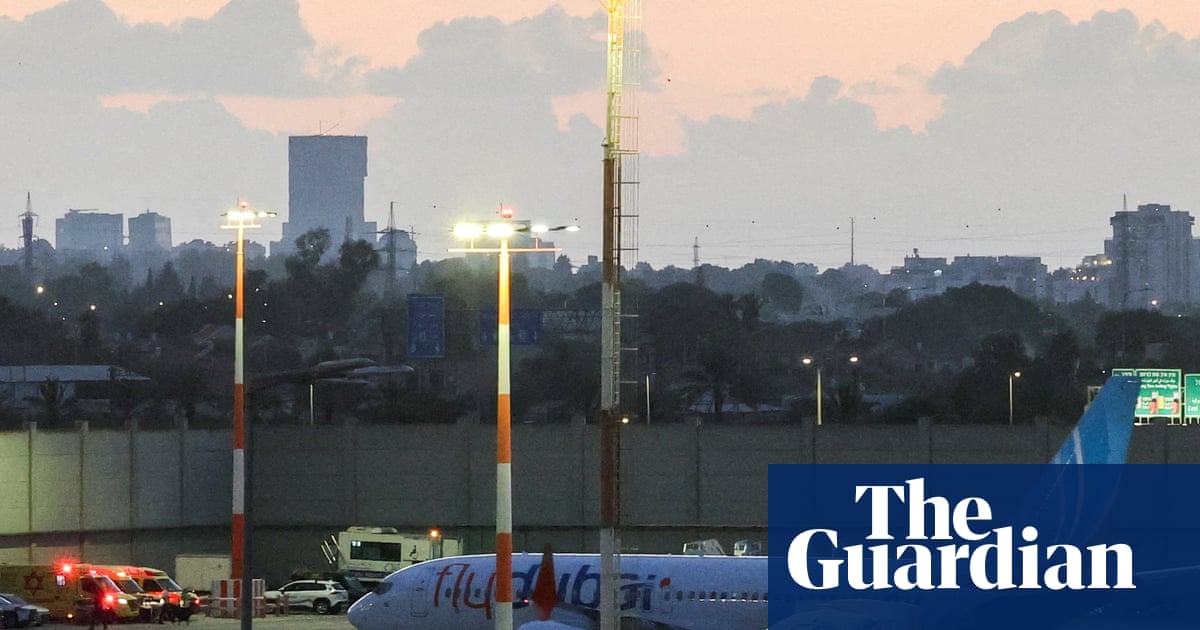
The cockpit breach that wasn’t supposed to happen
Hammam al-Hammami swung an emergency axe at his Indian colleague on a Dubai-to-Tel Aviv flight last week. He failed. Passengers overpowered him. An off-duty relief pilot landed the plane safely in Saudi Arabia. Nobody died.
But the foiled attack tells us something far more unsettling than any single act of violence: it reveals a growing vulnerability in the way Gulf airlines recruit, train, and deploy crew across an increasingly fragmented talent market.
A radicalization trail through unlikely geography
The UAE’s attorney-general, Dr. Hamad Saif al-Shamsi, laid out the timeline on Friday. Al-Hammami, 29, began radicalizing during two years of engineering studies in Australia, where he was exposed to takfiri ideology through extremist literature and online content glorifying suicide attacks and terrorist organizations. He left Australia in 2017 without finishing his degree. About a year later, he took flight training in New Zealand.
Only then did he enter the Gulf aviation pipeline — Oman Air (2020–2024), Royal Air Maroc (early 2025), and flydubai (January 2026). He earned a distance-learning aviation management degree from Buckinghamshire New University along the way, a credential that raised questions about how rigorous the qualifications vetting really is.
This is the pattern investigators need to take seriously. Radicalization does not always follow the geographic logic of conflict zones or traditional extremist strongholds. It moved through Australian universities and New Zealand flight schools before landing a man in a Gulf airline uniform — a uniform that granted him access to a flight path over water toward an Israeli airport.
Why the Omani passport matters
Al-Hammami is an Omani national. That detail matters for more than diplomatic courtesy. Oman maintains a carefully calibrated neutrality in the region’s rivalries, positioning itself as a mediator rather than a participant. An Omani citizen holding a co-pilot seat on a UAE carrier flying to Israel suggests the talent pools feeding Gulf aviation have become so broad that nationality no longer functions as a reliable proxy for ideological reliability.
The investigation has now reached Australian and New Zealand authorities. Both countries are probing whether their security services missed warning signs during al-Hammami’s time in their systems. Australia’s inquiry is significant because it touches on a country that has invested heavily in counter-radicalization programs precisely because its homegrown extremist threat has proven stubbornly resilient.
The public naming is itself a strategy
Perhaps the most consequential development is not what al-Hammami attempted but how the UAE chose to respond.
Al-Shamsi held a formal press conference, released detailed excerpts from al-Hammami’s confession, named the radicalization pathway explicitly, and confirmed that investigators had found evidence al-Hammami had used two previous flights to Tel Aviv to study the route and the airport’s layout. The UAE could have handled this quietly — internal debriefing, closed-door prosecution, minimal public disclosure. Instead, it went public with a comprehensive narrative.
There are at least three reasons this matters.
First, transparency functions as deterrence. Other potential operatives inside Gulf aviation ecosystems now know the state is tracking the radicalization pathways this case exposed — overseas education, online content consumption, sequential career moves across multiple carriers. That knowledge changes the risk calculus for anyone considering a similar path.
Second, the public naming repairs a credibility gap. After 9/11, the aviation industry learned that the worst attacks come from inside security perimeters — people who have already passed vetting, hold credentials, and occupy positions of trust. The UAE cannot afford to let the implicit question linger: how did this man get hired? Answering it publicly, however uncomfortably, strengthens institutional legitimacy.
Third, it shifts the burden of vigilance onto other jurisdictions. By confirming al-Hammami studied in Australia and trained as a pilot in New Zealand, the UAE is effectively asking those countries to scrutinize their own processes. This is not merely information sharing — it is a public signal that the problem extends beyond any single border.
What remains unclear
Al-Shamsi stated that al-Hammami admitted acting alone. Investigators are continuing to verify that claim. The distinction between lone-actor radicalization and network-directed operations is not always clean — confessions can be strategically crafted, and the absence of a discovered cell does not prove one never existed.
Equally unresolved is the question of whether two reconnaissance flights — used to study the route and terminal layout — represent adequate preparation for a suicide attack or indicate a plan that was still evolving when passengers intervened. The psychological distance between watching a flight path on a screen and executing a coordinated assault inside a cockpit is enormous. Understanding where al-Hammami sat on that spectrum will matter for sentencing, for deterrence theory, and for assessing whether the method was ever realistically achievable.
The aviation reality
Gulf carriers have expanded aggressively, hiring pilots and crew from a global talent pool to fuel growth in low-cost and full-service segments. flydubai, a government-owned carrier, has been one of the fastest-growing low-cost operators in the Middle East. The economics of that expansion demand scale, and scale demands recruitment from wherever qualified candidates exist.
That is not inherently problematic. But it creates a structural tension: the wider the recruitment net, the harder it becomes to detect ideological drift that has occurred outside the employer’s view. An applicant’s credentials from a UK distance-learning program, a employment record across three carriers in two years, and a training history split between New Zealand and the Gulf — these are not red flags in isolation. Combined, they form a profile that no single employer’s vetting process is designed to evaluate comprehensively.
What comes next
Netanyahu praised the passengers and the injured pilot. The passengers, overwhelmingly Israeli, returned to a country where the normalization of air links with the UAE remains politically sensitive. The attack failed, but the fact that someone could plot a terminal suicide bombing using a Gulf airline seat — and carry out reconnaissance on actual commercial flights — suggests the threat environment has evolved beyond the stereotypes that security frameworks were built to address.
The UAE’s decision to publish the details of this case will force other Gulf states, European aviation regulators, and countries like Australia and New Zealand to reconsider how they share intelligence about radicalized individuals who move through multiple jurisdictions before entering critical infrastructure roles. The alternative — fragmented, reactive responses to each incident — is a strategy that leaves the system vulnerable by design.