Flydubai Co-Pilot Attack Exposes Aviation Security Blind Spots
An Omani Flydubai co-pilot planned to crash a Tel Aviv-bound flight inspired by 9/11 attacks, despite passing all security checks. The incident raises urgent questions about insider threats to Gulf aviation security.
The Man Who Passed Every Check
An Omani co-pilot working for Flydubai passed every screening required for employment: a valid pilot’s licence, a certificate of good conduct, standard background checks. He then used that trusted position to assault his captain mid-flight with an axe, intending to steer the aircraft into Tel Aviv’s international airport in a deliberate, 9/11-style suicide attack.
The attack unfolded on 30 September 2026. The Flydubai jet was en route with most passengers Israeli. The co-pilot suddenly dropped the plane roughly 5,000 metres, striking the Indian captain inside the cockpit. Through sheer persistence, the captain managed to open the cockpit door before passengers stormed in and subdued the attacker. The plane landed safely in Saudi Arabia.
The United Arab Emirates’ top prosecutor later confirmed the co-pilot was inspired by Al-Qaeda and the September 11, 2001 attacks on the United States. His stated goal: to cause “the greatest possible loss of life.”
Why This Matters Beyond One Plane
The real story here is not that a terrorist existed — these networks have always operated. The real story is that he qualified for access to a commercial aircraft, sat in the cockpit with lethal weapons, and was considered vetted by the system.
Insider threats have haunted aviation security for decades. The 9/11 attacks themselves were carried out by individuals who had passed through rigorous screening processes. Since then, the industry has built enormous layers of additional checks: reinforced cockpit doors, armed sky marshals, biometric monitoring, behavioral detection programs, and background investigations that run years deep.
The Flydubai co-pilot met every requirement. That does not necessarily mean the system failed entirely — it means that someone willing to commit mass murder can still look perfectly acceptable on paper. Credentials do not measure ideology. Background checks do not detect conviction.
This is precisely why the aviation world struggles to categorize this threat. Insider attacks fall somewhere between terrorism and ordinary workplace violence, and neither category quite fits. They require security architectures designed for enemies outside the system, not enemies inside it.
What Happened Next in Israel and the UAE
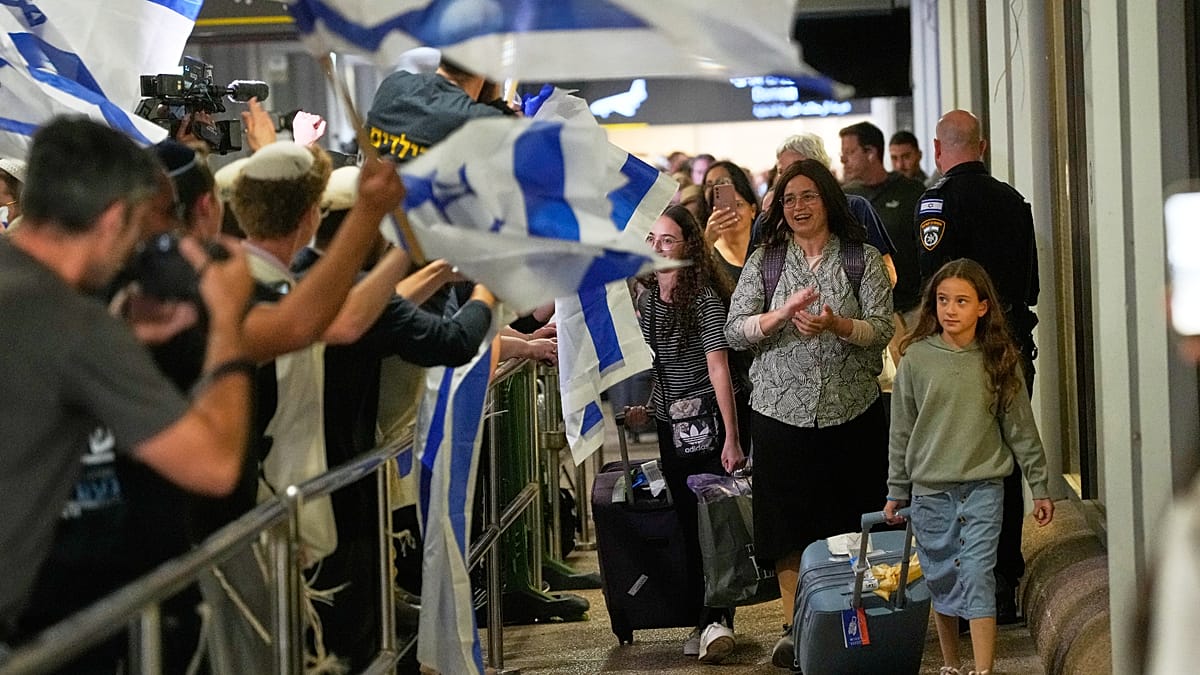
Israeli President Isaac Herzog awarded the Presidential Award for Civilian Heroism to six Israelis who helped foil the hijacking attempt. His remarks, as reported by The Jerusalem Post, made clear that gratitude for the passengers’ bravery was not enough: “Everyone, all of us, deserves clear and satisfactory answers.”
Prime Minister Benjamin Netanyahu went further, ordering a “thorough review of all security aspects of foreign civil aviation to Israel.” The timing is significant. Israel shares airspace and airport infrastructure with multiple countries that have normalized relations under the Abraham Accords. Any vulnerability in that network reverberates across the region.
The UAE, meanwhile, faces its own reckoning. Flydubai is a state-backed carrier headquartered in Dubai, one of the Gulf’s most vital aviation hubs. The discovery that an employee with full operational access planned such an attack will almost certainly trigger sweeping reviews of hiring practices, ongoing monitoring, and cockpit security protocols across Emirates Group operations and likely beyond.
The Radicalization Question
The co-pilot’s pathway to radicalization remains unclear from the available reporting, though the source notes he was Omani and had connections to Australia. Western countries have seen a steady stream of homegrown extremist cases in recent years, often involving individuals with no formal terrorist ties who become convinced through online propaganda and isolated study.
If this pilot was indeed radicalized abroad rather than recruited by an organization, it changes the profile entirely. Traditional intelligence methods rely heavily on detecting communications, financial flows, and organizational affiliations. Someone who radicalizes quietly and independently leaves almost no trail until they act.
Aviation security screens forKnown terrorists. It does not easily screen for isolated individuals who have read enough online material to believe crashing a passenger jet into an airport is a valid form of worship.
What Changes Now
Several things should change. The UAE will almost certainly tighten re-screening procedures for pilots and crew, possibly introducing periodic psychological evaluations, loyalty assessments, and behavioral monitoring throughout employment. These measures exist in some form already but are rarely comprehensive or consistent across all Gulf carriers.
Israel’s review of foreign civil aviation security will likely produce new requirements for flights entering Israeli airspace, potentially including enhanced cockpit access controls, randomized security audits, and stricter vetting of foreign airline staff who operate on Israeli routes.
The broader implication is that Gulf states now face a concrete terrorist threat directly linked to their aviation infrastructure from within their own workforce. The Abraham Accords brought diplomatic normalization, but they did not eliminate the possibility that extremists could exploit the same airports and airlines used by Israeli citizens and visitors.
The Uncomfortable Truth
The Flydubai co-pilot attack is another reminder that aviation security is ultimately a game of diminishing returns. Each new layer of screening catches more threats but also produces more false confidence. The system is designed to filter out known risks, but the risks that matter most today are often people who look exactly like everyone else.
The captain’s decision to open that cockpit door under attack, the passengers’ willingness to storm the front of the plane, and the emergency landing in Saudi Arabia all point to one conclusion: the final line of defense in any aviation terror plot is still human beings, not technology or policy.
That is both the industry’s greatest strength and its most uncomfortable vulnerability.
The co-pilot met every requirement. He still planned to kill hundreds of people. That gap between qualification and conviction is where the real security question now lives.