Trump Sanctions ICC — EU Fires Back With Cold-War-Era Weapon
The Trump administration's unprecedented move to sanction the International Criminal Court has triggered an EU counteroffensive using a blockade tool originally designed against Cuba and Iran. The question is whether Brussels can actually force Washington to back down.
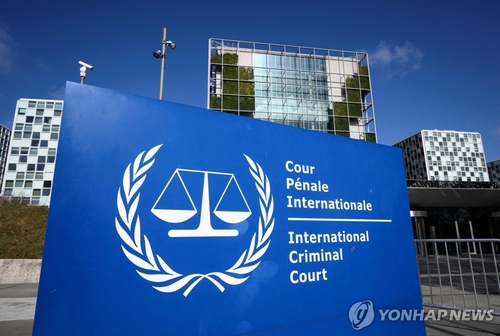
The EU’s Nuclear Option for International Law
When the Trump administration announced it would freeze all ICC assets on US soil and order American companies and individuals to sever ties with the court within six months, European capitals did not respond with moral outrage alone. They reached into a drawer they hoped never to open again.
On October 9, the European Commission stated it would cooperate closely to keep the court functioning and pledged to work with all 125 Rome Statute parties to protect the ICC’s independence. The next day, two senior EU figures made the threat concrete. Dutch Prime Minister Rob Jetten, speaking alongside EU Council President António Costa, stressed that the six-month grace period mattered precisely because it left room for negotiation. Then Belgian Foreign Minister Maxim Prevedello told reporters he was formally requesting the Commission activate the EU’s blocking statute — a legal weapon designed to nullify extraterritorial sanctions imposed by third countries.
The irony is thick. The blocking regulation was drafted in the late 1990s specifically to shield European firms from the secondary reach of US sanctions on Cuba and Iran. It has rarely been used in its current form. The fact that Brussels is now preparing to deploy it against an ally — and against sanctions aimed not at a rival state but at a judicial institution based in The Hague — marks a significant escalation in the transatlantic dispute over who gets to decide what international law means.
Who This Actually Targets
The US order calls the ICC a rogue tribunal. That framing may sound like political theater, but the mechanics are surgical. Freezing ICC assets within US jurisdiction cuts off a real, if modest, stream of operational funding. Barring American companies and individuals from any transaction with the court — even routine services like IT support, banking, or legal translation — creates a compliance nightmare. Multinational firms with US connections will face an impossible choice: obey Washington or stay operational in The Hague.
The six-month window is the most consequential detail in the entire order. It gives the ICC and its member states time to respond, negotiate, or find workarounds. It also gives the Trump administration room to claim it offered a path to de-escalation — one the EU has made clear it will not accept on US terms. If the court refuses to change its behavior, the sanctions lock in. If it concedes ground, Washington gains leverage over a body it has opposed for decades. Either way, the US sets the timetable.
The Seven-Nation Signal
Before the EU’s formal response, foreign ministers from Denmark, Germany, France, Italy, the United Kingdom, Canada, and Japan issued a joint statement warning that the sanctions would severely disrupt the court’s work and endanger its staff and their families. The grouping matters. It spans the core of Western diplomatic support for the ICC and includes countries that are also close US security partners. Their message was deliberate: this is not a regional European complaint. It is a multilateral alarm.
The statement also carried an unspoken warning. Several of these governments have their own citizens and institutions that could face exposure if the US decides to expand the sanctions net. The ICC is not the only entity that might suffer from a precedent of punishing countries for doing business with an international tribunal.
What the Blocking Statute Actually Does
The mechanics are deceptively simple. The regulation prohibits EU persons and companies from complying with the listed third-country sanctions. It allows businesses harmed by those sanctions to recover damages in European courts. And it requires EU entities to notify the Commission if they are affected by the extraterritorial measures.
In practice, the statute is more shield than sword. It protects European firms from US penalties for continuing to deal with the ICC, but it cannot stop Washington from sanctioning those firms directly. It cannot unfreeze ICC assets already locked in US banks. And it cannot force American companies to ignore the order. For smaller EU-based businesses with US exposure, the threat of secondary sanctions may still outweigh the protection the statute offers.
Still, activating the blocking regulation sends a signal that Brussels treats this as a systemic challenge, not a bilateral disagreement. It places the conflict inside a legal framework rather than a diplomatic one — which is exactly where the EU prefers to fight.
What Happens Next
The most likely near-term scenario is a tense six-month standoff. The EU will activate its blocking statute, coordinate with Rome Statute parties, and explore alternative funding and operational channels for the ICC that bypass the US financial system. American firms will scramble for compliance guidance. The court’s staff will brace for disruption.
But the deeper question is whether this clash redefines the boundaries of multilateral accountability. The ICC was created by sovereign states to prosecute the worst crimes when national systems fail. Sanctioning the institution itself — rather than specific judges or cases — attacks the architecture of collective justice, not just a policy outcome. If major powers learn they can economically coerce international courts, the precedent extends far beyond The Hague. It reaches every treaty-based body that depends on voluntary compliance and shared funding.
The EU’s response suggests it understands the stakes. Whether it has the political unity and economic leverage to defend international law against its most powerful member state remains an open and urgent question.