How Fox's Roku Deal Rewrites the Streaming Rules
Fox's $22 billion acquisition of Roku merges ad-supported scale with premium content — a move that could force every major streamer to rethink its distribution strategy.
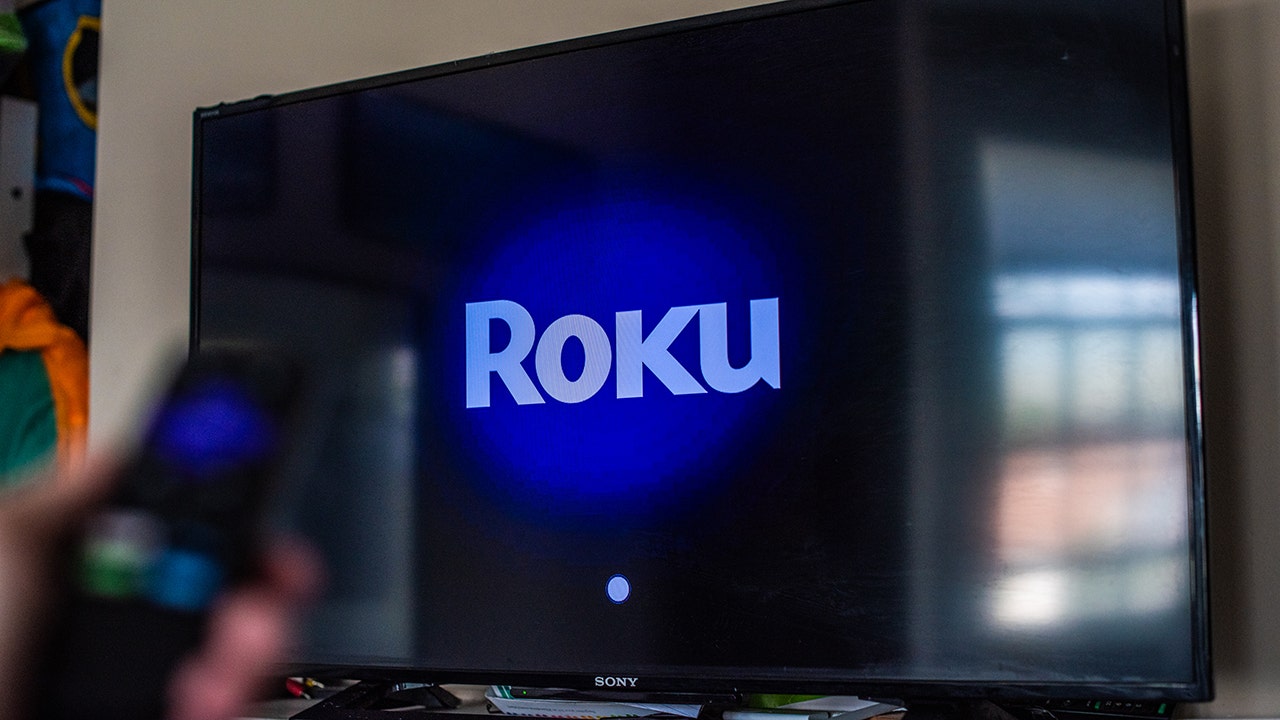
Fox just bought its way into the streaming wars.
Not the wars most people were watching — the ones between Netflix, Disney, and Amazon fighting for your subscription dollars. Fox’s $22 billion acquisition of Roku, announced in June 2026 and closed in November, is about a different battlefield entirely: the free, ad-supported tier of streaming where the real growth lives and the margins are thinner but the audience is massive.
The deal pairs Fox’s sports, news, and local programming — its most valuable linear assets — with Roku’s open connected TV platform, now reaching over 100 million households. Fox already owned Tubi, a free ad-supported service, and FOX One. Now it controls the hardware and software that delivers content to screens. That is not incremental. That is structural.
Why this deal is not about scale alone.
The headline number — $22 billion — is large for a media acquisition. But the logic behind it is what matters. Fox is betting that the next decade of television will be won at the intersection of content ownership and distribution control. Not just any distribution, but the kind that sits inside people’s homes and surfaces everything from network broadcasts to streaming apps to live sports.
Fox expects around $400 million in run-rate cost synergies within two years. That is a meaningful number for a company that has spent years defending declining cable revenues. The synergies should start accreting to free cash flow per share by the second full year after closing. Translation: this deal was structured to pay for itself, not just to look bold.
But the bigger story is what Fox gains that it could never have built on its own: the ability to serve advertisers across its entire content portfolio through Roku’s platform data and targeting capabilities. Ad-supported streaming is growing faster than subscription services. Fox now owns one of the fastest-growing pieces of that market and the content to fill it.
The leadership arrangement tells a story.
Roku founder Anthony Wood will join Fox’s board and co-chair a new division — FOX Digital Platforms — alongside Paul Cheesbrough, who moves into the role of co-chair and CEO. Wood’s continued involvement is significant. Roku’s identity as an open platform, agnostic to content partners, has been its defining feature and its primary value proposition to advertisers and developers. If Fox absorbs Roku too quickly, that openness erodes. If it preserves it, Fox gains access to an ecosystem it could never replicate internally.
Wood’s public statement — that the mission does not change, only the reach and resources — is the right message for employees, partners, and regulators. Whether it holds up in practice is the question that will define this deal.
What this means for the competition.
Netflix, Disney, Amazon, and Apple have spent years building walled gardens. Their strategy has been to keep you inside their apps, watching their content, paying their prices. Fox just built a bridge over that wall. By controlling both premium content and the device that delivers it, Fox can offer something no other major streamer can: live sports and news on a platform that also surfaces free content, ad-supported and subscription, without forcing consumers into a single app ecosystem.
This is especially relevant for cord-cutters. Fox’s linear audience — sports fans, local news viewers, cable subscribers leaving traditional TV — is the same audience that Roku reaches. The deal allows Fox to meet those viewers where they already are, rather than trying to pull them into a proprietary app that may already be crowded on their screen.
Second-order effects ripple outward.
The deal’s implications extend well beyond Fox and Roku. Every streaming service that has spent years negotiating placement deals with Roku now faces a platform owner with a direct stake in competing against them. This creates an immediate tension: does Fox prioritize Tubi and FOX One content over rival apps on its platform? If it does, competitors may push back or explore alternative distribution channels. If it doesn’t, the strategic value of owning Roku diminishes.
Advertisers, too, will feel the shift. Fox now controls both the inventory — its sports, news, and entertainment content — and the measurement infrastructure through Roku’s advertising technology. That vertical integration could compress margins for independent ad-tech firms and consolidate pricing power in fewer hands. The CTV advertising market, already consolidating, just got another heavyweight.
Cable operators face a more existential question. Fox’s move signals that legacy media companies see the future in direct-to-consumer distribution rather than negotiating carriage fees throughMultichannel Video Programming Distributors. If Fox succeeds in migrating its audience onto the Roku platform, other networks may follow. The gradual erosion of cable bundles accelerates, and the business models built on those bundles face renewed pressure.
Who loses.
Smaller streamers and content aggregators that relied on Roku as a neutral distribution channel now face a platform owner that is also a competitor. Amazon’s Fire TV division, Google’s Chromecast, and even Apple TV are in a different position — they are device makers but not primarily content companies. Fox is both. That creates a conflict of interest inside the platform itself.
Tubi, which Fox already owned, now operates under the same roof. Internal competition for ad dollars and content budgets is inevitable. Whether Fox can manage that without cannibalizing its own businesses remains to be seen.
Roku’s existing content partners — particularly those with competing direct-to-consumer plays — may find their apps deprioritized or their data access restricted. The platform’s value to developers has always rested on its neutrality. That assumption just changed.
What happens next.
The streaming industry is entering a phase of consolidation that most analysts predicted but few expected to move this fast. Fox’s acquisition of Roku signals that legacy media companies are no longer waiting for the dust to settle. They are reshaping the board.
Lachlan Murdoch, Fox’s executive chair and CEO, described the deal as advancing the long-term strategy of Fox. The real test will come in the next 12 to 24 months: can Fox integrate Roku’s technology and culture with its own content operations without destroying the openness that made Roku valuable in the first place? The answer will determine whether this deal becomes a blueprint for the industry or a cautionary tale.
One thing is clear. The streaming wars are no longer just about who has the best shows. They are about who controls the screen.