France Blood Bank Hack Exposes a Hidden Critical Infrastructure Weak
A cyberattack targeting blood bank refrigeration systems in France reveals a critical infrastructure vulnerability — one that could cascade into healthcare emergencies and expose gaps in how medical supply chains are defended.
A Cyberattack That Didn’t Destroy — But Could Have
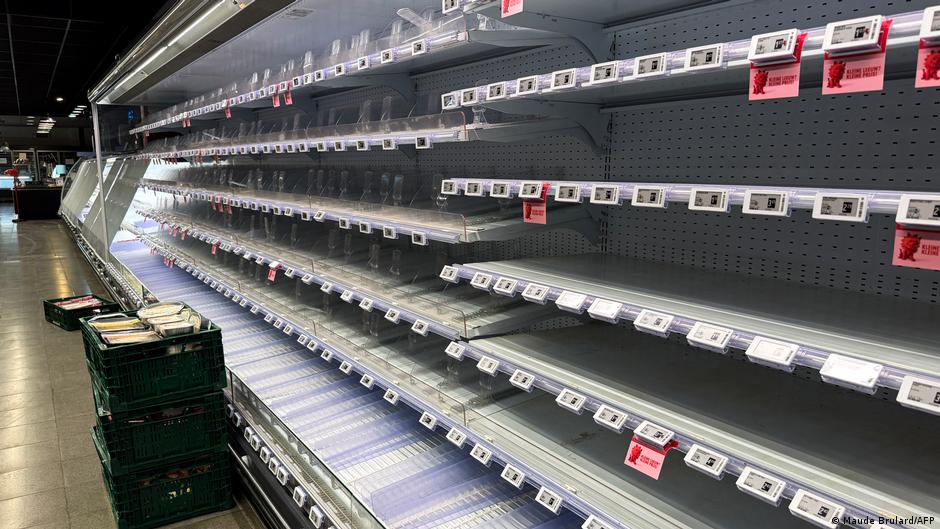
Blood banks in France were among the targets of a coordinated cyberattack on refrigeration systems across Europe over the weekend, French authorities confirmed Wednesday. This time, the attack was aimed not at supermarket shelves rotting under hackers’ control, but at life-saving cold storage units holding plasma and blood samples.
The French Blood Establishment (EFS) called it a “cybersecurity incident.” A refrigeration service provider’s control systems at three cold storage sites were breached. The hackers tried to raise temperatures inside the units to 110°C — a temperature that would obliterate the biological material stored inside. The attack was warded off before any damage occurred.
No blood products were lost. No health consequences were identified. Distribution operations continued uninterrupted.
And yet — the very fact that someone tried to turn a blood bank’s refrigeration system into an incinerator, and nearly succeeded, should alarm policymakers far beyond France’s borders.
Who Got In, and How
France’s cybersecurity agency and the Health Ministry have opened an investigation but have not identified a suspect. That absence of attribution is itself notable. The October supermarket attacks — which hit dozens of stores across France and Germany — were widely blamed on a Russian-speaking hacktivist group, though no definitive confirmation was ever made public. This latest wave, targeting both food retail and medical infrastructure, suggests either a reactivated operator or a copycat with more ambitious reach.
What matters more than the “who” right now is the “how.” Coolworld, the company that supplies the refrigeration equipment at the affected EFS sites, stated that the vulnerability was linked to a component from a third-party supplier — a part outside Coolworld’s direct control. That detail is significant. It points to a classic supply chain attack vector: a vulnerable firmware update, a compromised subcomponent, or a third-party software module that becomes an unwitting backdoor into otherwise hardened medical infrastructure.
The Real Vulnerability Is the Supply Chain
This is the non-obvious implication that English-language readers outside France may miss: the weakness here isn’t in the blood bank itself. It’s in the chain of dependencies that keeps the blood bank running. Coolworld’s refrigeration units are only as secure as the weakest component in their supply chain. And that third-party component was likely chosen for cost or availability reasons, not cybersecurity.
French hospitals and medical institutions increasingly rely on outsourced maintenance and proprietary hardware from specialized vendors. Each vendor operates its own supply chain, each with varying standards of security hygiene. When a supermarket chain can suffer €250 million in lost sales from a single cyberattack on refrigeration — as Dutch retailer Ahold Delhaize projected after the October incident — the financial and operational risk of an attack on medical infrastructure becomes exponentially higher.
Because while the blood bank in France escaped unharmed, the attack trajectory is clear. Next time, the alarm systems may not trigger. The backup controls may not engage. A malicious actor with access to refrigeration controls could do more than spoil products — they could destroy irreplaceable biological materials, disrupt transfusion services, and create acute shortages that ripple through an already fragile healthcare system.
What the Supermarket Attacks Already Proved
The supermarket attacks over the past month have served as a kind of live-fire exercise for European critical infrastructure. Frozen food destroyed. Supply chains disrupted. Millions in losses. The attacks exploited the same class of vulnerability — refrigeration control systems accessible through networked platforms — but targeted commercial rather than medical infrastructure.
The France supermarket attacks in early October cost retailers heavily. The second wave over the weekend added fresh losses. Ahold Delhaize, which operates the Albert Heijn and Intermarché chains across Europe, said the October attack alone could reduce quarterly sales by €250 million. CEO Franz Muller noted that while most disruption was contained within two weeks, full restoration of normal operations is still underway.
These are commercial failures. The France blood bank attack was a near-miss on a much graver scale. The difference between a spoiled shipment of frozen fish and a destroyed batch of plasma intended for burn victims is not semantic — it’s existential.
Why This Matters Outside France
Europe’s reliance on shared supply chains for medical infrastructure makes this a transnational problem. The third-party component identified by Coolworld could be sourced from a manufacturer in any number of countries. The refrigeration control software likely runs on a platform used by vendors across the continent. A vulnerability patched in France may remain unaddressed in Poland, Romania, or Italy.
The European Union has been pushing for stricter cybersecurity requirements under the Cyber Resilience Act and the NIS2 Directive, both of which aim to harden critical infrastructure against exactly this kind of attack. But implementation is uneven, enforcement is variable, and the pace of legislative change lags behind the speed at which threat actors adapt.
Germany — another country hit by the supermarket attacks — faces the same structural vulnerabilities. So do countries with less experience managing such threats. Eastern European nations, where healthcare IT investment has historically lagged, may be particularly exposed.
What Happens Next
France’s Health Ministry disabled remote access to the affected refrigerators. That’s a correct immediate response, but it’s also a tactical fix to a strategic problem. Remote access may be disabled on three sites today. It remains enabled — or at least possible — on thousands more across Europe.
The EFS credited its monitoring and alarm systems for preventing catastrophe. Those systems worked. They may not always work. Security teams should treat this incident as a warning, not a resolution.
Expected next steps include pressure on the EFS to disclose more details about the vulnerability, calls for EU-wide audits of medical refrigeration supply chains, and likely new procurement rules requiring vendors to prove the cybersecurity integrity of their components. France’s cybersecurity agency, ANSSI, may also issue a formal advisory — as it has done after previous attacks — outlining mitigation steps for healthcare providers.
The hackers, for their part, have proven they can reach into medical infrastructure and almost destroy it. The blood bank refrigerators in France survived. But the lesson they carry is plain: the next attempt may not be stopped in time.