The G20 at a Golf Course: Trump’s Diplomacy Rewritten
An invitation to Putin at a Trump-owned Miami golf club signals a dramatic shift in how the US approaches Russian diplomacy — and what it costs its European allies.
The Venue Is the Message
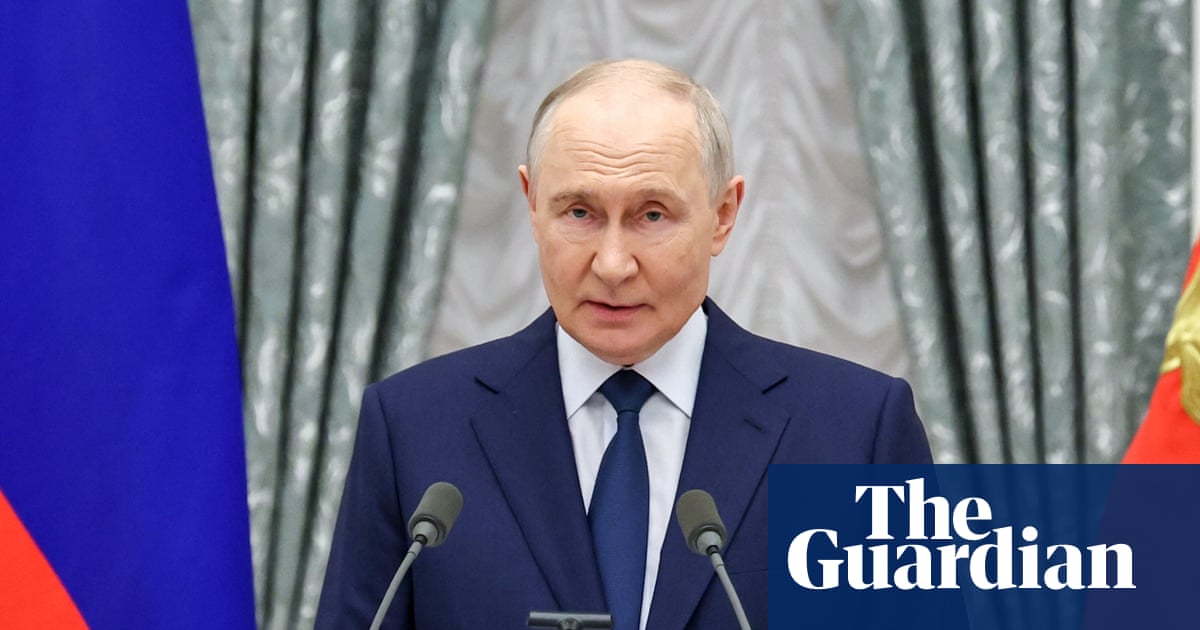
A G20 summit at a golf club is not just an unusual choice of venue. It is a statement. Trump National Doral in Miami will host the world’s largest economies in December, and for the first time since the full-scale invasion of Ukraine began in 2022, Vladimir Putin has been invited to attend.
The invitation was announced by Secretary of State Marco Rubio on the sidelines of the UN in New York, standing next to his Russian counterpart Sergei Lavrov. “We hope that’s an invitation he’ll accept,” Rubio said. That simple phrase — “we hope” — carries more weight than most formal diplomatic cables. It signals that the United States has moved from punishing Russia’s isolation to actively undoing it, and it has done so from a private golf course rather than a traditional diplomatic venue.
This is not routine diplomacy. It is diplomacy as theatrical reversal.
The Personalization of Global Power
Trump has long treated international summits as extensions of his personal brand. A G20 hosted at his own property makes that impulse institutional. The event blends the mundane — fairways, club membership, real estate — with the extraordinarily consequential: a gathering of leaders whose decisions shape global markets, military alliances, and war trajectories.
The implication is stark. When summits are held in private clubs owned by the host, the boundary between personal interest and national policy blurs. There is no separate diplomatic infrastructure. There is only the host, his property, and whoever he chooses to invite.
Putin’s absence from the G20 since 2019 was itself a signal. His return to the table, even tentatively, resets the visual language of global politics. Images of the Russian president walking through a Miami golf course alongside leaders who spent three years refusing to shake his hand would reshape the narrative of Russia’s standing in the world — regardless of what substantive outcomes emerge from the meetings.
Europe Already Lost the Photo Op
European discomfort is not hypothetical. In August, EU officials refused to pose for a group photograph with Russian Finance Minister Anton Siluanov at a G20 economic ministers’ meeting. That was a minor event. This December summit is the main stage, and the symbolic damage will be far greater.
The refusal to share a frame with a Russian official was a small act of defiance. What happens when the Russian president himself sits at the head table? European leaders face a choice between attending and lending legitimacy, or staying away and being written out of history. Either path carries a cost.
Congress Said One Thing. The State Department Said Another.
Five days before Rubio’s announcement, President Trump signed a sweeping sanctions bill passed by Congress that authorizes 100 percent tariffs on the top purchasers of Russian energy exports — primarily China and India. The bill was meant as a tightening of the economic noose. Rubio’s invitation to Putin effectively unties it.
The House Foreign Affairs Committee responded with a pointed post on X: “Trump signed the Russia sanctions bill 5 days ago. Today Rubio makes clear the administration has no intention of isolating Russia for its war of aggression in Ukraine.”
That tension between legislative intent and executive action is the real story here. Congress attempted to lock in a strategy of containment. The executive branch is overriding it through invitation and engagement. The question is not whether the administration can do this — it clearly can — but what happens when the constraint of bipartisan consensus evaporates.
The Energy Ceasefire Bargain
Trump is reportedly pushing for a partial ceasefire that includes a halt to Ukrainian attacks on Russian oil refineries. The logic, as framed by the White House, is economic: diesel fuel prices in the United States have nearly doubled since last year, and the midpoint election cycle creates pressure to show results on energy costs.
Zelenskyy called for a trilateral meeting with Trump and Putin during a UN sideline conversation. He told German broadcaster Deutsche Welle: “Results matter. That’s it.” But he also made clear that Russia is not yet ready for a genuine settlement. Kyiv continues to strike Russian energy infrastructure — including a major refinery near Moscow over the weekend — while Russia intensifies its own drone campaign against Ukrainian cities.
The juxtaposition is brutal. Zelenskyy is expressing willingness to negotiate while his cities are under daytime and nighttime drone attacks. One person died and eight were injured in Wednesday’s strikes on Kyiv alone. A petrol station, warehouses, a business centre, and transport infrastructure were hit near the capital’s main railway station.
Who Wins, Who Loses
Putin wins the most obvious prize: legitimacy. A seat at a G20 hosted in Florida, photographed alongside Western leaders, reinserts Russia into the visual architecture of global order after three years of exclusion. The substantive policy outcomes may be unclear, but the image will circulate for years.
Trump wins a narrative of dealmaking. He can point to a summit at his own property, with his own guest list, and claim that engagement — not isolation — is the path to peace. Whether that path leads anywhere concrete remains to be seen.
Zelenskyy loses ground. His government has fought for three years on the premise that Russia’s isolation is a weapon. That weapon is being disarmed not through military defeat of Russia, but through diplomatic invitation. Every photo of Putin at Doral erodes the moral framework Kyiv has built its international support upon.
European allies lose legitimacy. Their refusal to sit with Siluanov proved they still care about symbols. Their silence on the Putin invitation — so far — proves they cannot stop it.
What Happens Next
The Kremlin has not yet responded publicly to the invitation. That silence is itself strategic. Acceptance gives Putin the stage. Rejection lets him claim the US is desperate. Either outcome serves his interests more than it serves Ukraine’s.
If Putin attends, the December summit will be remembered not for any agreement reached but for the photograph of him walking into a Miami golf club. That image will outlast every press release, every joint statement, every diplomatic nuance.
If he declines, the administration can frame it as proof of Russian irredeemability. The narrative still moves in Washington’s direction.
Either way, the game has changed. Diplomacy is no longer conducted through institutions. It is conducted through invitations extended from private properties, announced at UN press conferences, and judged by the photos that follow. The G20 was supposed to be a forum of economies. At Doral, it becomes something else entirely: a stage for the personalization of world power, where the venue is the policy and the host is the diplomacy.