Germany's ex-spy chief arrested for espionage
August Hanning, former head of Germany's BND, is accused of passing classified information to a foreign intelligence service over more than a decade. The scandal threatens to shake trust inside European intelligence circles.
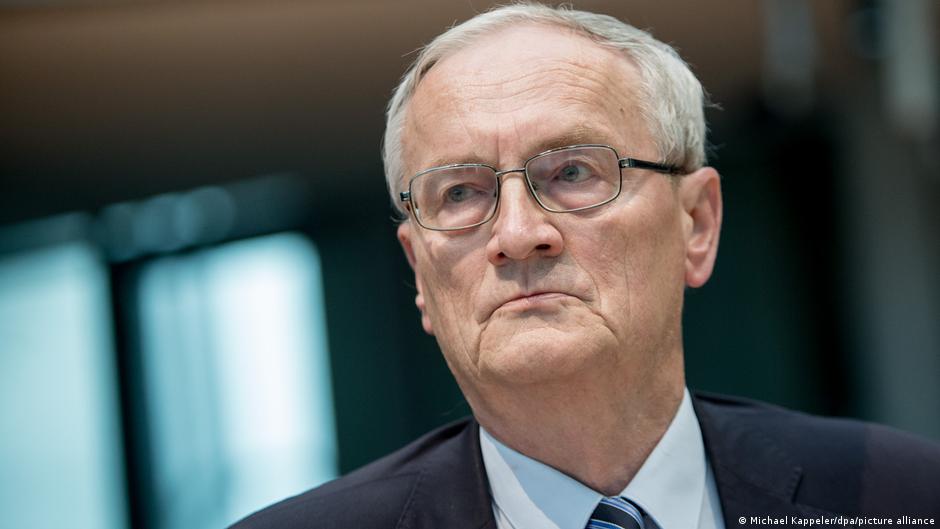
The spymaster who sold secrets
August Hanning was running Germany’s foreign intelligence agency when the second Bush administration was still justifying the Iraq War. He left the BND in 2005, moved into the Interior Ministry, and supposedly retired from public life by 2009. In 2010, according to federal prosecutors, he made a deal that would quietly hollow out the agency he once led.
He is now 80 years old and in custody. The charges are extraordinary: espionage, disclosure of state secrets, attempted treason, and working as a foreign agent. What makes this case so destabilizing is not just the scale — roughly 2,000 classified documents over more than a decade — but what it suggests about how easily a Western intelligence service can be penetrated from the inside.
How the leak actually worked
The mechanics, as far as prosecutors have outlined them, are almost banal in their simplicity. Hanning’s accomplice, identified only as Manfred D., held the most powerful desk job in any intelligence agency: chief of staff. In that role, D. had access to every classified document that passed through the BND’s machinery. After Hanning’s tenure ended, D. continued in that position under Hanning’s successors, delivering a steady stream of material to his former boss.
The arrangement began in 2010. It lasted until at least mid-2022. That is a quarter of a century during which one of Europe’s most important intelligence services was systematically compromised by its own leadership.
Hanning then used those stolen documents in his private consulting work. In at least one documented instance, prosecutors allege he prepared an analysis for an employee of a foreign intelligence service — using information he had obtained through D. and others inside the BND. The foreign service itself is not named, which is both legally cautious and professionally necessary. But the implication is stark: someone with Hanning’s experience knew exactly where to look inside Germany’s intelligence apparatus, and someone with D.’s access could deliver it.
Why this is bigger than a single spy
German officials are already calling this the country’s biggest espionage scandal of the century. That is not hyperbole. Germany has dealt with spies before — the Soviet defector-turned-double-agent Ulrich Behrens in the 1980s, the CIA’s Aldrich Ames, various FRG-era compromises — but none of those cases involved a former head of the BND, the agency responsible for Germany’s foreign intelligence collection. The damage here is institutional, not personal.
The BND has been criticized for years for being too close to Washington and not close enough to Berlin. This case flips that criticism on its head: the problem may not be that German intelligence serves foreign interests, but that its own leaders voluntarily do so.
The NATO and EU dimension
Germany is a cornerstone of European intelligence sharing. The BND maintains operational relationships with every major Western service — the CIA, MI6, DGSE, AIVD — and is deeply embedded in EU intelligence frameworks. When a former BND chief is accused of sharing classified material with a foreign service, every partner agency has to ask the same uncomfortable question: what else did they know, and how much of it was shared?
This is not a situation with a clean answer. Intelligence relationships are built on partial trust and mutual leverage. A breach at the top does not mean every piece of shared information was compromised, but it does mean that no partner can assume otherwise. The fallout will be measured in closed doors and recalibrated sharing agreements — the kind of institutional damage that takes years to repair.
Who wins and who loses
The immediate loser is credibility. German intelligence oversight is already a fragile ecosystem. Marc Henrichmann, who chairs the parliamentary intelligence committee, said Germany “will not tolerate the betrayal of secrets.” That is the right tone, but it reads like damage control. The opposition’s Konstantin von Notz called the allegations “deeply troubling” — again, appropriate, and again underscoring how thin the veneer of institutional confidence has become.
The winner, if there is one, is the argument for stronger oversight. Germany’s intelligence supervision arrangements are better structured than most, but this case shows that even robust frameworks cannot prevent betrayal from within. The real question is whether Hanning was acting alone or was part of a network that extends beyond the two men now in custody.
What happens next
Hanning and D. are expected to appear before an investigating judge in the coming days. The federal prosecutor has not named the foreign intelligence service involved, which means the investigation is still in its early stages. That leaves open the possibility — perhaps the likelihood — that more arrests follow.
For Germany, the immediate task is containing the damage. Every classified document that left the BND between 2012 and 2022 is now potentially compromised. That is not a small number. The agency will need to review its handling procedures, reassess which sources are still reliable, and have a conversation with its partners that no one wants to have.
For Europe, the lesson is less about any single spy and more about the architecture of intelligence trust. The BND is not an outlier. Every Western service has its Manfred D.s — people with access, ambition, and the opportunity to trade secrets for money or influence. The difference between a functioning intelligence community and a compromised one is often just the discipline to catch them before the damage becomes irreversible.
Germany, it turns out, got lucky this time. That should not be the standard.