Googlebook OS ships day-one on five PC brands — Google's biggest hardware bet
Google has just launched a new Linux-based operating system for laptops across Acer, ASUS, Dell, HP, and Lenovo. After 15 years since Chromebook, it represents Google's most ambitious push to make AI-native computing the default on the desktop.
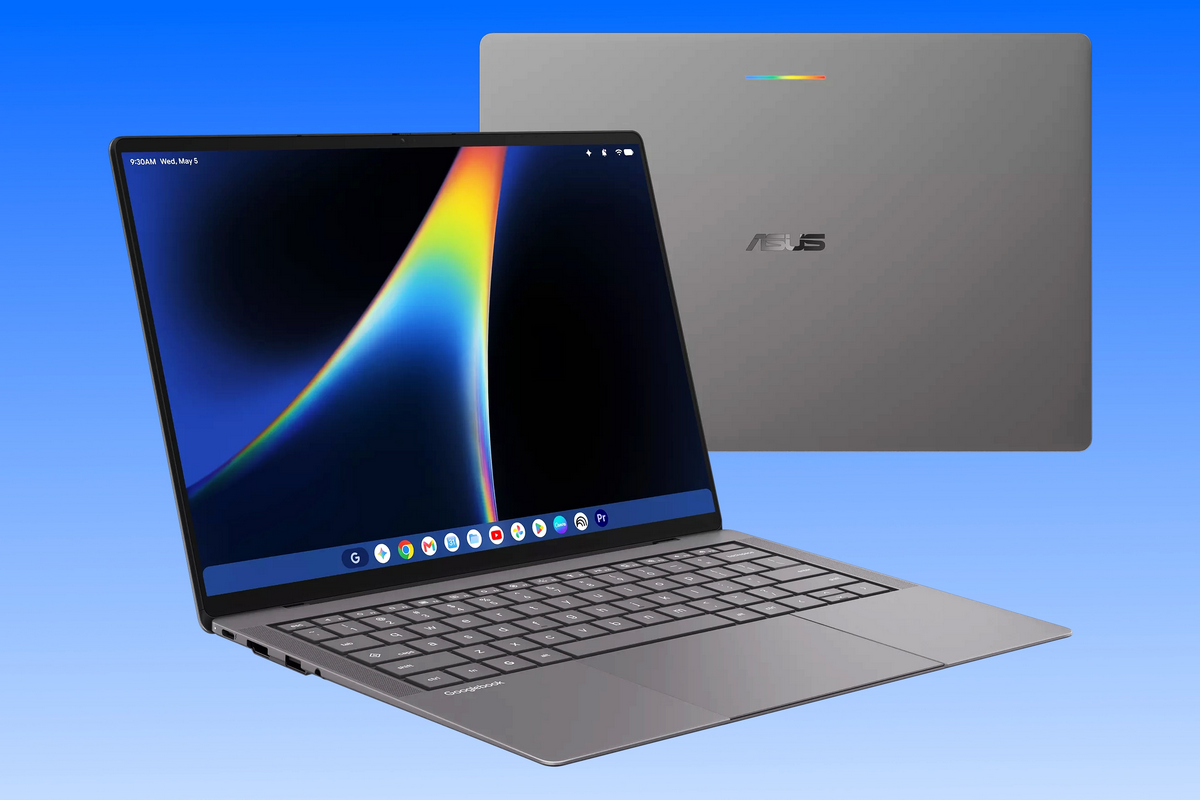
Five brands. One operating system. A statement nobody expected from Google.
Fifteen years after Chromebook launched with the promise that the cloud was the future of computing, Google has returned with a completely new operating system designed for the age of AI. The Googlebook OS ships simultaneously on Acer, ASUS, Dell, HP, and Lenovo starting October 4 in the United States and October 5 in Canada, the UK, Ireland, France, Germany, and Australia. The price starts at roughly 900 dollars.
What makes this launch notable isn’t just that Google built a new PC OS. It’s that Google is treating a laptop operating system as the primary vehicle for AI — not a smartphone feature grafted onto desktop hardware.
A different architecture, a different bet
The Googlebook OS is Linux-based. The interface resembles familiar desktop computing — mouse, keyboard, trackpad, large displays — but underneath it runs a system built around three pillars: unlimited Android applications, the Chrome browser as the desktop entry point, and Gemini as the intelligence layer woven through everything.
This is not ChromeOS. ChromeOS was essentially a browser running inside a lightweight OS shell. Googlebook OS is designed to run native Android apps at scale, support desktop-grade creative tools like Adobe Photoshop and CapCut, and handle offline streaming from Netflix and HBO Max. Google is building a system that can compete with Windows on actual productivity work, not just web browsing.
The hardware confirms this ambition. The initial lineup ranges from 899 dollars for the Acer Googlebook 14 to 1,300 dollars for the HP model. Specifications include 3K OLED touchscreens at 120Hz, aluminum and magnesium alloy bodies, haptic-feedback glass trackpads, fingerprint authentication, and battery life spanning 13 to 19 hours depending on configuration.
The 10-year pledge that changes the calculus
Perhaps the most consequential detail is the 10-year update guarantee for Googlebook OS. Laptop buyers have grown accustomed to devices becoming obsolete after three or four years, trapped on unsupported operating systems that no longer receive security patches or feature updates. Google’s commitment mirrors Apple’s approach to macOS and represents a significant shift in how a Google hardware product positions itself against the typical Windows laptop cycle.
The standard package includes a year of Google AI Pro — which bundles Gemini Advanced tools and 5TB of cloud storage — along with three months of YouTube Premium and access to Adobe Photoshop. The one-year GeForce NOW subscription on every device is an unexpected move that broadens the laptop’s appeal beyond typical productivity use into gaming territory.
AI isn’t an app. It’s the interface.
Google is structuring the entire experience around Gemini rather than treating AI as an add-on feature. The Magic Pointer lets users summon Gemini directly from the cursor to organize calendars, translate text, or manipulate information without switching windows. Rambler converts spoken thoughts into structured notes with headings and checklists. Create My Widget generates custom desktop widgets from plain-language descriptions.
This represents a fundamental design philosophy difference from Windows Copilot or macOS Apple Intelligence features, which are typically integrated as overlays or sidebars within existing application frameworks. Google is building the OS from the AI layer outward.
The developer play nobody is talking about much
Beneath the consumer features sits what could be the most strategically important component: Antigravity, Google’s AI agent development platform, pre-installed on every device. Developers can build, test, and deploy AI agents directly on the machine using Claude Code, Antigravity CLI, and a full terminal environment.
Even more significant is the pKVM hypervisor, certified at security level 5 — a first for a laptop. This provides an isolated Linux environment with complete terminal access, allowing developers to run Linux tools safely, clone code repositories, and execute autonomous agents without exposing their primary system. For a company that has historically struggled with developer goodwill around ChromeOS restrictions, this is a direct counterpunch.
The phone-to-laptop bridge that finally works
Google is using the shared Android foundation to create seamless continuity between smartphones and laptops — an integration Apple controls through its own ecosystem but Android has never achieved at this depth. Devices set up by transferring encrypted settings, passwords, Wi-Fi networks, and messages from phone to laptop. Continue On resumes tasks at exactly the point where the user left off on their phone. Files lets users browse and search phone content directly from the laptop. Cast My Apps streams phone applications into desktop windows.
The implication is that Google is positioning the laptop not as a replacement for the phone but as an extension of it — a reversal of the traditional PC-first hierarchy that has defined computing for decades.
Who wins and who loses
The immediate winner is Google, which gains a beachhead in the laptop market it has never meaningfully held. Chromebooks captured education and low-end consumer segments but never broke through in the mainstream Windows market. Googlebook OS with its Android app compatibility and AI-first design could change that trajectory.
The second winner is Intel and Qualcomm, whose processors power the new lineup. Dell and HP choosing Snapdragon X Elite while Acer, ASUS, and Lenovo go with Intel Core Ultra creates a dual-platform strategy that mirrors Microsoft’s own Windows on ARM pivot.
The loser is perhaps Windows on mid-range laptops. At 899 to 1,300 dollars with 10-year update guarantees, Android apps, and native AI integration, the Googlebook OS offers a compelling alternative to equivalent Windows laptops. Microsoft’s Copilot integration has not generated the kind of excitement that Google is bringing to this launch.
What happens next
The real test will come in 12 to 18 months when early adopters report whether the Googlebook OS delivers on its promises under real-world conditions. The Android app ecosystem on desktop has historically been mediocre — a problem Google must solve by ensuring performance and usability match the marketing.
The launch timing also positions Google to capture the back-to-school and holiday purchasing seasons in markets where Chromebooks already had brand recognition. Whether Googlebook OS can overcome Windows’ entrenched position in enterprise and professional environments remains an open question, but the Day One availability across five major manufacturers suggests Google is playing a different game than incremental OS updates.
After 15 years, Google is no longer testing whether a non-Windows laptop can work. It’s betting that AI-native computing is the reason people will choose it anyway.