GoPro's $285M Bet on AI Infrastructure Is a Signal, Not a Sidelight
GoPro is merging with an optical transceiver maker in a $285 million deal that clears its debt and repositions the camera company at the heart of the AI buildout. The move joins a growing wave of cash-rich tech firms pivoting toward AI infrastructure — but the track record on such turns is mixed.
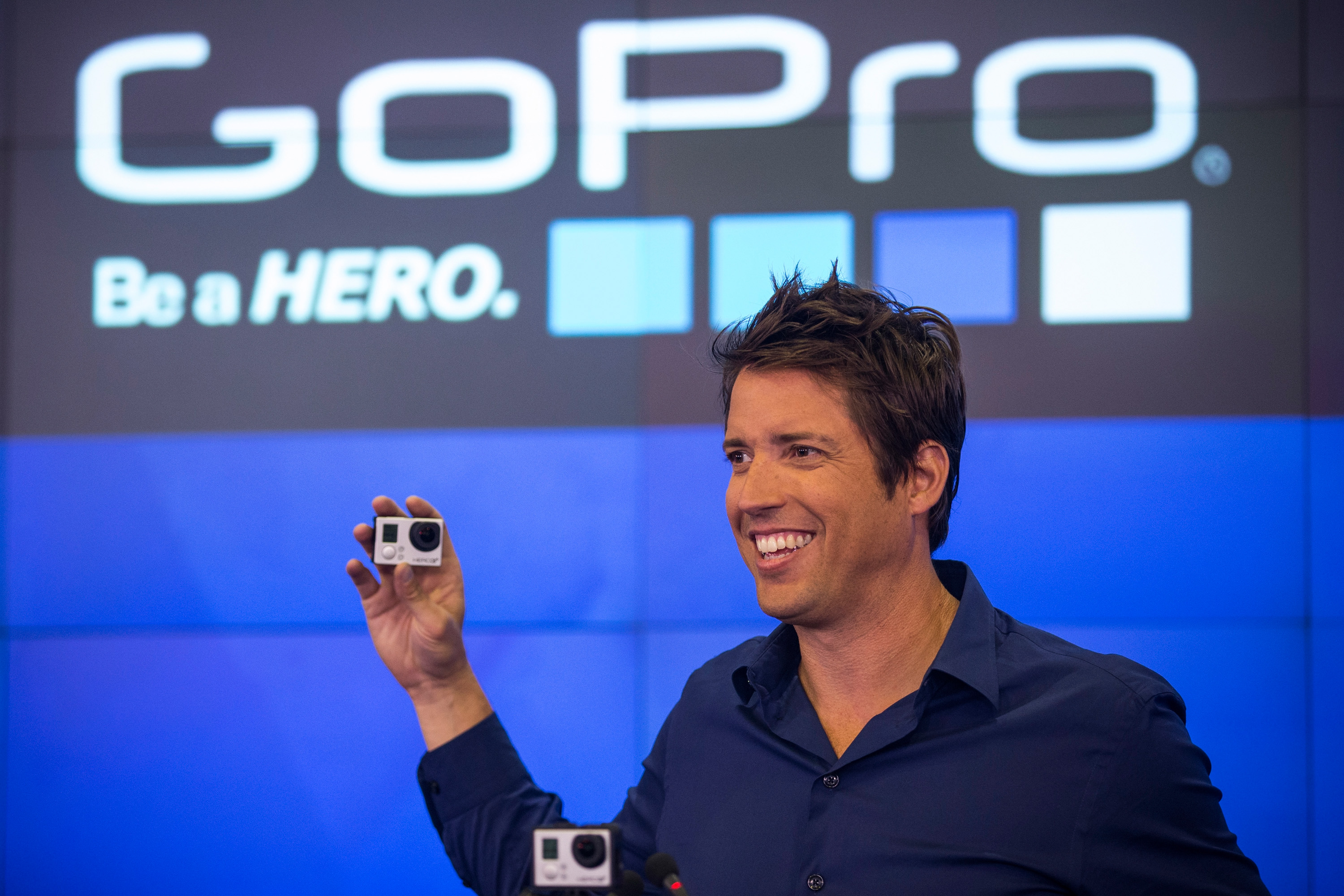
A Camera Company Becomes an AI Play
GoPro did not set out to become an AI infrastructure company. It built its name on waterproof action cameras that captured surfers, skiers, and extreme sports enthusiasts from 2009 onward. But on September 1, the company announced a $285 million merger with Starman Optical, a private firm under Starman Holdings that manufactures optical transceivers — the hardware that converts electrical data into light signals for high-speed fiber networks.
The deal is a full pivot. GoPro shareholders will receive $1.14 per share and retain roughly 10 percent of the new combined entity. Its approximately $92 million in debt will be cleared. Founder and CEO Nicholas Woodman said the company would expand into AI infrastructure, national security optics, robotics, and aerospace. Consumer camera lines would continue to be supported. The listing stays.
The market reacted instantly. Shares, which had sat at $0.60 on August 28, surged more than 40 percent the day of the announcement.
The Stock Before the Surge
To understand why this matters, you have to look at the numbers before the news hit. GoPro went public in 2014 at $24 a share. By late August 2025, it was trading at $0.60 — a decline of more than 95 percent from its listing price and down over 55 percent year to date. The company had spent years losing relevance in a consumer camera market that shifted toward smartphones. Its brand remained recognizable; its revenue engine did not.
Then came Mark Fischbach. Known to hundreds of millions of YouTube subscribers as Markiplier, the gaming creator and filmmaker acquired an 8.5 percent stake in GoPro just two days before the merger was announced. In his own words, he believed the stock was undervalued and wanted to push the company toward greater success. His debut feature film, “Iron Lung,” had grossed roughly $50 million worldwide on a $3 million budget earlier that year. Within 48 hours of his stake becoming public, GoPro’s shares had jumped 46 percent.
Fischbach’s move was not a takeover. It was a signal — one that a high-profile investor saw upside where the market saw almost none. The merger announcement turned that signal into a rally. What made his timing notable was less the size of the stake and more the implication: a creator-economy figure with deep internet credibility had staked his capital on a company Wall Street had largely dismissed. That kind of attention from outside traditional finance is increasingly common, and it carries its own gravitational pull. Retail investors following Fischbach’s moves likely amplified the buying pressure beyond what the fundamentals alone would have justified.
Optical Networks Are the Hidden Layer of AI
The strategic logic behind the pivot is not as speculative as it sounds. AI data centers are constrained by bandwidth. Moving terabytes of training data between GPUs requires more than faster chips — it requires optical interconnects that can carry that data at the speed of light through fiber. Optical transceivers are a critical bottleneck in the AI infrastructure stack.
Starman Optical’s business sits at exactly that point. GoPro brings optical design expertise, imaging sensor know-how, and a publicly traded vehicle with a recognizable brand. Together, they form a combined company positioned to supply the hardware layer that AI cloud providers need.
Woodman framed the expanded vision broadly — defense, government, robotics, aerospace — but the core thesis is narrower and more defensible: AI infrastructure demand is outpacing supply, and companies with optical capabilities are in demand. The secondary effect of this dynamic is already visible: optical transceiver suppliers are seeing lead times stretch and prices rise as hyperscalers compete for capacity. Anyone who can bring manufacturing online faster than the competition has a real window.
There is also a less obvious second-order effect. Defense and government contracts in optics tend to come with longer sales cycles and higher margins than consumer hardware, but they also require certifications and security clearances that create durable moats once established. If GoPro can navigate that path, the revenue base becomes far less cyclical than the action-camera business ever was.
A Pattern Worth Watching
GoPro is not the first distressed tech company to bet its future on AI infrastructure. CoreWeave, founded in 2017 as a cryptocurrency mining firm, pivoted to cloud and GPU infrastructure before its 2025 IPO, which made its founders billions. The market rewarded the turn.
Allbirds is a cautionary counterpoint. The sneaker company announced its pivot to AI infrastructure in April, changed its name to Smartbird in June, and saw its stock spike on the news. Since January, however, the shares have fallen roughly 42 percent. The market initially rewarded the ambition; it later punished the execution gap.
The difference between CoreWeave and Allbirds may come down to one factor: whether the company already owns the technology it is pivoting toward. CoreWeave had GPU rental infrastructure before it called itself an AI platform. Allbirds had shoes and a brand, neither of which translates directly to AI infrastructure. GoPro sits somewhere in between — it has optical engineering DNA, but it has not yet proven it can ship optical transceiver products at scale.
What distinguishes GoPro from Allbirds is the depth of that DNA. Optical sensor design, lens engineering, and precision manufacturing are not abstract concepts — they are the same foundational disciplines that underpin transceiver production. The gap between designing a camera module and designing an optical transceiver is real, but it is bridgeable with the right hires and the right acquisition. Allbirds had no such bridge. That is the key variable investors will be watching.
What Happens Next
The immediate question is whether the market will sustain its enthusiasm. A 40 percent single-day jump off a $0.60 base is dramatic, but it also means the stock is still trading well below its pre-announcement levels on a trailing basis. The $1.14 per share tender price sets a floor that is nearly double the August 28 close, but the real test comes when the merger closes and the combined company begins generating revenue from optical transceivers rather than consumer cameras.
Two metrics will matter most in the first quarter after closing. First, whether GoPro can convert its optical heritage into transceiver products that large cloud providers actually buy. Second, whether the cleared $92 million in debt is enough to give the new company room to invest without immediately returning to leverage.
There is a third metric that deserves attention: the pace at which Starman Optical can scale production. The optical transceiver market is not short on demand, but it is also not short on competitors. Companies like Coherent, Lumentum, and Innolight already dominate segments of this space. GoPro-Starman will need to carve out a defensible niche rather than compete head-on with incumbents that have deeper pockets and longer relationships with hyperscalers.
For now, the pivot has one undeniable effect: it has made a company that the market had all but written off into a story again. Whether that story has a durable ending remains to be seen — but the fact that a former action-camera maker is now being discussed alongside the architects of the AI buildout is itself a signal worth tracking. The camera company did not become an AI play because the brand needed refreshing. It became one because the infrastructure layer beneath every AI breakthrough runs on light, and GoPro now owns a piece of that layer.