Why GTA 6 Merch Backlash Matters More Than You Think
Gamers are cancelling pre-orders for Rockstar's $400 Vice City Collection, calling it slop and junk. What started as a collector's item row could signal deeper franchise fatigue.
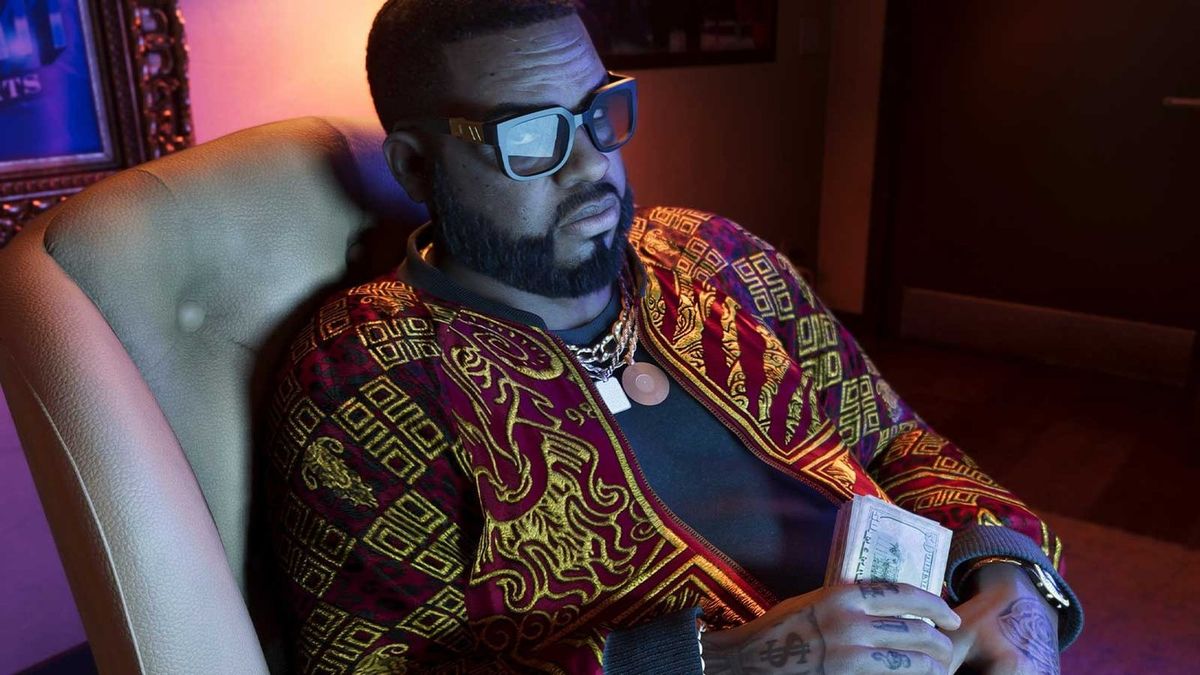
The $400 Box That Didn’t Include the Game
Rockstar Games unveiled the GTA VI: The Goodtime State - Vice City Collection on September 24, and within hours, gamers were already cancelling their pre-orders. The backlash is unusually sharp for a company that has enjoyed near-unblemished goodwill. What makes this moment worth watching isn’t the price tag alone — it’s what the revolt reveals about the relationship between a franchise in its twilight and the fans who built it.
The collector’s box costs $399.99 or £349.99 and, as of this writing, remains unsold. Inside you’ll find a six-inch Macca the Gator figure, Oakley Frogstyle sunglasses with Prizm Sapphire lenses, a New Era 9FORTY snapback, a magnetic mirror, a swizzle spoon, a razor blade keychain, a Leonida Keys crossbody bag, a Chunkee the Manatee shot glass, enamel pins, stickers, and a double-sided poster of Leonida. None of this includes a copy of GTA VI itself. Players must purchase the game separately.
The sunglasses alone account for roughly a third of the retail price. Rockstar clearly leaned on the Oakley name to justify the premium, but the rest of the contents feel like a warehouse clearance from the original Vice City promotional cycle.
It’s Not Just About the Money
Reddit threads show the tone shifting fast. “After a good night, I cancelled and I feel better,” wrote one user on r/GTA6V. Another called it “the normalisation of mediocrity.” The word “slop” appeared repeatedly across multiple subreddits, becoming a shorthand that traveled well beyond gaming circles. These aren’t casual complaints. They’re accusations that Rockstar is running on fumes and expects fans to pay premium prices for a rerun.
The cancellation threads themselves became a story. Hundreds of order confirmation screenshots flooded social platforms, many accompanied by messages of solidarity. This wasn’t scattered frustration — it was coordinated action, the kind of communal pushback that rarely emerges from a typically individualistic purchasing experience. Some users reported calling customer service directly, while others organized refund petitions on Change.org that gained thousands of signatures within forty-eight hours.
Some of the items — the razor blade keychain, the swizzle spoon — returned from the original Vice City launch two decades ago and drew controversy then for glamorizing drug culture. Rockstar appears unconcerned about re-litigating the same debate. The decision suggests the company assumes franchise loyalty will protect it from criticism, a bet that may no longer hold.
The Second-Order Effect: What This Models for Publishers
Here’s what makes this moment structurally significant rather than merely noisy. Rockstar occupies a rare position in gaming — the only publisher that can sustain seven-figure collector editions without needing to justify the math. GTA V moved over 200 million copies. Red Dead Redemption 2 anchored a generation of conversation. When Rockstar prices something at $400 and customers still buy it, the market validates the strategy. That validation is exactly what other publishers are tracking.
The collector’s edition economy has been quietly inflating for years. Five years ago, a $200 steelbook with a map and a figurine felt generous. Today, we’re seeing $400 tiers become routine for AAA launches. The Vice City Collection won’t be the last. If Rockstar weather’s this backlash without adjusting — and early indicators suggest they may not — every major publisher from Activision to Square Enix will recalibrate their pricing models accordingly. The ceiling gets higher for everyone.
The digital-only launch compounds the incentive structure. When physical media disappears and ownership becomes a subscription model, merchandise and collector editions are one of the few remaining tangible revenue streams that don’t require ongoing server infrastructure or live-service overhead. They’re pure margin. For a company managing the enormous costs of next-generation development, the logic is coldly rational. The problem is that rational economics and fan sentiment don’t always align.
Neither issue alone would cause this level of backlash. Together, they create a narrative arc that fans can tell: the company is squeezing value from a brand that no longer demands their deference.
Who Wins, Who Loses
Rockstar wins if the game sells well regardless — and industry projections still point to a massive launch. GTA VI is the most anticipated title of the decade, and hype is a stronger driver than grievances for most buyers. The collector’s edition likely won’t move the needle either way on revenue. Even zero sales of the Vice City Collection wouldn’t dent the projected $8 billion opening weekend that analysts are forecasting.
But Rockstar also loses something harder to quantify: the social contract that has underpinned the franchise since GTA III. That contract, however implicit, held that the company would reward dedication with something proportionate. The cancellation campaign isn’t just about a bad product placement — it’s about a perceived breach of trust. The fans who pre-ordered this edition did so because they believed Rockstar shared their enthusiasm. What they received felt like a transaction with no reciprocity.
Consumers lose if this sets a precedent. A $400 box that excludes the actual game becomes a template. Other publishers will notice. If Rockstar can extract this kind of margin from fans without damaging the bottom line, competitors will pursue the same model. The collector’s edition market already leans predatory — blind boxes, randomized loot, limited drops designed to manufacture scarcity — and this moment gives the worst actors in that space another weapon.
There’s also a generational dimension to consider. The fans who grew up with GTA III and Vice City are now in positions of influence — they’re the content creators, the podcast hosts, the community managers, the reviewers who shape discourse around major releases. Their dissatisfaction doesn’t dissipate after launch day. It compounds through word of mouth and social amplification, slowing the long tail of engagement that publishers increasingly rely on to sustain post-launch revenue through DLC and online services.
The middle ground is what happens next. If Rockstar responds to the backlash by adjusting future pricing or adding tangible value — a disc copy, a discount, a revised bundle — it signals that consumer feedback still matters in an industry that has progressively treated players as data points. If the company doubles down, the revolt becomes a case study in franchise risk: proof that evenuntouchable brands can hemorrhage goodwill when they mistake patience for permanence.
The Bigger Picture
Gaming franchises have always cycled through cycles of enthusiasm and fatigue. What’s different now is the speed at which dissatisfaction becomes visible and organized. Social media compresses months of simmering discontent into days. The Vice City Collection backlash likely would have stayed scattered and anecdotal before platforms like Reddit and X. Now it organizes quickly, publicly, and with measurable economic impact — cancelled pre-orders are real revenue foregone, even if marginal.
There’s also the question of what fills the vacuum. GTA VI won’t launch into emptiness. Competition for discretionary gaming spend is fiercer than at any point since the industry shifted to digital distribution. Titles like Final Fantasy VII Rebirth, Elden Ring’s lingering presence, and a growing backlog of high-quality indie releases all compete for the same wallet share. When a franchise that once faced virtually no meaningful competition starts losing customers to its own decisions, the competitive landscape shifts faster than the executive suite may realize.
Rockstar’s next move matters more than the current noise. A silent response confirms the company believes its brand is unassailable. A corrective one could defuse the narrative and set a better standard for how legacy franchises treat their customers. Either way, the pre-order cancellations are a signal worth tracking. The question is whether anyone at Rockstar is listening — and whether the answer will shape not just GTA VI’s trajectory, but the economics of everything that follows.