Meta's Muse Hits 5 Million Downloads in 22 Days, Rewriting the Rules
Meta's AI agent Muse reached 5 million downloads in just 22 days, outpacing ChatGPT and Claude. But the real story is what its monetization model means for an industry still figuring out how to profit from AI hype.
The Number That Should Make OpenAI Nervous
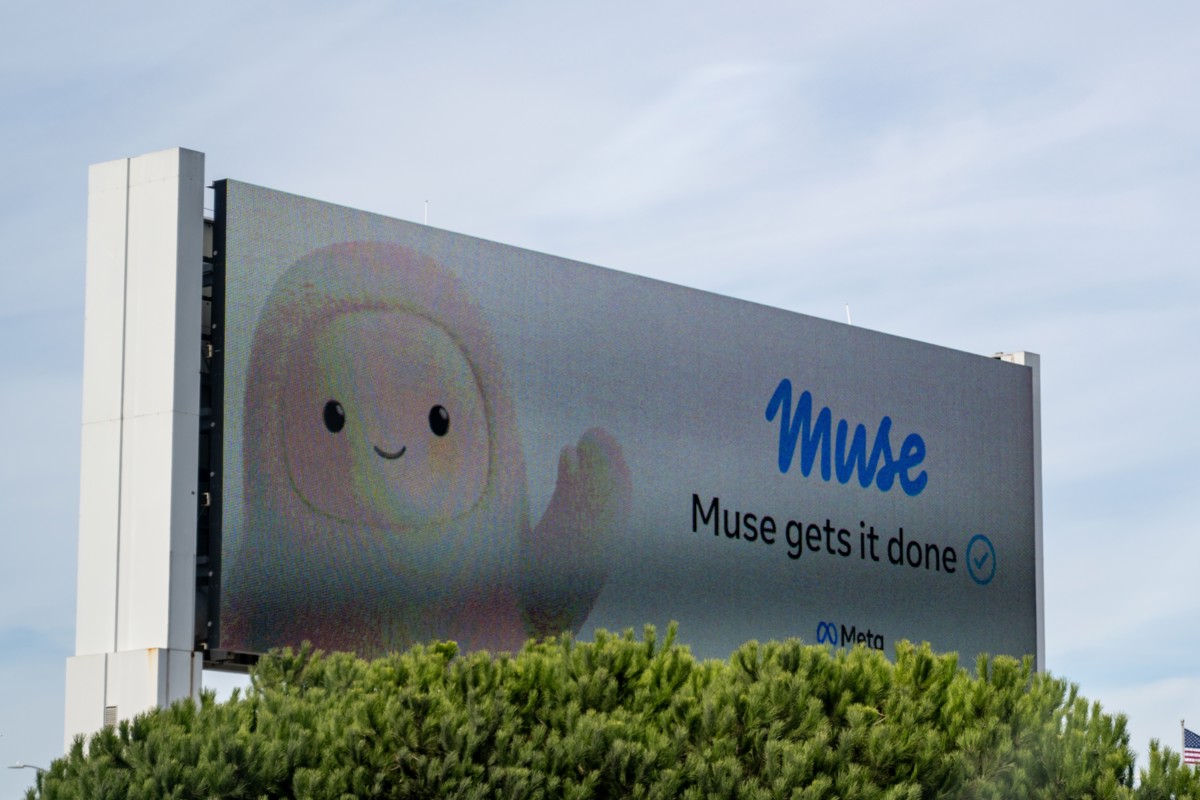
Meta’s personal AI agent Muse hit 5 million downloads in 22 days. Not 56 — the record ChatGPT held when it launched. Not 492 for Claude. Two and a half weeks.
This isn’t a marginal lead. It’s a rearrangement of the hierarchy. Sensor Tower confirmed the milestone, placing Muse among only 23 apps in history to hit 5 million downloads that fast. Remove the games — Fortnite, Pokemon GO, Candy Crush — and the list shrinks to four: Disney+, HBO Max, Threads, and now Muse. The rest of the AI assistant field is watching from the sidelines.
What makes this ranking particularly jarring is that most of those four predecessors benefited from either a cultural watercooler moment or a platform advantage that can’t be replicated. Disney+ had Marvel. HBO Max had prestige TV. Threads had the Instagram tailwind. Muse has Meta — and Meta is willing to weaponize it in ways competitors have decliningly demonstrated they can or will.
How Meta Bought Its Way to the Top
The speed isn’t an accident. Meta is spending money it has in ways OpenAI and Anthropic haven’t matched. The company allocated up to half of its own ad inventory to promote Muse. Last week in the US, Muse ranked among the top 15 most-impressioned brands in advertising — alongside consumer giants that don’t need AI agents to move product. The AdAge data placed Muse ahead of major retail and automotive campaigns, a testament to how aggressively Meta is converting its media empire into a distribution funnel for its own products.
Mark Zuckerberg has treated AI as existential to Meta’s future since he pivoted the company toward the metaverse and then toward generative AI in 2023. The company projected $130 billion to $145 billion in capital expenditures this year, overwhelmingly directed at AI infrastructure — data centers, GPU clusters, and the model training runs that power products like Muse. Investors flagged that number as risky throughout 2024 and into 2025. Muse’s traction gives him a concrete answer: the spending has a payoff, and it’s measurable in monthly subscriptions, not just engagement metrics or ad impressions.
The ad spend alone is notable. Meta doesn’t need to divest ad inventory it can’t spare — it can afford to redirect a portion of its own promotional ecosystem toward a product that competes directly with the very platforms other tech companies are trying to build. This is vertical integration as competitive strategy, and it’s a lever OpenAI and Anthropic can never pull.
The $100-a-Month Bet
Here’s what the download numbers don’t capture. Muse offers a paid tier at up to $100 per month. That’s aggressive pricing for a consumer AI agent that most people have never used and may not fully understand. OpenAI charges $20 for ChatGPT Plus. Anthropic’s Claude Pro is $20 as well. Even xAI’s Grok premium sits at $16 a month.
Meta is betting that Muse does something fundamentally different — not just a chatbot, but an agent that acts on your behalf. The product can book reservations, manage calendars, search across apps, draft and send messages, and handle tasks that require multi-step reasoning across platforms. If even a fraction of those 5 million downloaders convert, the revenue math changes dramatically. A 5% conversion rate at $100 monthly would generate $25 million in recurring revenue per month. A 1% conversion is still $5 million monthly — meaningful on its own, transformative at scale.
The pricing signal matters too. By positioning Muse at the top of the market, Meta is testing whether consumers will pay a premium for an agent with deeper platform integration. If the experiment succeeds, it redefines the ceiling for AI subscriptions industry-wide. If it fails, Meta has at minimum established a high-water mark that competitors will struggle to match on perception alone.
What This Means for the AI Stack
The implications ripple outward through the entire AI value chain.
OpenAI just raised valuation talks at $157 billion and is reportedly preparing for an IPO. Muse’s early momentum adds pressure to deliver on those expectations — quickly. The company can’t rely on its brand alone when a rival with deeper pockets and more distribution channels is moving faster in a key metric that matters to consumers. OpenAI’s next earnings calls will increasingly focus on agent revenue, not just research milestones.
Anthropic is in an even tighter spot. Claude took 492 days to reach 5 million downloads — nearly a full year. Meta achieved the same milestone in 22 days using the distribution network that powers Facebook, Instagram, and WhatsApp. Anthropic doesn’t have that leverage. Its growth has depended on prestige and technical reputation, neither of which scales through ad inventory or native platform integration. Rumors of a Google partnership or a Microsoft acquisition have circulated; either outcome would fundamentally shift the competitive balance.
Grok from X sits at 103 days in the comparison set — faster than Claude but far behind Muse. X’s platform constraints and Musk’s erratic management have limited Grok’s mainstream penetration. The product has never received the kind of coordinated promotional push that Meta is executing, and without one, it will continue to underperform relative to its technical capabilities.
Google hasn’t launched a comparable consumer AI agent product yet. Its silence is strategic, not accidental. The company is likely waiting to see whether Muse’s pricing model survives initial market resistance before committing its own resources. If Muse converts at a low rate, Google can enter later with a refined offering. If it converts well, Alphabet has the search monopoly and YouTube ecosystem to challenge Meta on its own terms.
The Non-Obvious Story
The headline grabber is the download record. The real signal is different.
Meta proved that an AI product can launch and monetize simultaneously. Most AI companies are still burning venture cash and hoping adoption converts to revenue eventually. Muse is collecting subscription fees from day one. That’s a business model, not a vanity metric. The distinction matters because it forces every competitor to answer a harder question: can you charge for this today, or are you still selling a vision?
It also proves that distribution beats pedigree in consumer AI. OpenAI built the best model. Anthropic built the safest. Meta built the best launch machine. The market rewarded the latter — at least in the short term. This doesn’t mean model quality is irrelevant forever. But for a category where most users haven’t yet developed strong preferences, first impression and accessibility determine early winners. Meta understood that and exploited it.
There’s a second-order effect worth noting: Muse’s success raises the cost of customer acquisition for everyone else. If Meta can acquire users through its own ad platform at near-zero marginal cost, competitors must spend more to reach the same audience. The economics of AI distribution are shifting in real time, and the companies with the largest owned channels have a structural advantage that will compound as the market matures.
What Happens Next
Muse’s momentum will force strategic responses across the industry. OpenAI will accelerate its agent roadmap, likely introducing features that narrow the integration gap with Meta’s platform. Anthropic may revisit its pricing or distribution strategy — a partnership deal with a major platform, a shift toward enterprise licensing, or a reconsideration of its premium tier. Google is almost certainly running its own parallel timeline for a consumer agent launch, calibrated to whatever the market data from Muse indicates.
For investors, the Meta capital expenditure question shifts from “will this pay off?” to “how fast will it pay off?” Muse answers both. The question now is whether 22 days of hype can sustain a $100 monthly subscription long enough to justify the spend. Conversion rates over the next 60 to 90 days will be the real test. Downloads are easy. Retention is hard.
The download record will age. The revenue question won’t.