Harald V’s Death Ends the Most Relatable Monarchy in Europe
King Harald V built a modern Norwegian monarchy on skiing, sailing and willingness to marry a commoner. His son Haakon inherits a crown with deep public affection—and a family already testing its tolerance for scandal.
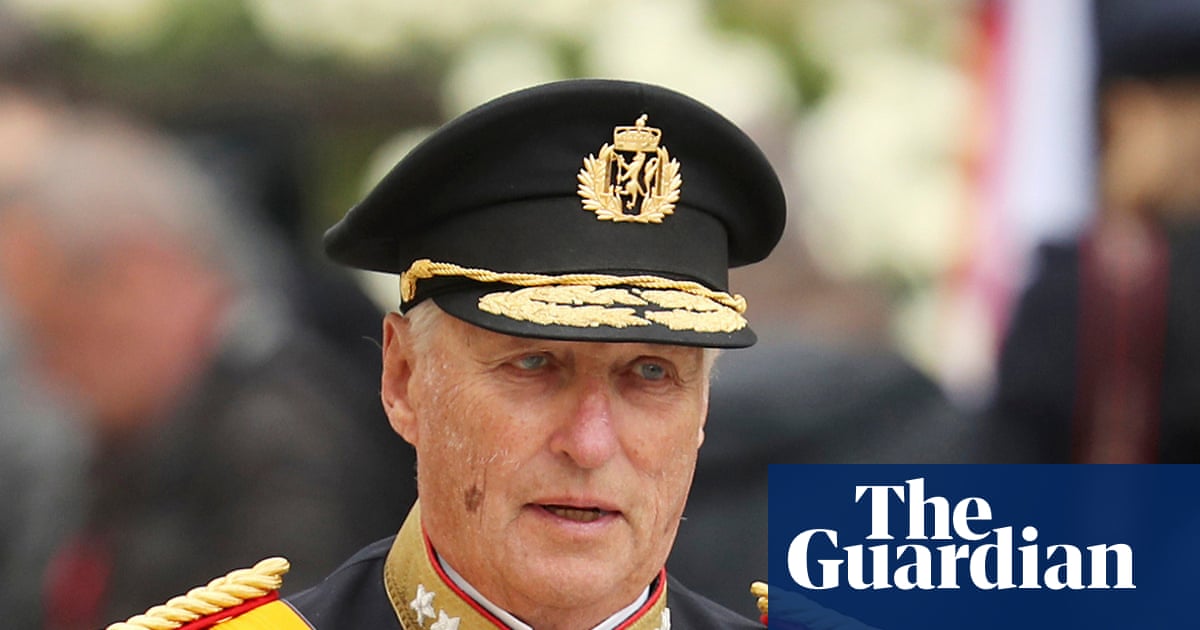
King Harald V of Norway has died at 89, closing out the longest-reigning and perhaps the most aggressively ordinary monarch in modern Europe. He leaves behind a crown that has, over three decades, been sanded down from something reverent to something almost neighborly—and a successor who must decide whether that project is finished or still under construction.
Harald became king in January 1991, at age 52, after the death of his father Olav V. He was the first Norwegian-born sovereign since 1370. His mother was Princess Maud of Wales, granddaughter of Edward VII; his father was the son of Haakon VII, Norway’s first king after independence from Sweden. By blood he was Scandinavian, British, and Danish all at once—the Glücksburg dynasty thread connecting him to queens in Copenhagen, Stockholm and, at one point, London. That mixed heritage shaped his sensibility. “It is not easy to say where we come from. Home is where the heart is,” he once said, in a phrasing that could have come from any immigrant parent rather than a hereditary monarch.
What made Harald unusual among Europe’s reigning royals was not his pedigree but his posture. He was a competitive sailor who represented Norway at three Olympics—Tokyo 1964, Mexico City 1968, Munich 1972—and who won world championship medals and a European gold in 2005, decades into his reign. He skied. He spoke with the faint American inflection of a boy who spent the war years in Washington, having fled Nazi-occupied Norway at age three with his mother and sisters after an allegedly forced border crossing into Sweden. He studied history, economics and politics at Balliol College, Oxford, where he also rowed.
But the choice that defined him was personal. In 1959, as crown prince, he met Sonja Haraldsen, a shop assistant and daughter of an Oslo textile manufacturer, at a sailing party. Their courtship was kept secret for years, partly because his father, Olav V, objected to a commoner bride. According to Norwegian accounts, Harald told his father plainly: if he could not marry Sonja, he would not marry at all, thereby ending the direct line. They wed in 1968.
The gamble paid off. Sonja became queen consort and, over time, shared much of Harald’s public standing. Together they modelled a version of monarchy that was warm without being performative, approachable without being calculating. Harald was named Norway’s person of the year in 2017 by Dagbladet, a result that would have been unthinkable for his grandfather Haakon VII and unlikely for his father. It reflected a genuine affection, not grudging tolerance.
His institutional legacy is equally measurable. Norway’s monarchy has no executive power: all official acts require the endorsement of the governing council of state, and the parliament debates the institution’s continued existence every four years. Earlier this year, amid controversies within the family, the Storting voted 141 to 26 to preserve it. Harald’s contribution was making the institution feel earned rather than imposed. He opened the palace and its estates to the public. He let himself be seen grieving openly at the Utøya memorial in 2011, after Anders Behring Breivik’s attack killed 77 people. He stood beside survivors and bereaved families without the stiff composure that has kept other royals at a polite remove.
There were reforms, too, that reflected the times. In 2012 Harald ceased to be head of the Lutheran state church. In 2018, six years later, he formally lost the constitutional descriptor “holy,” a relic of Norway’s older union with Denmark. The monarchy did not shrink from these changes; it adjusted. That flexibility may be the most durable thing he leaves behind.
What Haakon VIII inherits is both a strong brand and a fragile one. The new king adopts the traditional motto “All for Norway” and faces a monarchy that is, by European standards, deeply popular. But the family has already been tested. His wife, Mette-Marit, was obliged to apologize this February for email exchanges with convicted sex offender Jeffrey Epstein, in which her name appeared nearly a thousand times. Harald publicly stated she had broken no law. In June, her son Marius from a previous relationship was jailed for four years after convictions for two rapes and drug offences. The king’s instinct has been to insulate the institution from private failures, a strategy that worked for Harald but is harder to sustain when the failures multiply.
The broader context matters. Across Europe, monarchies are navigating a populist era that regards inherited privilege with increasing skepticism. Britain’s Charles III has tried to steady the crown through continuity and duty, framing it as an anchor. Spain’s Felipe VI has attempted post-Franco reinvention. Denmark’s Frederik X is the youngest reigning monarch in the continent. Sweden’s Victoria has had to reconcile a modern queen with a dynasty that once owned more people than it could count.
Norway’s version has been simpler and, arguably, harder to replicate: a king who rows, sails and skis, who married the woman he wanted and refused to pretend otherwise, who wept publicly and did not apologize for it. That is a formula that depends entirely on the character of the individual. Harald V was suited to it. Whether Haakon VIII is remains to be seen. The Storting’s recent vote suggests Norwegians will give him the benefit of the doubt. History rarely works that way for long.